Operation of Consultation Center for Building Violations with District Offices and Architects Association
Consultation on Possibility of Legalization Through Future Extensions
Recommendation to Ministry of Land for Amendment of Unreasonable Building Regulations
# Mr. A, who purchased a villa in Songpa-gu, Seoul ten years ago, continued to use the window sash installed on the terraced veranda by the previous owner. However, two years ago, he was cited for violating building regulations. For the past two years, Mr. A has been paying a compliance penalty, and with the abolition of the five-year penalty cap due to a revision of the Building Act, he now faces the prospect of paying the penalty every year. As a result, he is considering removing the structure.
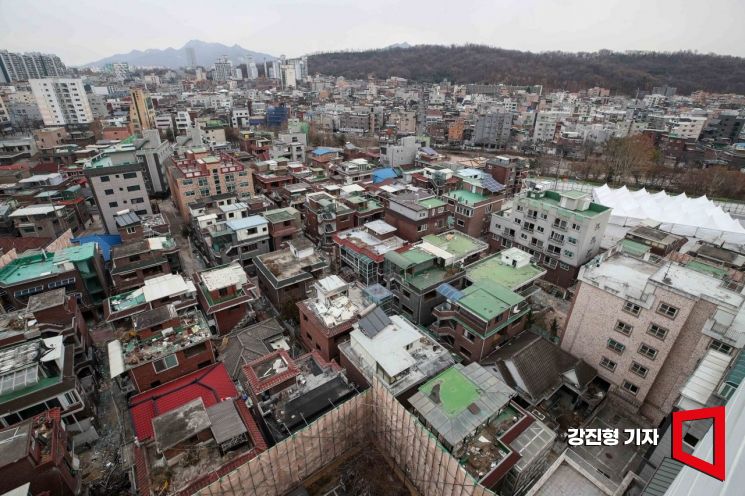
The Seoul Metropolitan Government is moving to address the issue of 'small-scale residential building violations,' such as terraced veranda window sashes, roofs installed to block sunlight or rain, and parking lot canopies. The city plans to extend the period during which compliance penalties can be reduced to a maximum of three years and will also propose amendments to the relevant laws.
On August 6, the city announced that, after conducting a survey of 'residential building violations' in the first half of this year, it found that most cases involved small-scale violations in low-rise multi-family and multiplex housing. In response, the city has prepared three support measures: administrative support, amendments to municipal ordinances, and improvements to existing systems.
Currently, even small-scale facilities such as window sashes or roofs installed for the convenience of residents are classified as 'building violations.' Compliance penalties are imposed on the current owner, even if these facilities were installed by a previous owner. Since the revision of the Enforcement Decree of the Building Act in 2019, the five-time cap on compliance penalties has been abolished, further increasing the burden on citizens.
First, the city will push to amend the ordinance to extend the period for penalty reduction from one year to three years. A 75% reduction in the compliance penalty will apply in cases such as: small-scale violations under 30 square meters (under 5 square meters for multi-unit buildings); when ownership changes after the violation; or when immediate correction is impossible due to a lease agreement.
The proposed ordinance amendment will be submitted to the city council after consultations later this month. In addition, although last year's amendment to the Enforcement Decree of the Building Act increased the reduction rate from 50% to 75%, citizens who had already begun paying compliance penalties were unable to benefit from this change. To address this unfairness, the wording of the ordinance will also be revised.
The city will also operate a 'Building Violation Consultation Center' in cooperation with the 25 district offices and the Seoul Association of Architects. Due to the temporary easing of floor area ratio restrictions in Type 2 and 3 general residential areas (Regulatory Reform No. 33), some building violations can now be legalized through post-construction reporting. However, since it is difficult for citizens to determine eligibility, the city will provide consultation services, including comprehensive advice on whether post-approval is possible within the permitted floor area ratio.
The city has determined that the current Building Act leads to the proliferation of building violations and will recommend amendments to the Ministry of Land, Infrastructure and Transport to correct unreasonable regulations affecting daily life. The proposed changes include excluding the area of certain facilities?such as canopies above exterior stairs of low-rise houses and small-scale pergolas (gazebos) for living and pedestrian convenience?from the calculation of floor area within a certain limit, and revising the 'sunlight setback regulation,' which is often the cause of illegal extensions. The sunlight setback regulation restricts the distance between buildings based on their height to ensure neighboring homes have access to sunlight. The city has already submitted multiple proposals to the ministry regarding this regulation and plans to continue discussions.
In addition, the city will intensively inspect commercial facilities with building violations that threaten public safety, as well as areas with dense crowds, strictly cracking down on violations and imposing compliance penalties as necessary.
Choi Jinseok, Director of Housing at the Seoul Metropolitan Government, stated, "We have prepared support measures for citizens who have had to pay compliance penalties every year due to the installation of small-scale facilities, even though these are essential living spaces such as stairs and verandas. We will continue to identify and improve regulations and systems that are tailored to real-life needs in order to enhance residential safety and convenience for citizens and reduce their financial burden."
© The Asia Business Daily(www.asiae.co.kr). All rights reserved.
![Clutching a Stolen Dior Bag, Saying "I Hate Being Poor but Real"... The Grotesque Con of a "Human Knockoff" [Slate]](https://cwcontent.asiae.co.kr/asiaresize/183/2026021902243444107_1771435474.jpg)
















