Baby Scent Acts as a Kind of "Pheromone"
Japanese Company Releases Perfume That Recreates the "Newborn Head Smell"
Many people enjoy the scent of newborn babies, and for both newborns and mothers, the sense of smell is more important than anything else. This is because it plays a crucial role in recognizing each other's presence. A classic study conducted in 1987 found that 90% of mothers could identify their newborns by scent alone. Subsequent research suggested that smelling a baby's scent could influence not only a person's mood but also their behavior. However, the period during which this pleasant scent can be detected is very brief, as it gradually fades after about six weeks from birth.
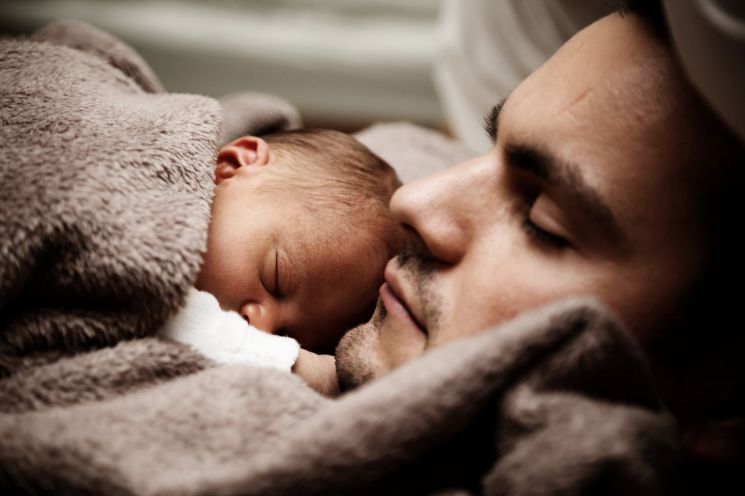
Inspired by the fact that people love the smell of babies, a perfume that faithfully recreates the "pleasant scent" from a newborn's head was recently launched in Japan. This product has gained significant popularity through word of mouth since its release. The perfume, which was launched in mid-June, quickly sold out due to high demand. The manufacturer announced on its official social networking service (SNS) that restocking would not occur until after the middle of this month. Some overseas users have even asked whether the perfume would be available in countries such as the United States. Those who have experienced the scent especially commented that it gives them "a sense of calm and comfort."
The popular perfume is "Poupon pure," launched by the Kobe University-based startup Sentsfes on June 15. According to Sentsfes, they created the world's first fragrance to authentically replicate the scent of a real baby by chemically analyzing the smell of a newborn's head. "Poupon" means "newborn baby" in French. Poupon pure features a well-balanced blend of floral and fruity notes, characterized by warmth and freshness without being overwhelmingly strong.
This perfume was inspired by a paper from Mamiko Ozaki, Professor Emeritus at Kobe University, which noted that parents often smell their baby's head and bottom while raising their child. Professor Ozaki, with the cooperation of medical staff at Hamamatsu University School of Medicine and pregnant women, collected and analyzed the head scent of about 20 newborns. The analysis identified a total of 37 scent components. Based on these findings, the team recreated the "baby scent" by blending more than 20 ingredients, including floral and citrus elements. In a scent test involving 20 men and women, including university students, parents, grandparents, and childcare workers, specific areas of the brain were activated, and participants responded that the scent made them "feel good" and that they "wanted to keep smelling it."
Baby scent stimulates protective instincts in women and reduces aggression in men
Professor Ozaki, who has studied how insects communicate through scent for decades, believes that babies, who cannot speak, emit this scent to encourage affectionate communication with their parents. Professor Ozaki identified the scent from a baby's scalp as a type of "pheromone." "There are pleasant scents in human body odor, and among them, a component called nonanal, which has a floral scent, is especially prominent," she explained. "This component was found in the highest concentrations in babies."
 The Wiseman Science Research Institute announced in the scientific journal "Science Advances" that this substance stimulates protective instincts in women and reduces aggression in men. The photo is not related to the specific content of the article. Pixabay
In addition to Professor Ozaki's work, the Weizmann Institute of Science in Israel also studied a colorless, odorless volatile chemical called "hexadecanal" (HEX), which is emitted from the scalps of babies, in 2021. The Weizmann Institute of Science announced in the scientific journal "Science Advances" that this substance stimulates protective instincts in women and reduces aggression in men.
Noam Sobel, the neuroscientist who led the study, stated, "While we cannot definitively call this chemical a pheromone, it is a human secretion that consistently influences human behavior, particularly aggressive behavior." According to the research team, hexadecanal is released from the body through the skin, saliva, and feces. In babies, it is primarily emitted from the scalp. The researchers hypothesized that the role of hexadecanal may be related to a baby's survival strategy. Eva Mishor, who participated in the study, explained, "By releasing this chemical when adults smell the soft, fluffy hair of a baby, the baby encourages adults to behave in ways that are beneficial to its own survival."
© The Asia Business Daily(www.asiae.co.kr). All rights reserved.
![Clutching a Stolen Dior Bag, Saying "I Hate Being Poor but Real"... The Grotesque Con of a "Human Knockoff" [Slate]](https://cwcontent.asiae.co.kr/asiaresize/183/2026021902243444107_1771435474.jpg)
















