Essential Energy Source for Securing a Manned Base
Helium-3 and Various Rare Earth Elements Scattered Across the Lunar Surface
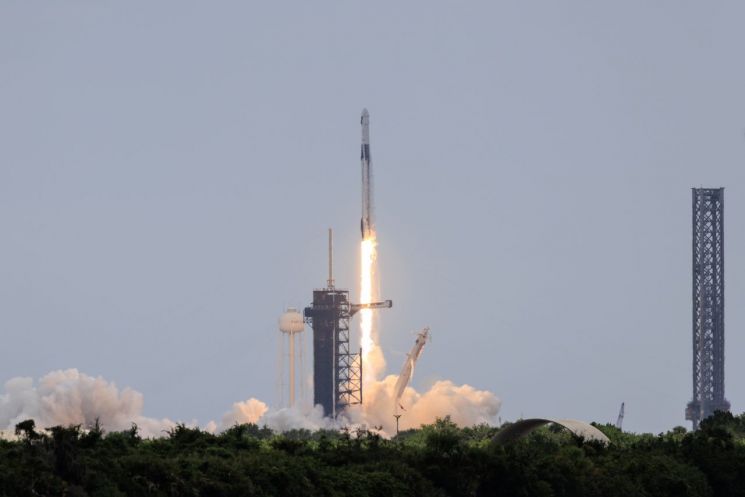
The United States government is accelerating its plans to build a nuclear reactor on the lunar surface, intensifying the competition among space powers to establish manned bases on the Moon. The race has heated up as countries believe that the first to build a manned base will dominate the Moon's rare earth resources. The Moon is known to contain a wealth of rare elements such as helium-3 (He3), considered a future energy resource, as well as various rare earth minerals, leading to expectations that the competition for resource development will only intensify in the future.
The US Races to Build a Lunar Surface Reactor... Speed Competition with China and Russia Intensifies
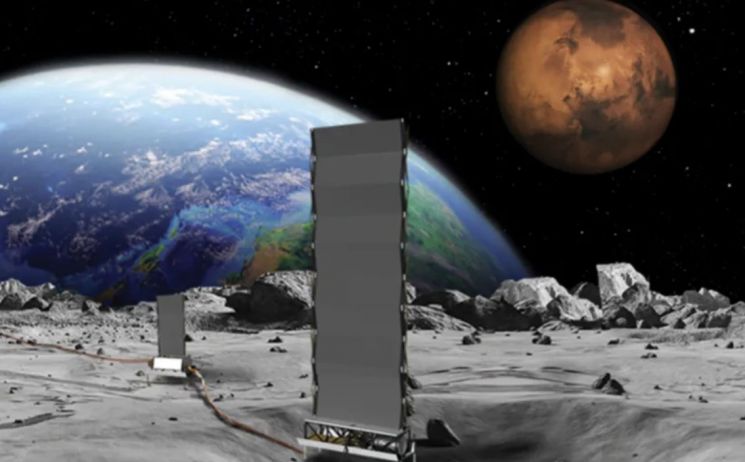 Conceptual diagram of the lunar surface power infrastructure network planned by the U.S. National Aeronautics and Space Administration (NASA). NASA website
According to an internal NASA document obtained by the US political media outlet Politico on August 5 (local time), Sean Duffy, Secretary of Transportation and acting NASA Administrator, has issued a directive to expedite the plan to construct a nuclear reactor on the lunar surface. He is expected to announce specific construction timelines and other details soon. An anonymous NASA official told Politico, "The goal is to win the second space race."
Politico also reported that Acting Administrator Duffy instructed NASA to seek out companies capable of building a 100 kW reactor on the Moon by 2030. The year 2030 is when China and Russia have announced plans to jointly begin constructing a manned base in the lunar south pole region. In June of last year, the two countries signed an agreement to jointly establish the International Lunar Research Station (ILRS).
In May of this year, China and Russia also signed a contract to jointly build a nuclear reactor on the Moon. The plan is to construct the reactor in 2030 to supply power to the ILRS, and then use super-heavy rockets to deliver construction materials and complete the ILRS by 2035, at which point operations will begin.
The reason the United States, China, and Russia are all rushing to develop nuclear reactors on the lunar surface is that nuclear power is the only viable energy source for building manned bases. The Moon's orbital period is 27.3 days, causing day and night to alternate every roughly 14 days, making it difficult to generate energy through solar power. Additionally, the lack of an atmosphere makes it impossible to use wind or other renewable energy sources, leaving nuclear power as the only alternative.
The Moon's Surface as a Rare Earth Warehouse... Intensifying Resource Competition Expected
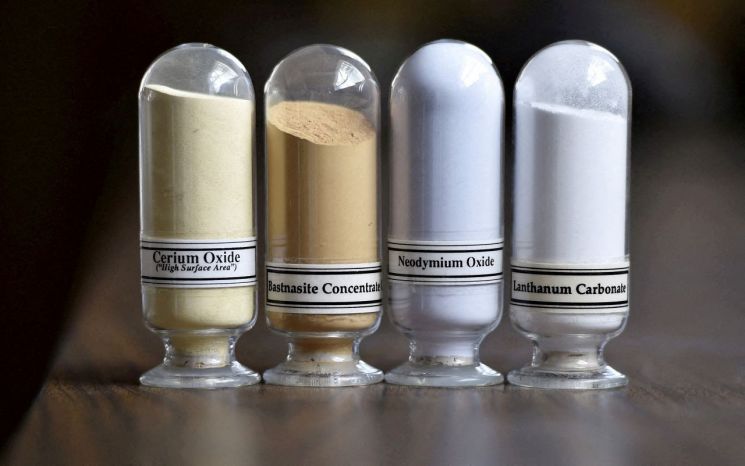
The vast reserves of rare earth resources scattered across the lunar surface are another factor fueling the race to build reactors on the Moon. The Moon is especially rich in helium-3, a rare element that is extremely difficult to obtain on Earth and is expected to become a future energy source.
Helium-3 is a rare element that is drawing attention as a key fuel for future nuclear fusion power, but it is nearly impossible to acquire on Earth. NASA estimates that there are more than 1.1 million tons of helium-3 on the Moon. It is known that using just 1 gram of helium-3 for nuclear fusion can generate as much energy as 14 tons of oil or 40 tons of coal. The current estimated economic value of 1 ton of helium-3 is about $3 billion (approximately 4 trillion won), suggesting a future scramble between the United States, China, and Russia.
In addition to helium-3, the Moon is also believed to contain abundant reserves of iron, aluminum, titanium, uranium, scandium, yttrium, and other rare earth elements. Because the Moon lacks an atmosphere and has little volcanic or orogenic activity, rare earth elements delivered by meteorites in the past often remain exposed on the surface. NASA also estimates that the Moon's rare earth resources are at least ten times greater than those on Earth.
The Moon Not Governed by International Law... Concerns Over Resource Scramble Led by Corporations
Because there is no official ownership of the lunar surface and international laws that apply on Earth do not extend to the Moon, the country that first establishes a manned base could gain a significant advantage in the resource race.
CNN reported that the only international agreement regarding the Moon and space development and ownership is the "Space Treaty" signed in 1967. Currently, 107 countries worldwide are parties to the Space Treaty. According to the treaty, no nation can claim sovereignty over the Moon or other celestial bodies beyond Earth's atmosphere, and the placement of weapons and military activities are prohibited.
However, the treaty only prohibits national claims of sovereignty and does not include provisions restricting corporate activities, resource development, or mining. In the 1960s, space development was a national project, and individual companies could not participate, so the treaty did not include clauses limiting corporate activity. As a result, there are concerns that the current Space Treaty lacks provisions to prevent countries from using private companies to compete for resources in space development.
© The Asia Business Daily(www.asiae.co.kr). All rights reserved.



















