Concealing Major Risks and Exaggerating Technology Effectiveness
Stock Price Plunges 6%, Wiping Out 68 Billion Dollars in Market Value
As Tesla's stock price continues to underperform, CEO Elon Musk has once again become entangled in legal risks. Shareholders have filed a lawsuit against Musk and Tesla, alleging that they exaggerated autonomous driving technology and concealed safety issues related to robotaxis. This lawsuit is expected to add further downward pressure on Tesla's already struggling stock price.
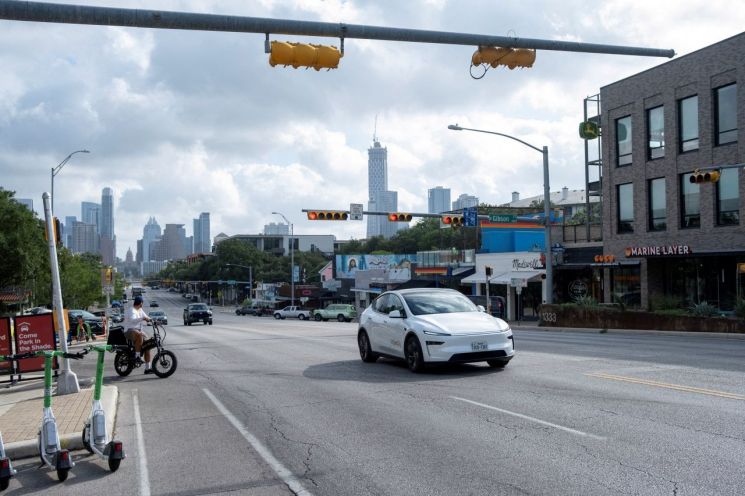
The Guardian reported on August 5 (local time) that some shareholders of the American electric vehicle company Tesla have filed a class action lawsuit against CEO Musk and the company, accusing them of securities fraud related to the autonomous robotaxi business.
The lawsuit was filed the previous night in the U.S. District Court for the Western District of Texas in Austin. The shareholders claim that Musk and Tesla concealed significant risks associated with the robotaxi pilot program, which began on June 22 near the company's headquarters.
During the pilot operation of the autonomous vehicles, Tesla cars exhibited several safety issues, including excessive speeding, sudden braking, driving onto curbs, entering incorrect lanes, and letting passengers disembark in the middle of multi-lane roads. The National Highway Traffic Safety Administration (NHTSA) has launched an investigation into the pilot program.
The shareholders highlighted Musk's statement during the April 22 earnings conference call, in which he said he was "razor-focused on launching robotaxis in Austin in June," as well as Tesla's announcement on the same day that it would "achieve scalable and safe deployment across various regions and use cases."
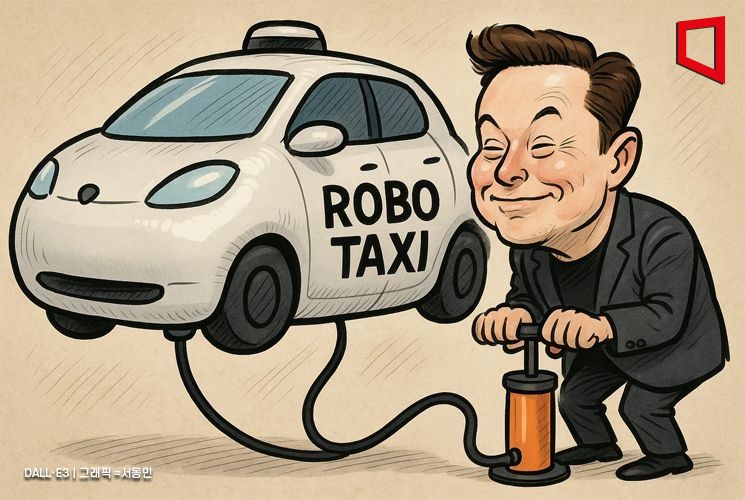
The shareholders allege that Musk and Tesla repeatedly exaggerated the effectiveness of the company's autonomous driving technology and its business prospects, thereby artificially inflating Tesla's financial outlook and stock price. In reality, Tesla's stock price fell by 6.1% over the two trading days following the launch of the robotaxi pilot service, wiping out approximately $68 billion (about 90 trillion won) in market capitalization. With this lawsuit, judicial risks are once again coming to the forefront, raising concerns that Tesla's stock price could be negatively affected.
The shareholders who filed the lawsuit are seeking damages on behalf of investors who held Tesla stock between April 19, 2023, and June 22, 2025.
As of now, Tesla has not responded to media requests for comment regarding the lawsuit. Since launching its latest autonomous ride-hailing taxi service in Austin in June, Tesla has expanded the service area twice and continues to operate the service.
The Guardian reported that "the expansion of the robotaxi business has emerged as a core growth strategy for Tesla amid recent slowing vehicle demand and political backlash against CEO Musk." Musk has announced plans to provide robotaxi services to half of the U.S. population by the end of this year, but obtaining regulatory approval and proving safety remain major challenges.
Musk claims that the company has expanded its robotaxi service to the San Francisco Bay Area. However, the California Department of Motor Vehicles (DMV) stated that "Tesla needs a separate, updated permit to operate paid autonomous driving services."
Meanwhile, according to the online media outlet Teslarati, only one official safety complaint was filed with the Austin city authorities during the initial six weeks of robotaxi operations.
© The Asia Business Daily(www.asiae.co.kr). All rights reserved.
![Clutching a Stolen Dior Bag, Saying "I Hate Being Poor but Real"... The Grotesque Con of a "Human Knockoff" [Slate]](https://cwcontent.asiae.co.kr/asiaresize/183/2026021902243444107_1771435474.jpg)
















