Processed Food Price Increases Slow Down
Spinach Prices Jump 78.4% from Previous Month Due to Prolonged Heatwave
The consumer price inflation rate has remained stable at around 2%, which is the Bank of Korea's price stability target, for the past year. The increase in processed food prices has slowed due to discount events and other factors. However, due to a longer heatwave compared to the previous year, the prices of certain items, such as spinach, have risen significantly. The cost of living index also rose by 2.5%, indicating that the perceived burden of prices continues.
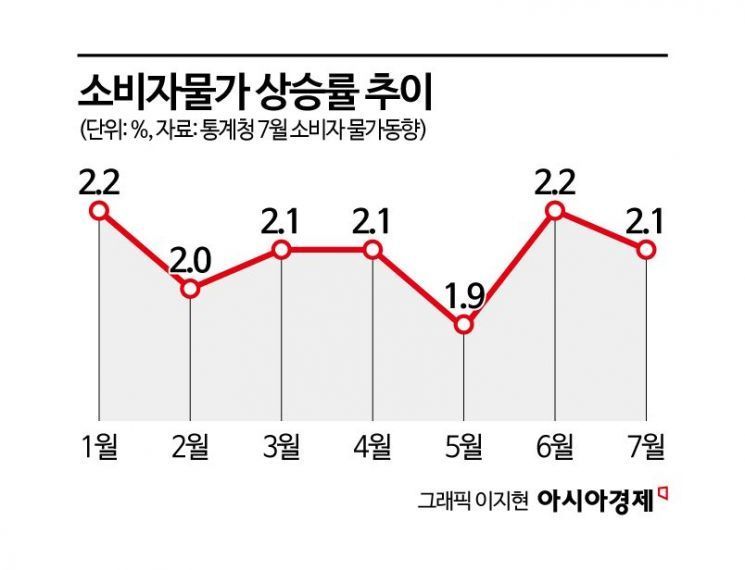
According to the "July Consumer Price Trends" released by Statistics Korea on August 5, last month’s consumer price index rose by 2.1% compared to a year earlier, which is a slight slowdown from the 2.2% increase in the previous month. Since recording 2.6% in July 2024, the consumer price index growth rate has remained stable at or below the low 2% range. This year, the rate stayed in the 2% range from January, dropped to 1.9% in May, but has returned to the 2% range for two consecutive months since June.
The price of processed foods, which had seen a large increase recently, rose by 4.1% compared to a year earlier, a slowdown from the 4.6% increase in the previous month. Park Byungseon, Director of Price Trends at Statistics Korea, said, "In July, large-scale discount events by retailers reduced the price increases for items such as kimchi, ramen, and carbonated drinks, so the rise in processed food prices slowed compared to the previous month." However, for items such as bread (6.4%) and coffee (15.9%), the impact of higher factory prices led to a significant increase.
The price of personal services also rose by 3.1% compared to a year earlier, showing more stability than in June (3.3%). Dining-out services increased by 3.2%, which is a larger increase than the previous month (3.1%), but non-dining-out services (3.1%) showed a slowdown from the previous month (3.5%). Statistics Korea explained that in July, car rental companies increased their discount rates, resulting in a drop in passenger car rental fees (-11.5%). In addition, the decrease in demand for group travel, partly due to concerns over earthquakes in Japan, led to a drop in overseas group travel expenses (-2.3%), contributing to the slowdown in non-dining-out service prices.
Petroleum Prices Turn Negative... Fresh Fish and Seafood Index Up 7.6%
Petroleum prices fell by 1.0%, turning negative from the previous month’s 0.3% increase. The decline in petroleum prices was largely due to lower international oil prices compared to the previous year. As of July, Dubai crude oil was $70.9 per barrel, lower than $83.8 per barrel in July of the previous year.
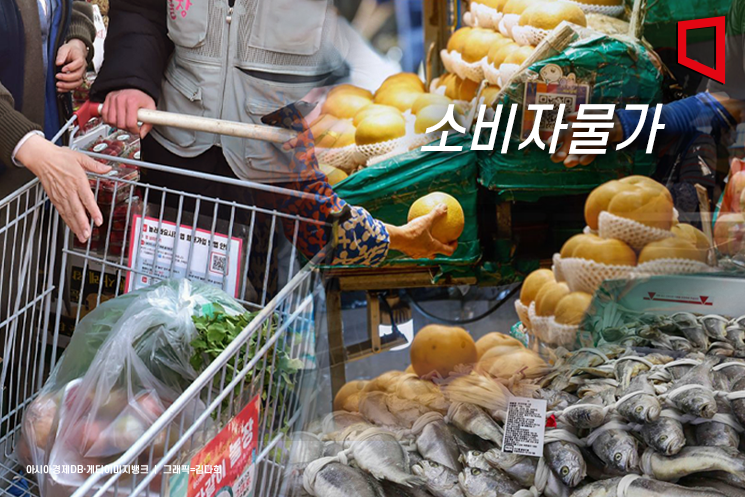
Agricultural, livestock, and fishery products rose by 2.1%, with the rate of increase expanding from 1.5% in the previous month. In particular, seafood prices jumped by 7.3%, continuing their steep rise after a 7.4% increase in the previous month. The fresh fish and seafood index, which consists of seafood-related items, also rose by 7.6% from the previous month, marking the largest increase in two years and five months since February 2023 (8.1%). Statistics Korea explained that the main factors were a decrease in the production of mackerel and croaker compared to the previous year, as well as higher import prices. By item, mackerel prices increased by 12.6% compared to a year earlier. The increase in livestock product prices was 3.5%, a slight slowdown from 4.3% in the previous month.
On the other hand, agricultural product prices fell by -0.1% in August, following a -1.8% decrease in the previous month. Pears (-37.3%), apples (-11.0%), and carrots (-41.3%) saw significant declines. However, due to the strong impact of the heatwave, the prices of some vegetables and fruits rose sharply compared to the previous month. The number of heatwave days in July 2025 was 13.5, more than three times higher than the previous year (4.3 days). In particular, compared to the previous month, spinach (78.4%) and young radish (57.1%), which are vulnerable to heat, saw large increases. Compared to the same month last year, spinach rose by 13.6% and young radish by 10.1%. Watermelon also jumped by 20.7% compared to a year earlier.
Cost of Living Index Jumps 2.5%... Domestic Beef Up 4.9%
Due to increases in agricultural, livestock, and fishery products, the cost of living index rose by 2.5% compared to a year earlier. The cost of living index is calculated using 144 items that are frequently purchased and account for a high proportion of household spending, making it sensitive to price fluctuations. The core inflation index, based on the OECD method and excluding food and energy, rose by 2.0%, the same as the previous month (2.0%).
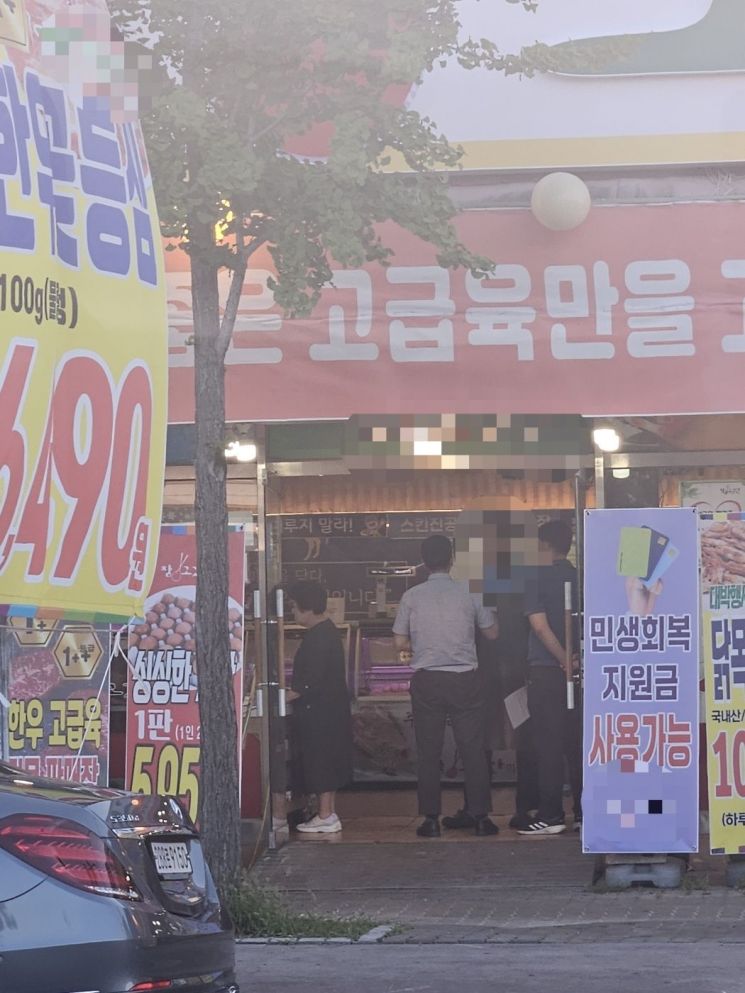
The impact of the livelihood recovery consumption coupons, issued from July 21, appears to be minimal so far. Looking at items such as domestic beef and pork, which saw price increases during the COVID-19 relief payments, domestic beef rose by 4.9%, pork by 2.6%, beef dining-out by 1.6%, and pork rib dining-out by 2.3% compared to a year earlier. Compared to the trends in June?domestic beef (3.3%), beef dining-out (1.2%), and pork rib dining-out (1.8%)?the rate of increase has expanded slightly over the past month.
Director Park explained, "Basically, the number of slaughtered domestic cattle and pigs has decreased, leading to rising prices. Although the rate of increase has expanded, since the consumption coupons started being issued on the 21st, it is difficult to precisely isolate their effect on price increases." However, he added, "There are expectations that demand will increase as the coupons are distributed."
The government stated that it is preparing for possible fluctuations in beef prices due to the distribution of consumption coupons. Lim Hyeyoung, Director of Price Policy at the Ministry of Economy and Finance, said, "In the past, when disaster relief payments were distributed, there was a precedent of increased demand for Hanwoo leading to higher prices. We are increasing the supply of Hanwoo by more than 30%."
Monthly rent and jeonse (lump-sum lease) prices also rose by 1.1% and 0.5%, respectively, compared to a year earlier. Compared to the previous month, both increased by 0.1%. Statistics Korea analyzed that the decrease in jeonse listings, due to the June 27 loan regulation, had some impact on jeonse prices. The government plans to make every effort to stabilize perceived prices through joint efforts by relevant ministries, given the uncertainties related to weather and international conditions.
© The Asia Business Daily(www.asiae.co.kr). All rights reserved.
![Clutching a Stolen Dior Bag, Saying "I Hate Being Poor but Real"... The Grotesque Con of a "Human Knockoff" [Slate]](https://cwcontent.asiae.co.kr/asiaresize/183/2026021902243444107_1771435474.jpg)


















