Trump pressures India: "Tariffs on India could be raised substantially"
Over 40% of India's oil imports come from Russia, surpassing Middle Eastern oil
Agricultural tariff negotiations are key: "A compromise must be found"
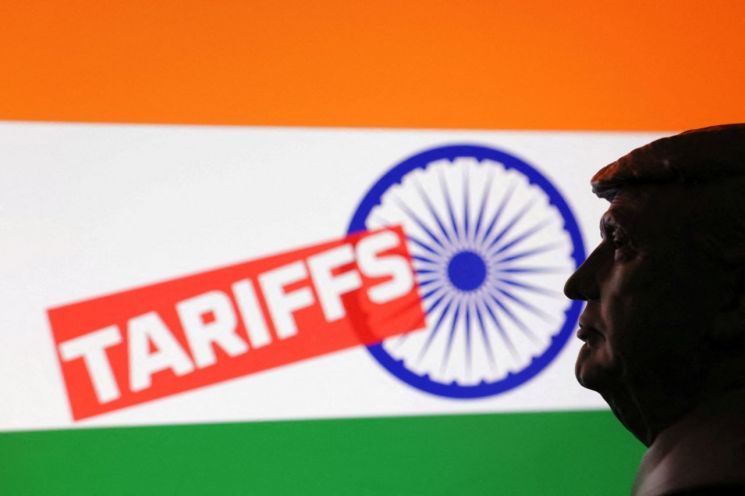
The Indian government is maintaining its stance of continuing to import Russian oil despite tariff pressure from U.S. President Donald Trump, leading to escalating diplomatic tensions between the two countries. Russian oil accounts for over 40% of India's total crude imports, so a sudden halt in imports could result in an energy crisis. Some analysts point out that the fundamental cause of the conflict lies in the issue of agricultural tariffs, and that President Trump's pressure is likely to continue until a tariff agreement is reached.
Trump pressures India: "Tariffs on India could be raised substantially"
 On the 3rd (local time), U.S. President Donald Trump arrived at Lehigh Valley International Airport in Pennsylvania and held a brief press conference. Photo by Reuters Yonhap News
On August 4 (local time), President Trump stated on the social networking service Truth Social, "India is purchasing a massive amount of Russian oil and selling it on the open market for significant profit. They do not care how many people are dying in Ukraine at the hands of Russia's war machine. I will substantially raise tariffs on India."
Previously, President Trump had announced plans to impose a 25% reciprocal tariff on India and pressured the country to halt imports of Russian oil. He has now increased the level of pressure by warning that if the Indian government continues to import Russian oil, tariff rates could be raised even higher than 25%. Since last month, President Trump has repeatedly criticized India's imports of Russian oil as negotiations over agricultural import tariffs between the two countries have stalled.
However, the Indian government is strongly objecting, insisting it will continue to import Russian oil. Randhir Jaiswal, spokesperson for India's Ministry of External Affairs, stated on X (formerly Twitter), "Targeting India is neither justified nor reasonable. Since the outbreak of the Ukraine conflict, oil supplies have shifted to Europe, forcing India to import oil from Russia. The United States continues to import uranium, palladium, fertilizers, and chemicals from Russia. We will take all necessary measures to protect our national interest and economic security."
Over 40% of India's oil imports come from Russia, surpassing Middle Eastern oil
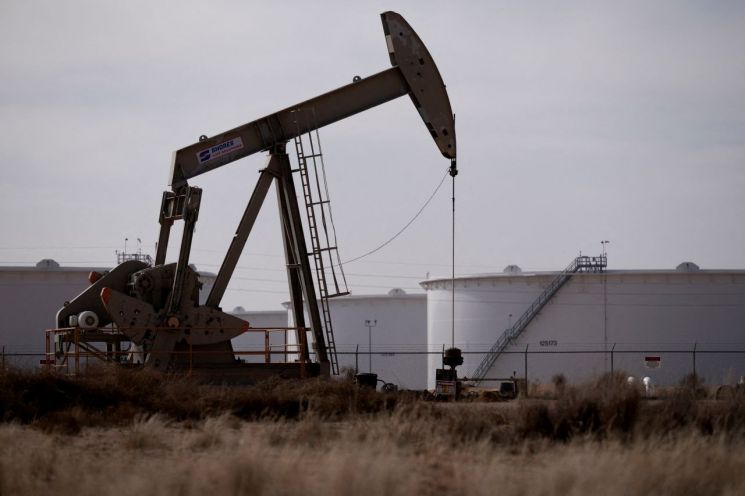
The reason the Indian government has not taken steps to halt Russian oil imports despite President Trump's tariff pressure is believed to be its significant dependence on Russian oil. According to trade data provider Kpler, Russian oil accounted for 44% of India's crude oil imports last year, the highest share. Other sources included Iraq (20%), Saudi Arabia (11%), and the United States (4%). At the outbreak of the Ukraine war in February 2022, Russian oil made up only 0.2% of India's total oil imports, with over 80% coming from Middle Eastern countries such as Iraq and Saudi Arabia.
During the Ukraine war, as European markets were closed to Russian oil due to sanctions, Russia offered oil at prices 30-40% lower than the market rate, prompting the Indian government to sharply increase its imports. It is estimated that over the past two years, from 2023 to last year, the Indian government gained approximately $13 billion (about 17 trillion won) in price differentials through purchases of Russian oil.
The Indian government claims that importing Russian oil has actually helped stabilize international oil prices. Hardeep Singh Puri, India's Minister of Petroleum and Natural Gas, stated at a recent press conference, "If India had not purchased Russian oil, international oil prices would have continued to skyrocket," countering U.S. criticism of India's Russian oil imports.
Agricultural tariff negotiations are key: "A compromise must be found"
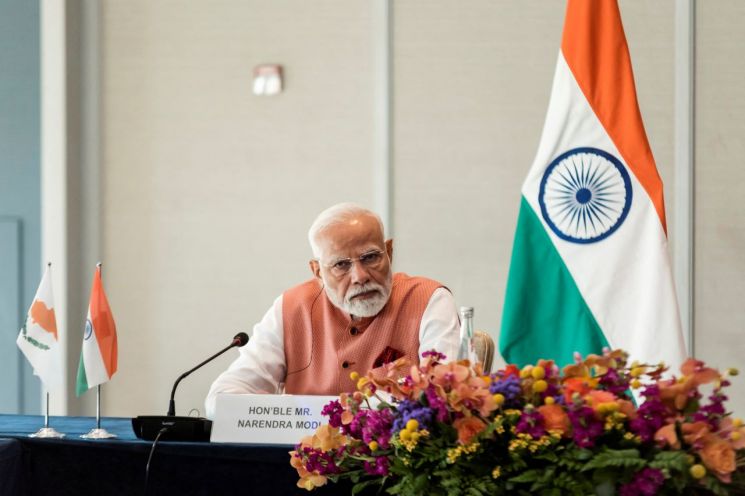 On June 15 (local time), Indian Prime Minister Narendra Modi attended a business forum held in Cyprus. Photo by Reuters Yonhap News
Some observers argue that the diplomatic clash between the United States and India is more about agricultural tariffs than Russian oil imports. According to the Associated Press, citing a White House official who requested anonymity, "President Trump's criticism of India's Russian oil imports reflects his frustration with the pace of trade negotiations with India. India is an important partner in Asia, and President Trump is not pursuing a strategic realignment in Asia, including relations with India."
Since the start of tariff negotiations with India in May, the Trump administration has demanded the removal of tariff barriers in India's agricultural market. However, the Indian government has refused to open its agricultural market, causing negotiations to stall. As of August 1 (local time), the deadline for the tariff negotiations had passed, but talks between the United States and India are still ongoing.
The Indian government is concerned that accepting the U.S. demand for tariff-free access to its agricultural market would provoke backlash from Indian farmers. In February last year, Indian farmers staged large-scale protests demanding legislation to guarantee minimum prices for agricultural products. Following the protests, Prime Minister Modi narrowly secured a third term in the Indian general elections held in April last year, but his party, the Bharatiya Janata Party (BJP), failed to secure a majority and had to form a coalition government.
As a result, there are concerns that diplomatic friction between the United States and India will continue until a breakthrough is found in tariff negotiations. Sreeram Sundar Chaulia, professor at Jindal School of International Affairs in New Delhi, told the Associated Press, "The best-case scenario is that this remains a temporary whim by President Trump for tariff negotiations. However, if the rift between the United States and India becomes prolonged and the U.S. proceeds with financial and energy sector deals with Pakistan, further antagonizing India, it could significantly weaken the strategic partnership between the two countries."
© The Asia Business Daily(www.asiae.co.kr). All rights reserved.



















