"Tariffs and Government Spending Cuts Deal Greater Blow to Low-Income Earners"
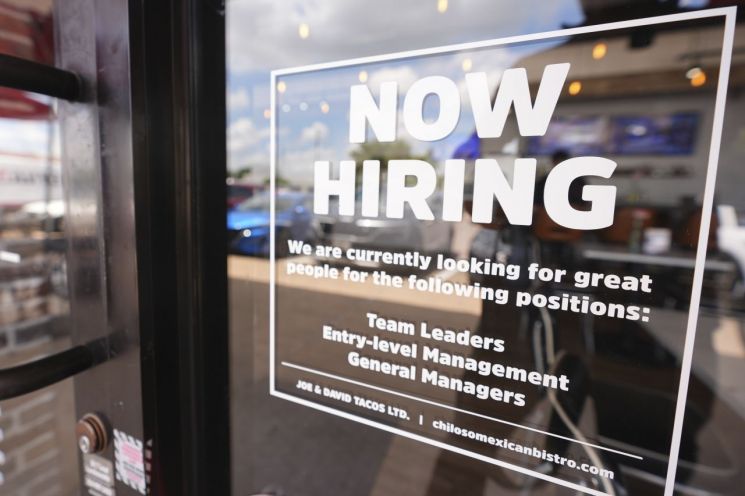
The Financial Times (FT) reported on August 3 (local time) that low-income earners in the United States are experiencing a steeper slowdown in wage growth compared to high-income earners.
According to data from the Federal Reserve Bank of Atlanta, FT stated that the wage growth rate for the bottom 25% of workers, who earn less than $806 per week (approximately 1.11 million KRW), slowed to an annual rate of 3.7% as of June. This marks a significant decline from 7.5% at the end of 2022, when labor shortages were severe in the aftermath of the pandemic.
In contrast, the wages of the top 25% of workers, who earn more than $1,887 per week (approximately 2.61 million KRW), rose by 4.7% during the same period, indicating a relatively smaller slowdown. The average wage growth rate for all workers was reported to be 4.3%.
This data was released shortly after U.S. President Donald Trump issued a statement following the Department of Labor's employment report on August 1. The Department of Labor announced through the employment report that non-farm payrolls in the United States increased by 73,000 in July compared to the previous month, which was significantly below the experts' forecast of 100,000. The job growth figures for May and June were also revised downward by a total of 258,000 from previous reports.
Additionally, according to the employment report, the number of people unemployed for 27 weeks or more surpassed 1.8 million, reaching the highest level since 2017, excluding the pandemic period, as reported by the Wall Street Journal (WSJ). This accounts for one-quarter of all unemployed people, an increase from about 20% a year ago. WSJ pointed out that labor market conditions are being affected by tariff uncertainties and cautious hiring by companies.
Experts are warning that the Trump administration's tariff policies and government spending cuts could have a greater impact on low-income households. The Yale Institute for Budget Studies analyzed that tariffs could reduce the disposable income of the bottom 10% of households by more than 3% in the short term, while the top 10% would see only about a 1% reduction.
© The Asia Business Daily(www.asiae.co.kr). All rights reserved.
![Clutching a Stolen Dior Bag, Saying "I Hate Being Poor but Real"... The Grotesque Con of a "Human Knockoff" [Slate]](https://cwcontent.asiae.co.kr/asiaresize/183/2026021902243444107_1771435474.jpg)















