580,000 Flock to Three Beaches in a Single Day
Short Monsoon and Surge in Foreign Tourists Drive Crowds
As the peak vacation season begins in earnest, crowds are flocking to major beaches in Busan. Beaches such as Haeundae, Gwangalli, and Songjeong are bustling with hundreds of thousands of tourists each day, making it clear that the high season is in full swing.
According to the Busan city government on August 3, on August 2 alone, approximately 275,000 people visited Haeundae Beach, 49,000 visited Songjeong Beach, and 252,000 visited Gwangalli Beach. In just one day, a total of 580,000 people flocked to these three beaches.
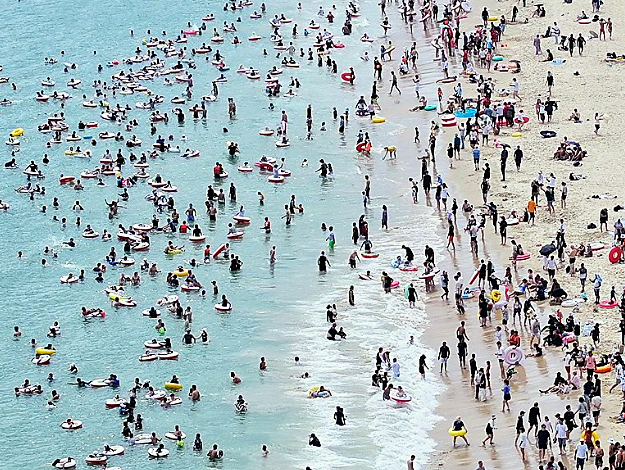 On the afternoon of the 3rd, Haeundae Beach in Busan is crowded with vacationers. Photo by Yonhap News
On Sunday, August 3, a similar number of people visited the beaches as the day before, creating a sea of people along the coast. At Haeundae, vacationers wearing tubes rushed into the sea to escape the sweltering heat, and the sandy beach was so crowded that the expression "half water, half people" was fitting, with barely any room to step.
Dadaepo Beach in Saha-gu was also livelier than usual due to the larger crowds. At the "Sunset Beach Club," part of the Busan Sea Festival, citizens and tourists gathered from day to night to enjoy marine leisure activities and DJ performances. At night, the "Dadaepocha," a 2,000-seat outdoor food stall event, was packed with people escaping the tropical night. Songjeong Beach, known as a surfing hotspot, was also filled with surfers in wetsuits and vacationers.
Busan Sees Surge in Tourists... Short Monsoon and K-Culture Drive Growth
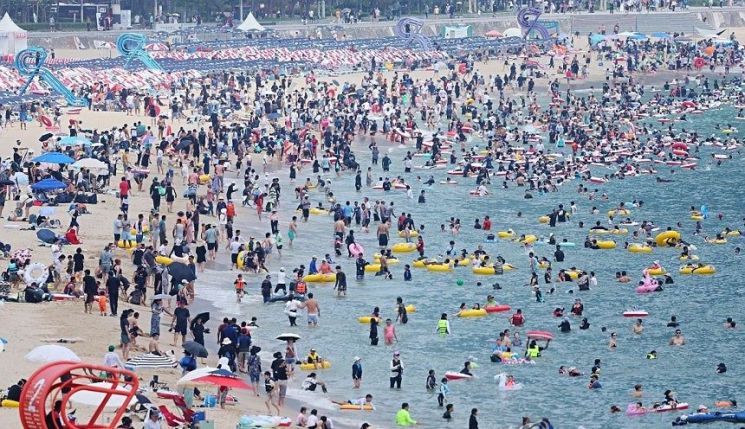 On the afternoon of the 3rd, Haeundae Beach in Busan is crowded with vacationers. Photo by Yonhap News
Several factors appear to have contributed to the strong start of Busan's beaches at the beginning of the peak season. The weather and the increase in foreign tourists have had a significant impact. In July last year, Busan experienced more than 20 days of drizzle or heavier rainfall, but this year, the monsoon ended earlier than usual, and the vacation season began in earnest from July 7.
Another variable is the increase in foreign tourists. As K-Culture gains popularity worldwide, overseas interest in Busan's major beaches and city attractions has also risen. In fact, according to the city, the number of foreign tourists visiting Busan from January to May increased by 23.7% compared to last year.
Meanwhile, according to the Ministry of the Interior and Safety, over the past five years (2020?2024), there have been a total of 112 deaths caused by water-related accidents, with 48% (54 deaths) occurring in August. In particular, the highest number of deaths?27?occurred in early August, which is the peak of the summer vacation season. Additionally, August is a period when the number of patients affected by contact with toxic marine animals such as jellyfish surges. Over the past five years, 2,082 people suffered injuries from toxic marine animals in August alone. Furthermore, as outdoor activities increase during the vacation season, the risk of heat-related illnesses also rises, so vacationers are urged to take extra precautions.
© The Asia Business Daily(www.asiae.co.kr). All rights reserved.
![Clutching a Stolen Dior Bag, Saying "I Hate Being Poor but Real"... The Grotesque Con of a "Human Knockoff" [Slate]](https://cwcontent.asiae.co.kr/asiaresize/183/2026021902243444107_1771435474.jpg)
















