"Expansion of Tax Support for New Business Investments Needed"
More than half of domestic manufacturing companies recognize the limitations of their existing businesses, yet they are unable to pursue new businesses due to a combination of factors such as management conditions and market circumstances.
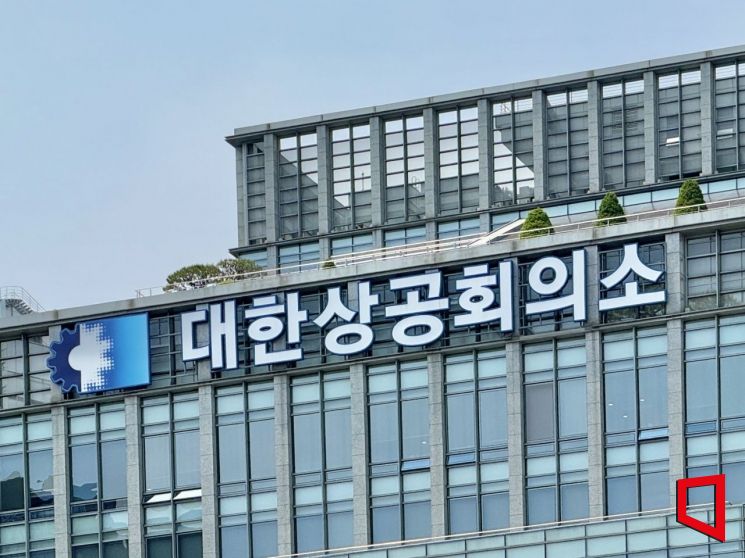
The Korea Chamber of Commerce and Industry announced on the 4th that it had surveyed 2,186 manufacturing companies nationwide regarding the current status and challenges of pursuing new businesses, and this was the result. Among the responding companies, 82.3% assessed that the market for their current main products had entered a red ocean. Specifically, 54.5% answered that their main products were in the 'maturity stage' with a saturated market, while 27.8% considered themselves to be in the 'decline stage' with a shrinking market. When looking at the proportion of companies responding with 'maturity stage' or 'decline stage' by major industry, non-metallic minerals ranked highest at 95.2%, followed by oil refining and petrochemicals?representative oversupplied industries?at 89.6%, and steel at 84.1%.
As the market has reached saturation, competition has become even more intense. When asked about the competitive landscape in their main product markets, 83.9% of companies responded that they either had no competitive advantage or had already been overtaken. Even efforts to pursue new businesses to replace existing products have been sluggish. When asked whether they had started or were considering new businesses, 57.6% of companies replied that they had no ongoing new business initiatives.
The reasons cited for not pursuing new businesses included: worsening management conditions such as funding difficulties (25.8%), lack of confidence in the market or business potential of new ventures (25.4%), and inability to discover new business items (23.7%).
As for the challenges experienced in the process of pursuing new businesses, the most frequently cited was uncertainty about the outlook for new business markets (47.5%). This is interpreted as being influenced by uncertainty over tariff negotiations with the United States and the prolonged slump in domestic demand. Other challenges mentioned included insufficient funds and difficulties in raising capital (38.5%), as well as securing sales channels and developing distribution routes (35.9%).
The Korea Chamber of Commerce and Industry pointed out that comprehensive support measures are urgently needed not only for high-tech industries facing fierce global competition but also for existing core manufacturing sectors whose competitiveness is weakening. For crisis-hit industries struggling with global oversupply, the organization called for reducing the burden of business restructuring costs and expanding tax support for new business investments.
Kim Hyunsoo, head of the Economic Policy Team at the Korea Chamber of Commerce and Industry, stated, "To promote active investment and innovation, it is important for the government to share the risk of failure with companies." He added, "To enable the manufacturing sector to successfully identify future growth engines, it is necessary to encourage investment and revitalize businesses through the introduction of artificial intelligence (AI)."
© The Asia Business Daily(www.asiae.co.kr). All rights reserved.
![Clutching a Stolen Dior Bag, Saying "I Hate Being Poor but Real"... The Grotesque Con of a "Human Knockoff" [Slate]](https://cwcontent.asiae.co.kr/asiaresize/183/2026021902243444107_1771435474.jpg)















