Public-Private U.S. Trade Strategy Round Table Held
Follow-up Measures Prepared for Entry into Alternative Markets and Tax/Financial Support
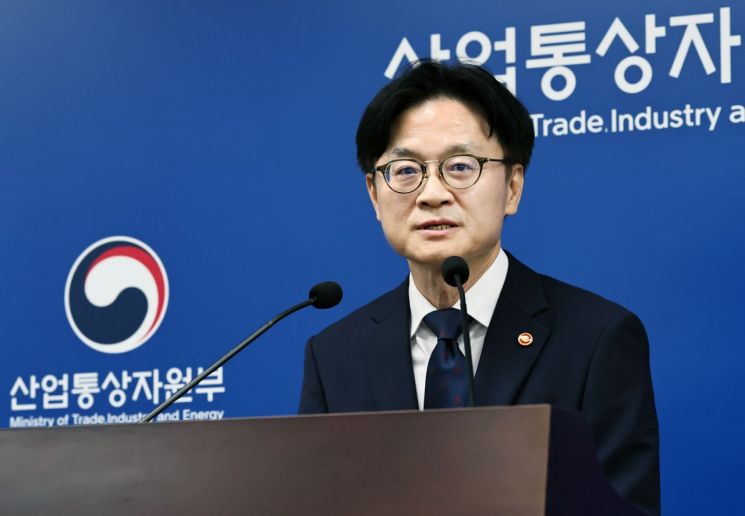
On August 4, Minister of Trade, Industry and Energy Kim Jungkwan stated, "We will strengthen cooperation with the United States in strategic industries such as shipbuilding, automobiles, semiconductors, and bio, and strive to utilize these as new opportunities to enter the U.S. market."
At the 'U.S. Trade Strategy Round Table' held at the Korea Chamber of Commerce and Industry in Seoul that morning, Minister Kim evaluated, "With the conclusion of the Korea-U.S. tariff negotiations, the short-term export uncertainty for our companies has been resolved, and we have secured competitive conditions that are not disadvantageous compared to major countries."
This meeting was organized to share the results of the Korea-U.S. tariff negotiations, which were concluded on July 30, with the industry and to discuss tailored follow-up support measures for companies. Attendees included: from economic organizations, Park Iljun, Vice Chairman of the Korea Chamber of Commerce and Industry; Lee Inho, Vice Chairman of the Korea International Trade Association; Jung Chul, President of the Korea Economic Research Institute; Lee Hojun, Executive Vice Chairman of the Korea Federation of SMEs; Choo Moongap, Head of Economic Policy at the Korea Federation of SMEs; from industry associations, Kang Namhun, President of the Korea Automobile Manufacturers Association; Kim Junghoe, Vice Chairman of the Korea Semiconductor Industry Association; Park Taesung, Vice Chairman of the Korea Battery Industry Association; Choi Kyujong, Vice Chairman of the Korea Shipbuilding Industry Cooperative; Lee Kyungho, Vice Chairman of the Korea Iron & Steel Association; Lee Seungkyu, Vice Chairman of the Korea Bio Association; and from research institutes, Kwon Namhun, President of the Korea Institute for Industrial Economics & Trade, and Lee Siwook, President of the Korea Institute for International Economic Policy.
Minister Kim said, "In response to the tariff measures, we will prepare practical follow-up measures such as resolving export difficulties, entering alternative markets, and providing tax and financial support." He added, "In the mid- to long-term, we will pursue strategies to overwhelmingly enhance the fundamental competitiveness of our industries."
Representatives from economic organizations and industry generally welcomed the establishment of a competitive environment equal to that of major countries. However, they specifically requested that the government provide non-discriminatory tax and financial support for vulnerable sectors and establish an effectively operated U.S. investment package system. They emphasized that the specificity of investment commitments, implementation plans, and participation of domestic companies must be clearly defined so that not only major companies such as Samsung and Hyundai Motor but also small and medium-sized enterprises can benefit.
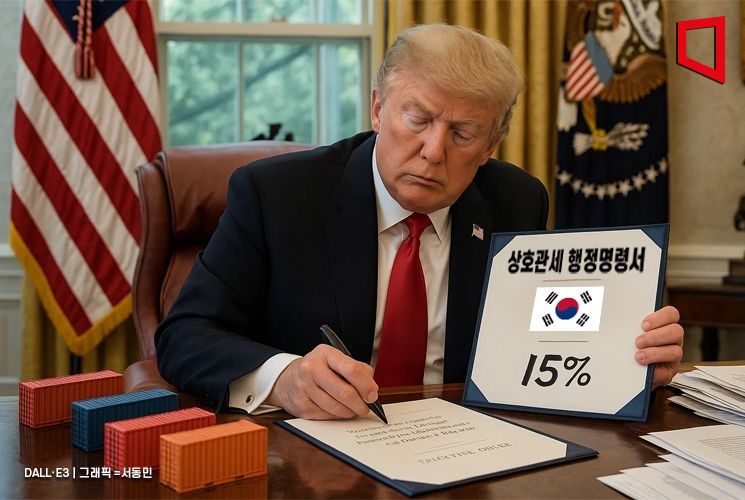
Foreign media evaluated that the negotiations "avoided the worst-case scenario," analyzing that a significant portion of Korea's export uncertainty has been alleviated, and raised the possibility that the Bank of Korea could revise its growth forecast upward. Under the Korea-U.S. agreement, the United States will apply a 15% tariff starting August 7, instead of the previously scheduled 25% tariff from August 1. This is the same level as that applied to Japan and the European Union (EU).
In particular, the 15% tariff on automobiles and auto parts is expected to be a major turning point for global competitiveness of automobile manufacturers such as Hyundai Motor and Kia. For Samsung Electronics, the removal of uncertainty in semiconductor exports raises expectations for increased orders to the United States.
The Ministry of Trade, Industry and Energy plans to accelerate the preparation of concrete follow-up measures starting with this meeting. The already announced $350 billion U.S. investment package is allocated as $150 billion for shipbuilding and about $200 billion for semiconductors, bio, batteries, and nuclear power, focusing on localization of U.S. industries and joint project promotion.
In particular, the $150 billion shipbuilding cooperation program, called 'Make American Shipbuilding Great Again (MASGA),' is drawing attention as a stepping stone for the reconstruction of the U.S. shipbuilding industry and the overseas expansion of Korean companies.
The government stated that it will prioritize the national interest and continue to stably manage U.S. trade issues in the future, actively reflect industry opinions, and steadily implement measures to resolve export obstacles, various support policies, and establish market support systems. An official from the Ministry of Trade, Industry and Energy said, "This negotiation is not the end but the beginning," adding, "We will strengthen policy support so that companies can take advantage of new opportunities."
© The Asia Business Daily(www.asiae.co.kr). All rights reserved.
![Clutching a Stolen Dior Bag, Saying "I Hate Being Poor but Real"... The Grotesque Con of a "Human Knockoff" [Slate]](https://cwcontent.asiae.co.kr/asiaresize/183/2026021902243444107_1771435474.jpg)

















