Combined Market Share of Korea's Top Three Battery Companies Drops by 5 Percentage Points
In the first half of this year, global demand for electric vehicle batteries increased by more than 37% compared to the previous year, and major Korean battery companies such as LG Energy Solution and SK On continued their overall growth trend.
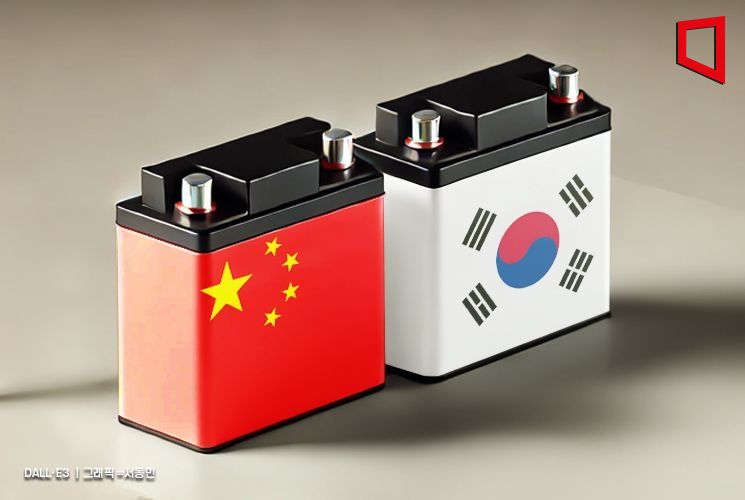
According to SNE Research on August 4, the total battery usage in electric vehicles (EV, PHEV, HEV) registered worldwide in the first half of this year was approximately 504.4 gigawatt-hours (GWh), a 37.3% increase compared to the same period last year. During the same period, the combined global market share of battery usage for electric vehicles by the three major Korean battery companies?LG Energy Solution, SK On, and Samsung SDI?was 16.4%, a decrease of 5.4 percentage points compared to the same period last year.
However, by company, LG Energy Solution grew by 4.4% (47.2GWh) year-on-year, maintaining its third-place position. SK On recorded a growth rate of 10.7% (19.6GWh), ranking fifth. In contrast, Samsung SDI saw a decrease of 8.0% (16.0GWh).
Looking at the battery usage of the three Korean companies by electric vehicle sales, Samsung SDI supplied mainly to BMW, Audi, and Rivian. BMW equipped its major electrified models?including the i4, i5, i7, and ix?with Samsung SDI batteries. However, due to the slowdown in sales of the best-selling i4, battery usage for BMW decreased by 5.0% compared to the same period last year.
Rivian's R1S and R1T have maintained stable sales in the United States, but the launch of the Standard Range trim equipped with lithium iron phosphate (LFP) batteries from China's Gotion negatively affected Samsung SDI's supply share. On the other hand, Audi saw an 8.8% increase in battery usage year-on-year, driven by the full-scale sales of the Q6 e-Tron based on the PPE platform.
SK On batteries were mainly installed in major finished vehicles from Hyundai Motor Group, Mercedes-Benz, Ford, and Volkswagen. For Hyundai Motor Group, battery installation volumes showed a gradual recovery following the facelifts of the Ioniq 5 and EV6, and the solid sales of Volkswagen's ID.4 and ID.7 also contributed positively to SK On's battery usage growth. In contrast, due to the decline in sales of the Ford F-150 Lightning, which is equipped with a large-capacity battery, battery usage for Ford decreased by 13.4% year-on-year.
LG Energy Solution batteries were mainly installed in major finished vehicles from Tesla, Chevrolet, Kia, and Volkswagen. For Tesla, battery usage decreased by 28.9% year-on-year due to sluggish sales of models equipped with LG Energy Solution batteries. In contrast, strong global sales of the Kia EV3 and the expansion of North American sales of Chevrolet's Equinox, Blazer, and Silverado EVs?equipped with the Ultium platform?were evaluated as key factors driving the increase in LG Energy Solution's battery usage.
Japanese company Panasonic, which mainly supplies batteries to Tesla, recorded battery usage of 18.8GWh this year, ranking sixth. Panasonic is accelerating the reorganization of its supply chain focused on North America in response to the recently strengthened U.S. regulations on Chinese batteries and raw materials. In particular, the company is focusing on reducing its dependence on Chinese materials, expanding local procurement, and securing new materials to enhance the stability of battery production. This strategy is expected to form an important foundation for recovering battery usage and maintaining market share in North America in the future.
China's CATL maintained its solid position as the global leader, growing by 37.9% (190.9GWh) year-on-year. Major original equipment manufacturers (OEMs) such as Zeekr and Xiaomi are adopting CATL batteries, and numerous global OEMs?including Tesla, BMW, Mercedes-Benz, and Volkswagen?are also using CATL batteries.
BYD recorded a growth rate of 58.4% (89.9GWh), ranking second in global battery usage. BYD, which manufactures both batteries and electric vehicles (BEV, PHEV) in-house, is expanding its sales across various vehicle segments based on strong price competitiveness, rapidly increasing its presence not only in the Chinese domestic market but also in overseas markets. In particular, BYD's expansion in the European market is remarkable, with battery usage in Europe reaching 6.0GWh in the first half of this year, a 313.4% increase compared to the same period last year.
An SNE Research official stated, "The United States' 'One Big Beautiful Bill (OBBBA)' significantly reduces clean energy tax benefits based on the existing Inflation Reduction Act (IRA) and, through the Foreign Entity of Concern (FEOC) regulations, restricts tax credit eligibility for batteries and raw materials linked to specific countries such as China. This is emerging as a major policy variable across the electric vehicle and battery industries." The official continued, "In response, Korean battery companies are pursuing long-term strategies such as expanding local production in North America, reducing dependence on Chinese raw materials, and strengthening supply chains outside of China." The official also added, "Europe is expanding policies to encourage local production and strategic stockpiling to secure supply chain stability, and Chinese battery companies are accelerating the establishment of local plants, rapidly reshaping the competitive landscape. Battery companies now face a transitional phase that requires not only technological competitiveness but also independence in supply bases and flexibility in regional strategies."
© The Asia Business Daily(www.asiae.co.kr). All rights reserved.
![Clutching a Stolen Dior Bag, Saying "I Hate Being Poor but Real"... The Grotesque Con of a "Human Knockoff" [Slate]](https://cwcontent.asiae.co.kr/asiaresize/183/2026021902243444107_1771435474.jpg)















