CBS Interview
"Positive" Outlook on Extending US-China Tariff Truce
Jamison Greer, the United States Trade Representative (USTR), stated on August 3 (local time) that the country-specific reciprocal tariffs set to be imposed starting August 7 are "pretty much set," and that the possibility of lowering tariffs for most countries is very low. However, he mentioned that the possibility of extending the "tariff truce" with China is "positive."
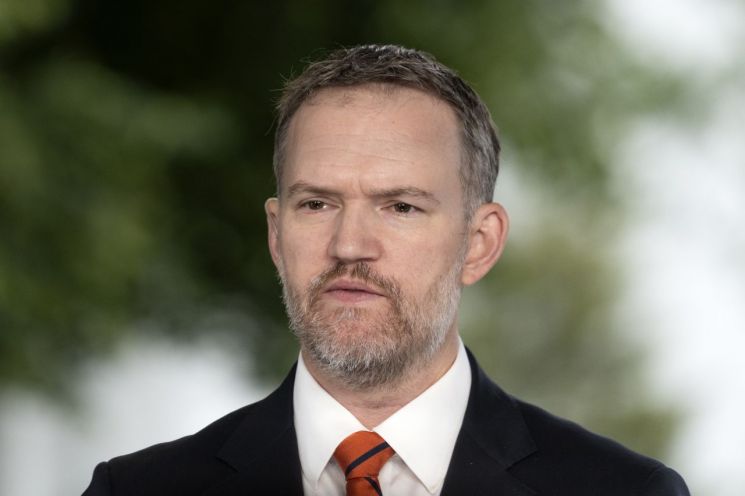
In an interview with CBS's "Face the Nation" on the same day, Greer was asked whether tariffs could be lowered through negotiations. He replied, "I don't see that happening in the next few days." He explained that most tariff rates have already been set based on agreements or trade balance levels, leaving very little room for change.
When asked if this means that certain countries cannot avoid tariffs, he said, "Most countries are subject to tariffs of 10% or 15% or more."
However, he also stated that President Trump makes final decisions after discussing with his advisors and considering the concessions offered by trading partners and the potential to reduce trade deficits. He added, "Some countries do offer additional concessions to improve their negotiating terms," leaving some room for negotiation.
Regarding the possibility of reducing tariffs or extending the suspension of tariffs with China, Greer said, "We are working toward that goal."
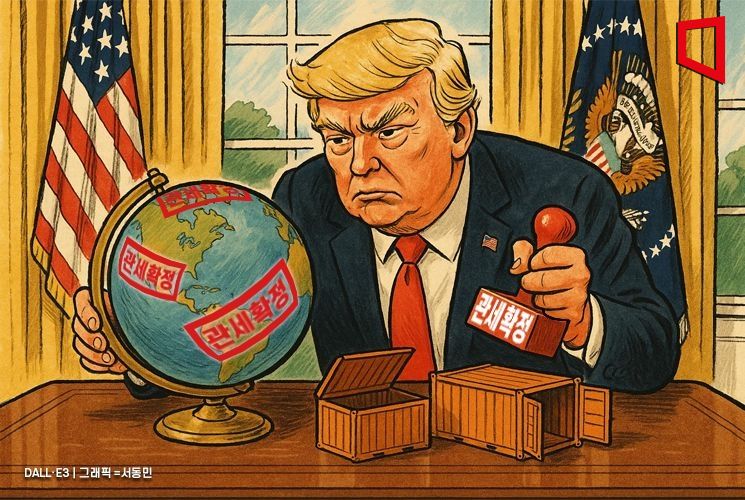
Previously, the United States and China reached a tentative agreement to extend the suspension of tariffs during the third round of high-level trade talks held in Stockholm, Sweden, on July 28-29. In the first round of talks held in Geneva, Switzerland, in May, the two countries agreed to mutually lower tariffs by 115 percentage points for 90 days. Currently, the United States is imposing a 30% tariff on China, while China is imposing a 10% tariff on the United States. This measure is set to expire on August 11.
Regarding this, Greer said, "Technical issues are being resolved, and discussions with President Trump are ongoing," adding, "Things are moving in a positive direction." He continued, "No one would want tariffs to be raised to over 80%," suggesting the possibility of extending the tariff truce between the two countries.
Additionally, Greer cited Canada's retaliatory measures as the reason for the 35% tariff imposed on Canada. He explained, "The President is trying to improve trade terms with Canada," and added, "If there is room for negotiation, tariffs can be readjusted, but if not, the current level will be maintained."
Regarding the imposition of an ultra-high tariff of 50% on Brazil, he said, "This was a measure based on the International Emergency Economic Powers Act (IEEPA)," and added, "It was used as a normal means to respond to geopolitical issues."
© The Asia Business Daily(www.asiae.co.kr). All rights reserved.
![Clutching a Stolen Dior Bag, Saying "I Hate Being Poor but Real"... The Grotesque Con of a "Human Knockoff" [Slate]](https://cwcontent.asiae.co.kr/asiaresize/183/2026021902243444107_1771435474.jpg)
















