Official Vacation Begins at Jeodo, Geoje on August 4... Major Briefings to Continue
South Korea-U.S. Summit Scheduled for August: Security Issues Pile Up, Including Defense Cost-Sharing, Defense Budget, and China Containment
Follow-Up Measures Needed After Dramatic Mutual Tariff Agreement
Liberation Day Special Pardon Outline Expected... Calls for "Cho Kuk Pardon" Continue Within the Ruling Bloc
President Lee Jaemyung, who began his official summer vacation on August 4 at Jeodo in Geoje, South Gyeongsang Province, is expected to further concretize his plans regarding key pending issues such as the upcoming South Korea-U.S. summit and the Liberation Day special pardon during his break. Since the summit was agreed to be held within two weeks of the mutual tariff negotiation settlement on July 31, there is not much time left, making prompt decision-making necessary. President Lee's decision on the 'pardon for former Cho Kuk Innovation Party leader Cho Kuk,' which is being discussed mainly within the ruling bloc, is also a critical issue that could sway the political landscape, requiring a cautious approach.
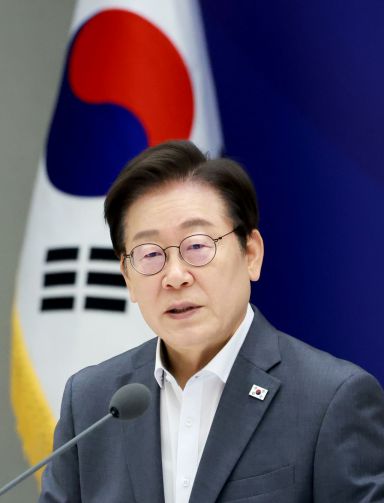
The South Korea-U.S. summit is likely to cover a wide range of topics, including follow-up measures to the mutual tariff agreement, an increase in the defense cost-sharing for U.S. Forces Korea, raising South Korea's defense budget to 5% of GDP, the Indo-Pacific strategy, and diplomatic and security issues concerning China. The Trump administration agreed to lower the 25% mutual tariff it intended to impose on Korean products to 15%. Tariffs on automobiles, a major Korean export, were also reduced to 15%, and there will be no further opening of sensitive domestic markets such as rice and beef. In addition, both sides agreed to establish a $350 billion (about 487 trillion won) investment and cooperation fund to expand Korean investment in strategic industries in the U.S., such as shipbuilding, semiconductors, and secondary batteries. However, detailed implementation plans remain as issues for further negotiation between the two sides.
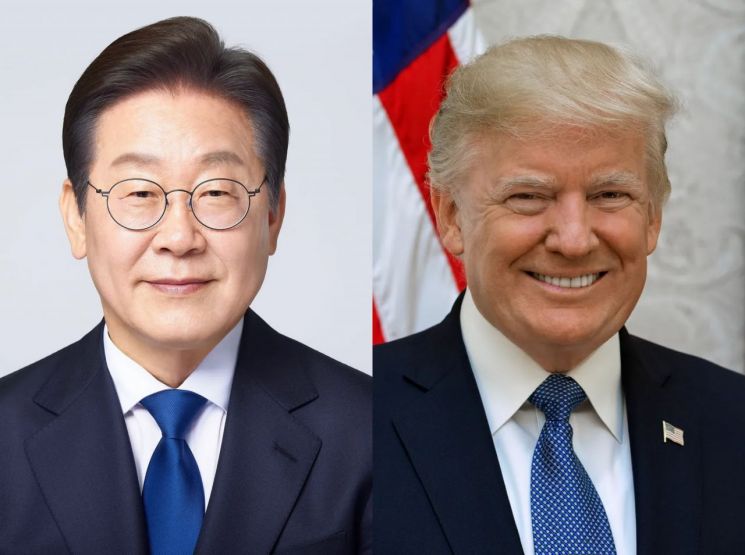
Unlike the South Korean government's intention to pursue a 'package deal' linking security and trade in the mutual tariff negotiations, the U.S. did not respond in kind, raising the possibility that Washington may present additional demands before the summit. In particular, the Special Measures Agreement (SMA) on defense cost-sharing is likely to be discussed as a summit agenda item. President Donald Trump has consistently argued that South Korea's current level of defense cost-sharing is insufficient and has pressured for an increase. President Trump has even made statements that do not align with the facts regarding the size of U.S. Forces Korea and the amount of the contribution, demanding that South Korea pay nine times more than the current amount. Although South Korea has increased its defense cost-sharing annually under the current SMA, additional demands regarding the scale or duration of future increases may arise at this summit. A ruling party official explained, "Although the tariff negotiations have been concluded, they are not completely over," adding, "The focus of future negotiations will be on security."
Demands for Increased Defense Spending, Modernization of the Alliance, and Containment of China: Piling Up South Korea-U.S. Security Issues
The demand for increased defense spending is also a sensitive issue. The U.S. expects South Korea to significantly increase its defense budget as part of alliance modernization and cost-sharing for security. To reduce its own fiscal deficit, the U.S. is indirectly demanding that key allies such as South Korea spend around 5% of their GDP on defense instead of increasing its own defense budget. Considering South Korea's current defense spending ratio (2.7%), this represents a significant increase and, combined with pressure to raise defense cost-sharing, poses a substantial burden. If President Trump uses the operation of U.S. Forces Korea as leverage to pressure South Korea to increase its defense budget, the South Korean government may also have to bear the burden of regional security and alliance cooperation.
The Indo-Pacific strategy and measures to contain China are also major agenda items. The U.S. is pushing for 'alliance modernization,' expanding the South Korea-U.S. alliance framework from the defense of the Korean Peninsula to broader security cooperation across the Indo-Pacific region. Specifically, the U.S. may propose expanding the role of U.S. Forces Korea beyond traditional deterrence against North Korea to include preparation for regional conflicts, such as those in the Taiwan Strait, and may suggest some redeployment of forces. This is essentially aimed at containing China, and from South Korea's perspective, changes in the operational scope of U.S. Forces Korea could have implications for relations with China. The summit is expected to discuss ways to expand South Korea's role in the Indo-Pacific region while seeking to avoid unnecessary escalation of tensions with China. The challenge for this summit may be for South Korea to appropriately respond as an ally to U.S. demands for measures to contain China while finding a strategic balance to maintain stable relations with China.
Experts predict that this month's South Korea-U.S. summit will serve as a venue covering the full spectrum of economic and security agendas. They analyze that the key will be to seek solutions that ensure the stable development of South Korea-U.S. relations through easing trade friction and coordinating alliance issues, while also protecting South Korea's national interests and strategic autonomy amid rapidly changing international circumstances. Foreign Minister Cho Hyun, who returned to Korea on August 3 after meeting with U.S. Secretary of State Marco Rubio and others, responded to questions about changes to the role of U.S. Forces Korea by saying, "We discussed the South Korea-U.S. combined defense posture, the importance of U.S. Forces Korea, and international developments that will pose challenges for us in the future," and added, "Further discussions will take place at the working level."
Will Politicians Be Included in the Liberation Day Special Pardon, a Unique Presidential Authority?
Among upcoming domestic issues, the biggest focus is whether politicians will be included in the Liberation Day special pardon. Voices within the ruling bloc continue to call for the pardon of former Cho Kuk Innovation Party leader Cho Kuk. Some predict that, since the South Korea-U.S. tariff negotiations were dramatically concluded last month, concrete discussions will begin after President Lee returns. As the authority to pardon and restore rights is exclusively vested in the president, it is expected that the president will outline the plan while receiving reports from presidential aides. The final list of those to be pardoned and have their rights restored will be determined by a Cabinet resolution after a review by the Pardon Review Committee, chaired by the Minister of Justice. A senior official at the presidential office said, "There will be further discussions going forward."
President Lee is also expected to refine his message for the 80th anniversary of Liberation Day and the 'National Appointment Ceremony' to be held on August 15. With Jeong Cheongrae newly elected as the leader of the Democratic Party, President Lee also faces the task of establishing relations with the ruling party under its new leadership. On August 2, President Lee spoke with the new party leader Jeong by phone, emphasizing the 'one team' spirit and expressing his hope to work together to deliver tangible results to the public. According to the presidential office, Jeong responded by agreeing with the president's vision and promising to ensure effective division of roles between the party and the government and to swiftly pass reform legislation for the public's benefit.
© The Asia Business Daily(www.asiae.co.kr). All rights reserved.


















