South Africa Launches Project to Inject Radioactive Material into Rhinoceros Horns
Aims to Deter Poaching and Facilitate Detection of Smuggled Horns
South Africa has launched a project to inject radioactive material into rhinoceros horns in order to protect them from poaching.
On August 1 (local time), the BBC reported that a research team from the University of the Witwatersrand in South Africa is carrying out this project. The method involves injecting low-level radioactive material into the horns, which is harmless to the rhinoceroses but allows smuggled horns transported worldwide to be detected.
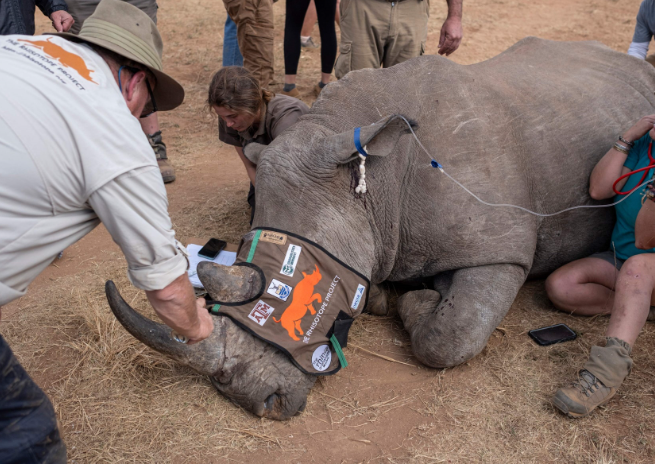
Injecting radioactive material into the horns reduces their value as a commodity and increases the likelihood of detection at border crossings.
The research team developed this method through six years of research and experimentation. In a preliminary study involving 20 rhinoceroses, they confirmed that the radioactive material is completely safe for the animals.
Additionally, through cooperation with the International Atomic Energy Agency (IAEA), the team stated that the injected radioactive material enables the detection of horns even inside a shipping container measuring six meters in length.
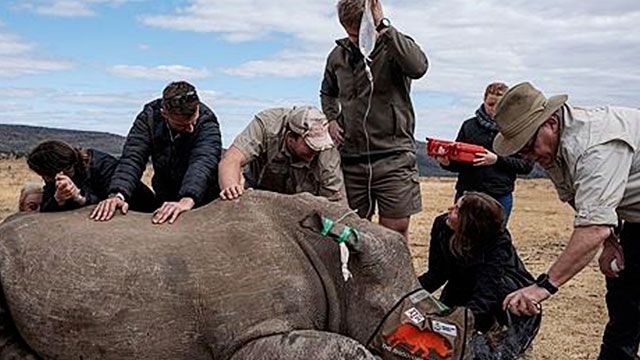
In South Africa, where nearly 80% of the African continent's rhinoceros population resides, poaching is rampant due to demand from Asian regions where rhinoceros horn is used in traditional medicine. Although international trade in rhinoceros horns is banned, they are trafficked in black markets in countries such as Vietnam and China, where they are sold at prices higher than gold or cocaine for use as medicine or ornaments.
According to the animal protection organization Save the Rhino, more than 400 rhinoceroses have been poached each year in South Africa since 2021.
South Africa has the largest rhinoceros population in the world, which includes both white rhinoceroses and black rhinoceroses, the latter of which is classified as "critically endangered" by the International Union for Conservation of Nature (IUCN).
© The Asia Business Daily(www.asiae.co.kr). All rights reserved.
![Clutching a Stolen Dior Bag, Saying "I Hate Being Poor but Real"... The Grotesque Con of a "Human Knockoff" [Slate]](https://cwcontent.asiae.co.kr/asiaresize/183/2026021902243444107_1771435474.jpg)
















