The Nikkei reported that on July 31, the yen/dollar exchange rate surpassed the 150-yen mark for the first time in about four months since April 2, due to the weakening of the yen.
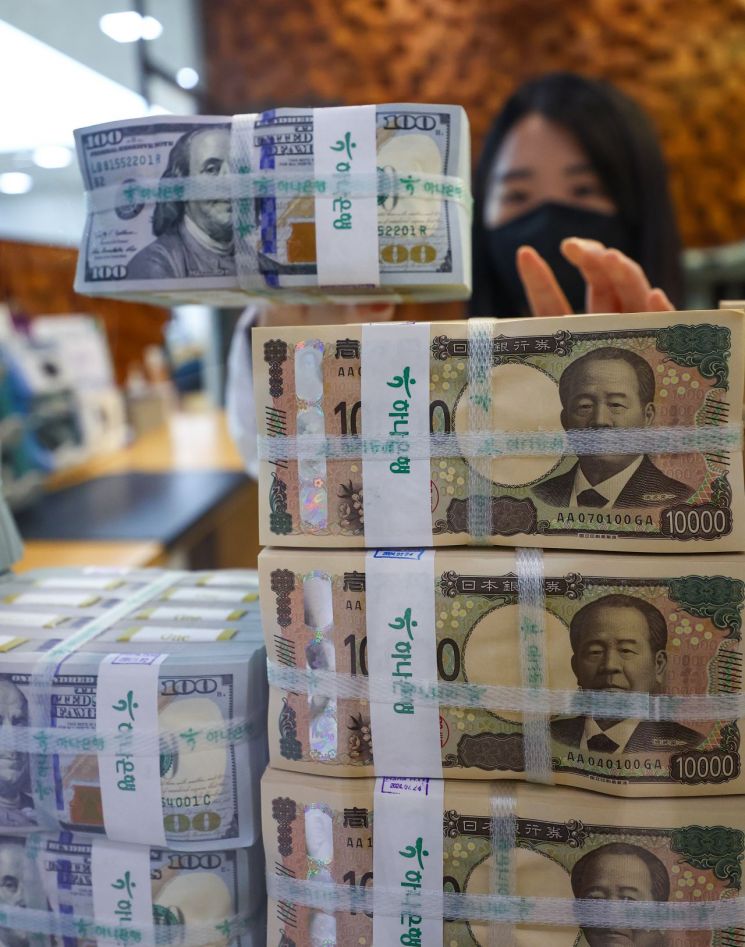 On the morning of the 18th, an employee is organizing Japanese yen and US dollars at the Hana Bank Counterfeit Response Center in Jung-gu, Seoul. Photo by Yonhap News
The Nikkei explained that the monetary policies of the United States and Japan influenced the depreciation of the yen. On this day, the Bank of Japan, Japan's central bank, maintained its short-term policy interest rate, which is the benchmark rate, at "around 0.5%" during its Monetary Policy Meeting. Previously, on July 30 (local time), the US central bank, the Federal Reserve (Fed), also kept its benchmark interest rate unchanged at 4.25?4.50% and did not indicate any intention to cut rates at the September meeting.
As a result, the Nikkei pointed out that expectations are spreading that the interest rate gap between the United States and Japan will not narrow, which has strengthened the movement to sell yen and buy dollars. The newspaper also added that the view that the ruling party's defeat in the House of Councillors election on July 20 weakened the foundation of the Shigeru Ishiba cabinet was another reason for the selling pressure on the yen. In April, the yen/dollar exchange rate had once exceeded 150 yen due to the impact of the reciprocal tariff policy announced by US President Donald Trump, but then fell to the 139-yen range as the dollar weakened.
© The Asia Business Daily(www.asiae.co.kr). All rights reserved.
![Clutching a Stolen Dior Bag, Saying "I Hate Being Poor but Real"... The Grotesque Con of a "Human Knockoff" [Slate]](https://cwcontent.asiae.co.kr/asiaresize/183/2026021902243444107_1771435474.jpg)















