From Zero Tariffs to 15%... Price Competitiveness Inevitably Weakened
Mid- to Long-Term Challenges: Export Diversification and Structural Transformation Needed
As the United States has decided to lower tariffs on Korean-made automobiles and related parts from 25% to 15%, the domestic automotive industry has expressed relief at having avoided the worst-case scenario. However, there are concerns that small and medium-sized auto parts companies, which have benefited from tariff exemptions under the Korea-US Free Trade Agreement (FTA), still face significant burdens due to the remaining tariff barriers.
In particular, there are worries that the impact of the tariff increase may be more direct and long-lasting for auto parts companies than for finished vehicle manufacturers, given that about 88% of the roughly 20,000 domestic auto parts suppliers are small businesses with annual sales of less than 10 billion won.
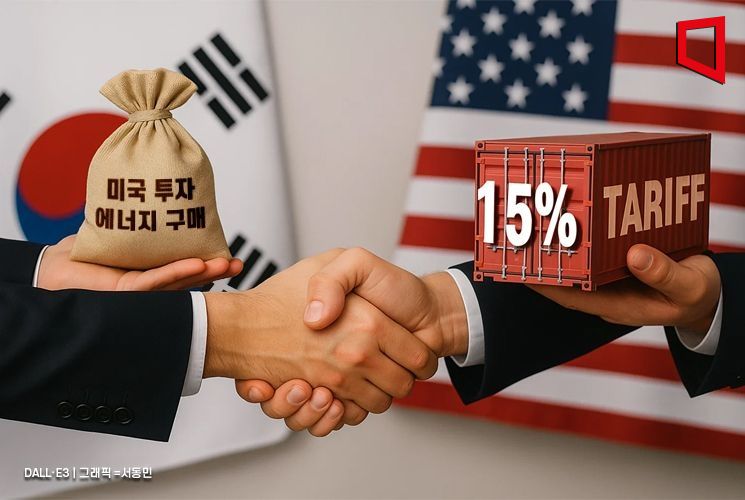
According to the government and related industry sources on August 1, domestic small and medium-sized auto parts companies have expressed both relief at having avoided the "worst-case tariff bomb" of 25% and anxiety, as a 15% tariff is still a significant burden that cannot be ignored.
While Japan and the European Union have so far faced tariffs of around 2.5%, Korea has enjoyed the advantage of zero tariffs through the FTA. Now, with all parties facing a common 15% tariff hurdle, there is concern that competitiveness will inevitably decline to some extent. Although China has not yet concluded tariff negotiations with the United States, the industry expects that the impact of tariffs on China will be relatively limited, as the unit price of Chinese supplies is already much lower.
A representative from an auto parts company based in North Chungcheong Province said, "We were planning to enter the North American market, but have temporarily put those plans on hold due to the tariff burden. Although the tariff has been lowered, our price competitiveness is still weak, making it difficult to find immediate countermeasures."
According to the Korea Institute for Industrial Economics and Trade, the share of domestic auto parts exports to the United States has steadily increased, rising from 30.3% in 2021 to 36.5% in 2024. With dependence on the North American market growing, the tariff hike could directly lead to declines in sales and profitability. Kim Kyungyu, a senior research fellow at the institute, analyzed, "For domestic parts suppliers, not only will there be direct impacts from high tariffs, but also broad and long-term damages such as pressure to lower supply prices."
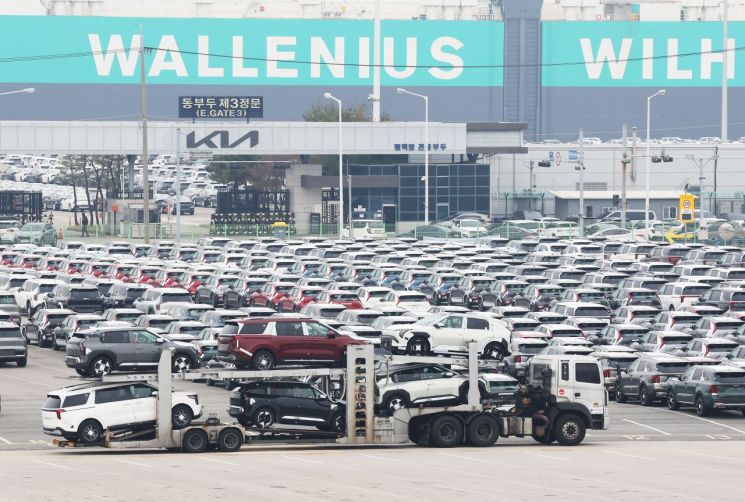
The Ministry of SMEs and Startups has allocated 4.6 trillion won in policy funds to support export-oriented small and medium-sized enterprises affected by US tariffs. Of this, 4.2 trillion won is earmarked for "crisis response special guarantees" to address trade risks such as tariffs and exchange rates, while 400 billion won is set aside as emergency management stabilization funds to help secure liquidity.
The tariff itself is a problem, but developing new strategies to respond to rapidly changing market conditions is also a significant challenge. Key tasks now include diversifying export destinations, shifting to future vehicle parts, and building cooperative systems with finished vehicle manufacturers.
Lee Taekseong, chairman of the Korea Automobile Industry Cooperative Association, said, "This negotiation is meaningful in that it has removed uncertainty. However, since the tariff burden still poses a major challenge for parts suppliers, continued government attention and support are desperately needed."
The Ministry of SMEs and Startups also agrees that, in addition to short-term support for tariff damages, it is urgent to provide mid- to long-term assistance for diversifying export markets. A ministry official said, "This is an important time as the system is shifting from the FTA to a protectionist framework. We will do our utmost to ensure that small and medium-sized enterprises can turn this into an opportunity."
© The Asia Business Daily(www.asiae.co.kr). All rights reserved.
![Clutching a Stolen Dior Bag, Saying "I Hate Being Poor but Real"... The Grotesque Con of a "Human Knockoff" [Slate]](https://cwcontent.asiae.co.kr/asiaresize/183/2026021902243444107_1771435474.jpg)
















