On July 31, the city of Namyangju in Gyeonggi Province (Mayor: Joo Kwangdeok) announced that it has designated a total of 22 internal road sections and assigned road names at seven subway stations on the Gyeongchun Line and Gyeongui-Jungang Line within the city.
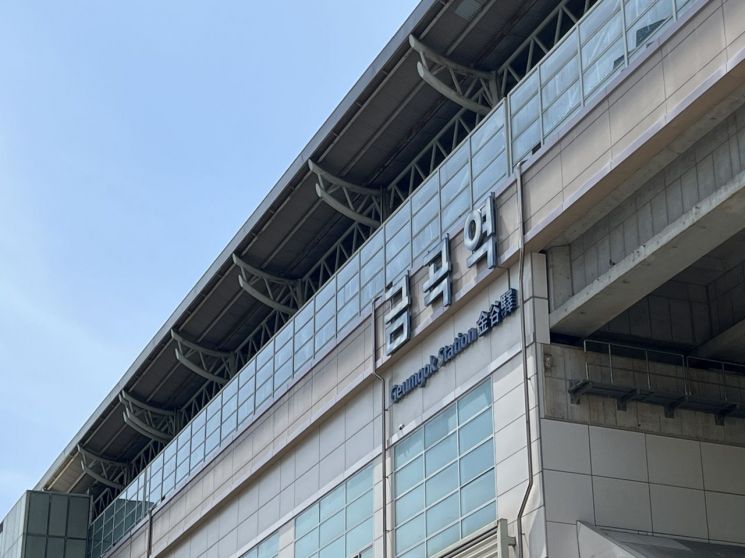
This measure was implemented to introduce a three-dimensional address information system in frequently used spaces such as internal corridors and platforms of subway stations. The aim is to enhance emergency response capabilities for rescue and medical activities, as well as to improve everyday convenience for citizens.
Among the total of 18 stations in the city, the road names were first assigned to the main internal routes of seven stations with high usage demand: Geumgok, Byeollae, Donong, Yangjeong, Dosim, Paldang, and Ungilsan.
The road names were structured to clearly indicate the actual routes, such as Central Corridor, East and South Corridors, and Upbound and Downbound Platforms.
At Geumgok Station, road names such as "Geumgok Station Central Corridor," "Geumgok Station Upbound Platform," and "Geumgok Station Downbound Platform" were assigned. For Donong Station, reflecting the structure where the main corridor splits into two branches, the names "Donong Station East Corridor" and "Donong Station South Corridor" were used instead of "Donong Station Central Corridor."
The assignment of these road names was officially announced after completing legal procedures, including gathering residents' opinions and deliberation by the Address Information Committee.
With this measure, the city can now provide citizens with more accurate location information. It is also expected to serve as address information infrastructure for future technologies, such as indoor navigation and autonomous robots.
Kim Mimin, head of the Real Estate Management Division, stated, "By assigning accurate addresses to internal spaces of stations, we expect not only greater convenience for citizens but also significant improvements in the speed of disaster response. The city will continue to systematically upgrade address information infrastructure closely related to citizens' daily lives."
© The Asia Business Daily(www.asiae.co.kr). All rights reserved.
![Clutching a Stolen Dior Bag, Saying "I Hate Being Poor but Real"... The Grotesque Con of a "Human Knockoff" [Slate]](https://cwcontent.asiae.co.kr/asiaresize/183/2026021902243444107_1771435474.jpg)















