Snake Bites Mostly Affect Hands and Feet,
While Bee Stings Target Various Body Parts Including the Face
Wear Gloves, Long Pants, and Boots;
Evacuate to a Safe Place If You Encounter Bees or Snakes
Accidents involving bee stings or snake bites during outdoor activities are found to be concentrated in the summer months of July to September, highlighting the need for caution. Bee sting incidents mainly occurred among people in their 40s and older during daily activities, while snake bites were most common among those in their 50s and older while working in fields.
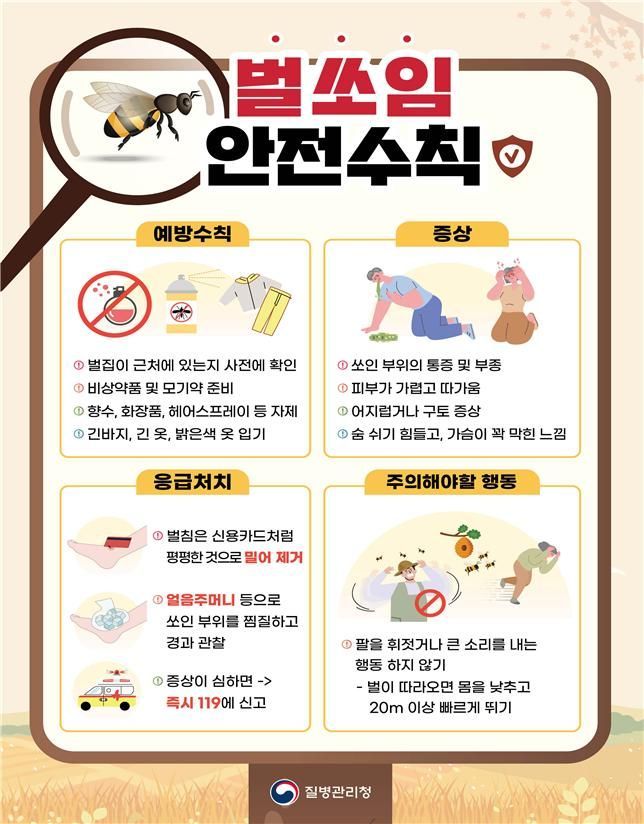
According to an analysis by the Korea Disease Control and Prevention Agency (KDCA) of the Emergency Department-based Injury In-depth Surveillance data released on July 31, there were a total of 3,664 emergency room visits in Korea due to bee stings over the past five years (2020?2024). Among these, 88 people were hospitalized and 13 died.
Bee sting accidents occurred most frequently between July and September, accounting for 70.5% of cases. In particular, they were most common during the daytime hours of 12:00 to 18:00 (43.1%), and by day of the week, on weekends (47.0%). Male patients accounted for 64.4% of bee sting cases, and by age group, those in their 60s (25.8%) and 50s (22.1%) showed the highest rates.
Bee sting incidents mainly happened during daily activities (37.2%), leisure activities (24.3%), and work (20.0%). For people in their 30s and younger, the proportion of cases occurring during daily activities such as resting or lying down, as well as during leisure activities like hiking, was high. From the 40s and older, after daily activities, many bee stings occurred during activities such as grass cutting or weeding.
Regarding the location of accidents, outdoor areas, rivers, and the sea accounted for 37.5%, followed by roads (18.8%), homes (16.1%), and farms or primary industry sites (9.6%). In all age groups except those in their 20s, outdoor areas, rivers, and the sea were the most common locations (for those in their 20s, roads accounted for 36.1% and outdoor areas, rivers, and the sea 29.3%). For children aged 0?9, the most common locations were at home (19.8%) and play or cultural spaces (16.9%), while for teenagers, roads (26.9%) and homes (14.1%) were most frequent. For people in their 30s to 50s, after outdoor areas, rivers, and the sea, roads were the next most common locations for bee stings. Notably, from the 50s and older, the proportion of cases at home and on farms or primary industry sites increased.
The body parts most commonly stung by bees were the hands (25.5%), arms (17.6%), face (13.5%), and legs (12.2%).
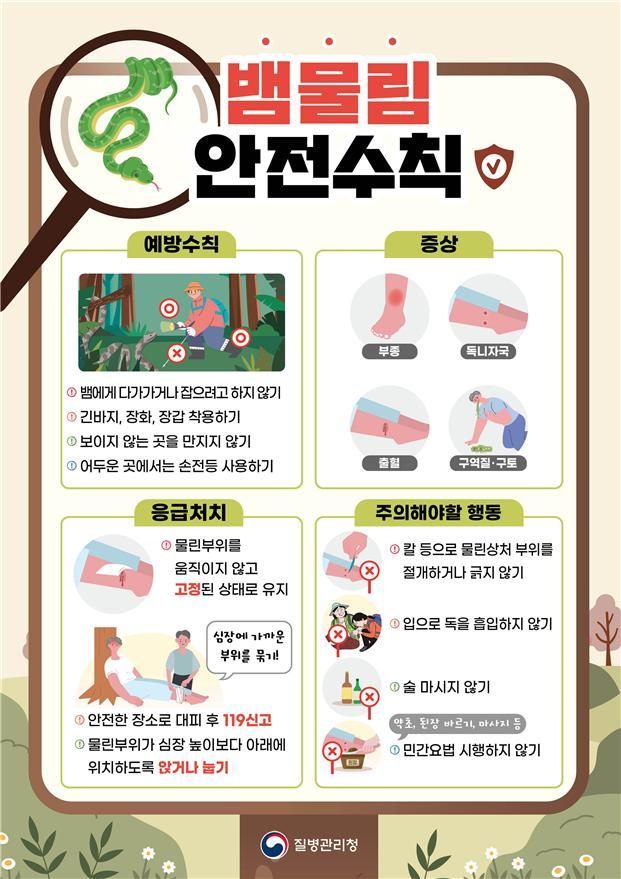
There were 726 cases of snake bites reported over the past five years. The highest proportion occurred in September (24.0%), followed by August (16.8%) and July (16.3%). By day of the week, most incidents happened on weekends (40.8%), and by time of day, 41.0% occurred between 12:00 and 18:00, and 30.3% between 06:00 and 12:00.
By age group, patients in their 60s (28.9%), 70s and older (24.0%), and 50s (19.6%) accounted for 72.5% of all cases. Men accounted for 56.6%, higher than women (43.4%). Notably, 59.6% of snake bite patients required hospitalization, indicating the seriousness of these incidents and the need for caution.
Snake bite accidents mainly occurred during tasks such as weeding or harvesting crops (27.3%), followed by daily activities (24.2%), and unpaid work such as organizing storage or sorting recyclables (22.9%). For those aged 0?40, the frequency of incidents was higher during leisure and daily activities, but for those in their 60s and older, most incidents occurred during field work or unpaid work.
In terms of location, outdoor areas, rivers, and the sea accounted for 43.1% of cases, while farms and primary industry sites such as fields accounted for 27.7%. At home, most bites occurred in gardens or yards (56.4%) and other outdoor spaces such as recycling areas or storage sheds (18.2%).
The most common body part bitten by snakes was the hand (60.6%), followed by the foot (20.9%) and the leg (9.3%). The KDCA emphasized the importance of wearing protective gear such as gloves, long pants, and boots when working in fields.
The KDCA stated, "Since bee sting and snake bite accidents frequently occur until October, extra caution is needed during outdoor activities," and advised, "If you discover a beehive or a snake, do not attempt to catch it. Instead, evacuate to a safe location."
© The Asia Business Daily(www.asiae.co.kr). All rights reserved.


















