Call for Policy Integration Amid Broadcasting Stagnation and OTT Dominance
National Assembly Discussion on "Direction for Media Government Organization Reform under the New Administration" Highlights Dispersed Policy Functions
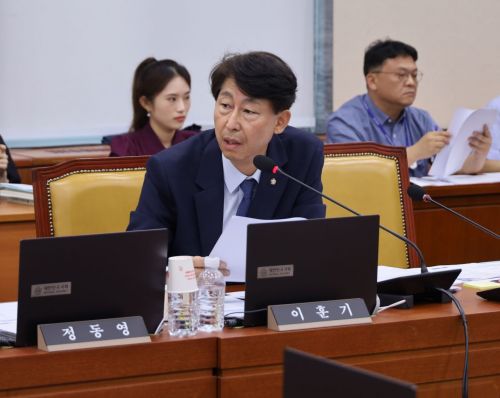
The need to integrate and manage policies related to broadcasting and video content has been raised. There are concerns that, under the current structure where functions are dispersed among multiple ministries such as the Ministry of Science and ICT, the Korea Communications Commission, and the Ministry of Culture, Sports and Tourism, it is difficult to achieve both public interest and industrial competitiveness at the same time.
According to the office of Lee Hoonki, a member of the Democratic Party of Korea, on July 30, Lee emphasized at the discussion session titled "Direction for Media Government Organization Reform under the New Administration," which was co-hosted the previous day with the Korean Society for Journalism and Communication Studies, the Korean Society for Broadcasting, and the Korean Society for Communication and Information Studies, that "the two pillars of strengthening the public function of broadcasting and enhancing the global market competitiveness of content must move forward together." He stressed, "To achieve this, the government organization related to media must be restructured."
Lee referred to the passage of the so-called "Three Broadcasting Laws" (the amendments to the Broadcasting Act, the Foundation for Broadcast Culture Act, and the Korea Educational Broadcasting System Act) in the National Assembly as a prerequisite for enhancing the public interest of broadcasting. He argued that, in order to strengthen the capabilities of the content industry, organizational restructuring that integrates policy functions must be carried out in parallel.
Yoo Hongsik, a professor at Chung-Ang University's Department of Communication, who delivered the keynote speech that day, also strongly criticized the current media policy system. Professor Yoo pointed out, "The structural limitations of a media market focused on domestic demand, combined with the spread of global OTT (online video services), have put the domestic content industry on the brink of collapse." He emphasized, "Now is the last golden time."
He compared and analyzed the government reorganization proposal jointly suggested by the three academic societies, including the Korean Society for Broadcasting, and the plan of the Democratic Party's Special Committee on Broadcasting and Content. He explained, "A new regulatory system that clearly distinguishes between public functions and market functions is needed."
He then described a "dual integrated" system, which separates the industrial and public sectors, as the direction for media governance reform to achieve successful media policy, promote the content industry, and protect public service.
In addition, Professor Yoo suggested that, in the market sector, autonomy and minimal regulation should be prioritized, while at the same time, user protection mechanisms must be carefully designed.
© The Asia Business Daily(www.asiae.co.kr). All rights reserved.

















