Online platforms (including e-commerce malls) will now be required to actively participate in eradicating the distribution of counterfeit goods. This obligation applies not only to domestic online platforms but also to those based overseas.
The Korean Intellectual Property Office (KIPO) announced on July 30, during the 2nd Cabinet Meeting on State Affairs chaired by the Prime Minister, a "Comprehensive Countermeasure for Preventing the Distribution of Counterfeit Goods" that includes these measures.
The comprehensive countermeasure aims to block the distribution of counterfeit goods through online markets, social networking services (SNS), and live broadcasts.
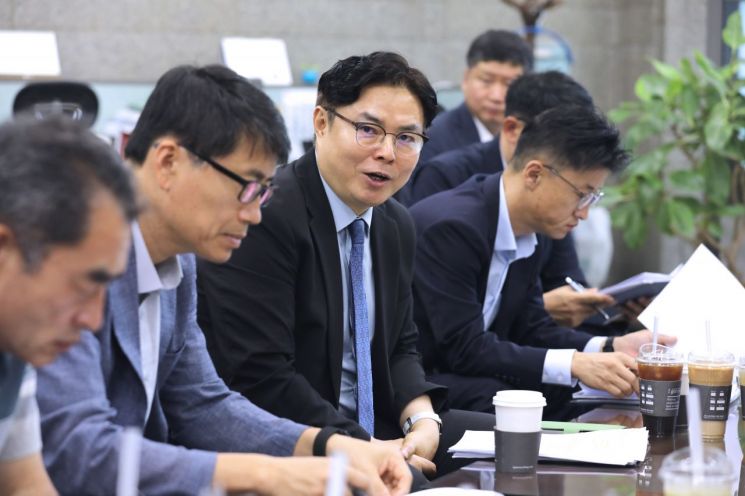 Juseongho, Deputy Commissioner of the Korean Intellectual Property Office, is explaining the 'Comprehensive Measures to Prevent the Distribution of Counterfeit Goods' at the Government Complex Daejeon on the 30th. Photo by Korean Intellectual Property Office
To ensure the effectiveness of the comprehensive countermeasure, KIPO will amend the Trademark Act to assign responsibility to online platforms for eradicating the distribution of counterfeit goods.
First, if a trademark holder discovers counterfeit goods online and reports them to the platform company, the platform must suspend the sale of the reported goods. If the online platform company fails to take actions such as suspending the sale of the reported goods, it will face penalties such as fines and public disclosure of the violation through the media.
The responsibility sharing for online platforms does not apply only to domestic platform companies. To this end, KIPO will require foreign platform companies to designate a domestic representative. The mandatory domestic representative designation system is being introduced to ensure that foreign-based online platform companies are equally responsible for eradicating the distribution of counterfeit goods.
KIPO also explained that it will introduce procedures for written surveys and public disclosure of the results to systematically monitor the implementation of measures by both domestic and foreign platforms.
The comprehensive countermeasure also includes expanding the number of brands monitored and blocked for counterfeit goods distribution using artificial intelligence (AI) from 160 to 500 by 2027. By expanding the scope of monitoring and related activities, the strategy is to make the comprehensive countermeasure proactive rather than reactive.
In particular, KIPO emphasized that it will work to eradicate the distribution of counterfeit goods through multi-agency cooperation, such as blocking overseas direct purchase counterfeit goods detected by AI at the customs clearance stage with the Korea Customs Service, and linking with the Korea Communications Standards Commission to block access to sales sites and delete posts by overseas operators.
Special attention will also be paid to the sophisticated distribution structures of counterfeit goods via SNS and live broadcasts. Habitual sellers of counterfeit goods identified in this process will have their accounts suspended, and their seller information will be shared with relevant agencies.
Separately, for large-scale counterfeit goods street vendors that damage the national image, such as the yellow tents in Dongdaemun, a dedicated investigation team will be formed for intensive management, and the level of punishment will be raised to enable strong responses such as the cancellation of street vendor permits by local governments.
The comprehensive countermeasure also includes measures to eradicate the distribution of counterfeit "K-brand" goods overseas. KIPO, in cooperation with the Ministry of Agriculture, Food and Rural Affairs and the Ministry of Oceans and Fisheries, plans to share methods for distinguishing genuine and counterfeit products in product categories where domestic brand counterfeits are frequently distributed overseas with local agencies such as overseas IP centers and aT centers, and to increase the provision of counterfeit goods information for agency-specific crackdowns.
Kim Wanki, Commissioner of KIPO, stated, "To effectively respond to the increasingly sophisticated manufacturing and distribution of counterfeit goods, our response methods must also become more scientific and meticulous," and added, "KIPO will utilize advanced technologies such as AI to eradicate the distribution of counterfeit goods, while also assigning responsibility to market players such as online platforms to enable a more proactive response."
© The Asia Business Daily(www.asiae.co.kr). All rights reserved.

















