Koo Yooncheol Meets U.S. Commerce Secretary in First Washington Engagement
Arrives at Airport at 11:30 a.m., Heads Directly to Negotiation Site
Final Tariff Negotiations with Secretary Besant Scheduled for the 31st
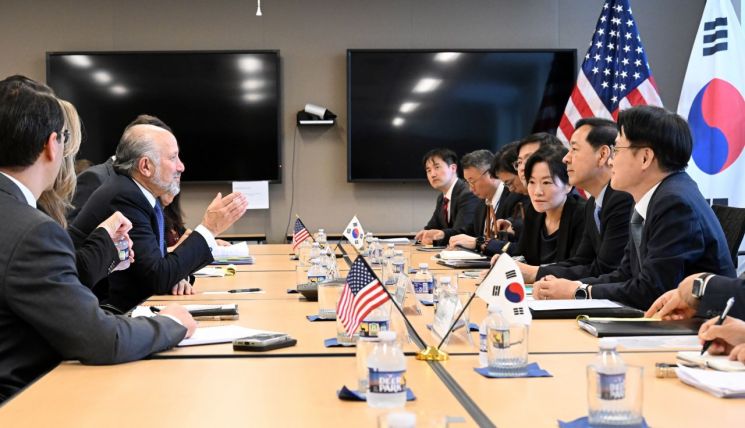 Deputy Prime Minister and Minister of Economy and Finance Koo Yooncheol, visiting Washington DC, USA for Korea-US trade consultations, is holding trade talks with US Secretary of Commerce Gina Raimondo at the US Department of Commerce on the 29th (local time), along with Minister of Trade, Industry and Energy Kim Jungkwan and Chief Negotiator for Trade Yeo Hangoo. Ministry of Economy and Finance
On the 31st, ahead of the final round of tariff negotiations between South Korea and the United States, the two countries' top officials in finance and trade held a series of informal relay consultations in Washington, D.C. With significant differences remaining on sensitive issues such as the amount of investment in the U.S. and further opening of the agricultural and livestock markets, South Korea put forward the so-called 'Make American Shipbuilding Great Again (MASGA)' project, a shipbuilding cooperation initiative, as a key bargaining chip. In addition to aiming to lower mutual tariff rates to 15%?as previously agreed upon with the European Union (EU) and Japan?the two sides are making a last-ditch effort to reach a comprehensive one-shot deal that would also reduce tariffs on items such as automobiles.
According to the Ministry of Economy and Finance on the 30th, Deputy Prime Minister and Minister of Economy and Finance Koo Yooncheol met with U.S. Secretary of Commerce Howard Lutnick in Washington, D.C. to discuss tariff negotiations. This was Koo's first official engagement after arriving in the U.S. to hold tariff talks with U.S. Treasury Secretary Scott Besant. Koo arrived at Washington Dulles International Airport at approximately 11:25 a.m. local time on the 29th and immediately headed to the U.S. Department of Commerce, the site of the negotiations. The meeting, which began at 3 p.m. that day, lasted about two hours. Minister of Trade, Industry and Energy Kim Jungkwan and Trade Negotiations Head Yeo Hankoo were also present at the meeting.
Starting with his meeting with Secretary Lutnick, Deputy Prime Minister Koo is scheduled to hold a series of informal meetings with key officials over two days before Secretary Besant returns from the U.S.-China high-level talks in Stockholm, Sweden, held on the 28th and 29th of this month. The final round of negotiations with Secretary Besant will take place on the 31st. Before departing from Incheon Airport on the morning of the 29th, Koo told reporters, "We will do our utmost to ensure an agreement that benefits both countries, centered on national interest," and added, "We will thoroughly explain the programs South Korea is preparing and our current situation, and will work to reach a good agreement on long-term cooperation in the shipbuilding sector between South Korea and the United States."
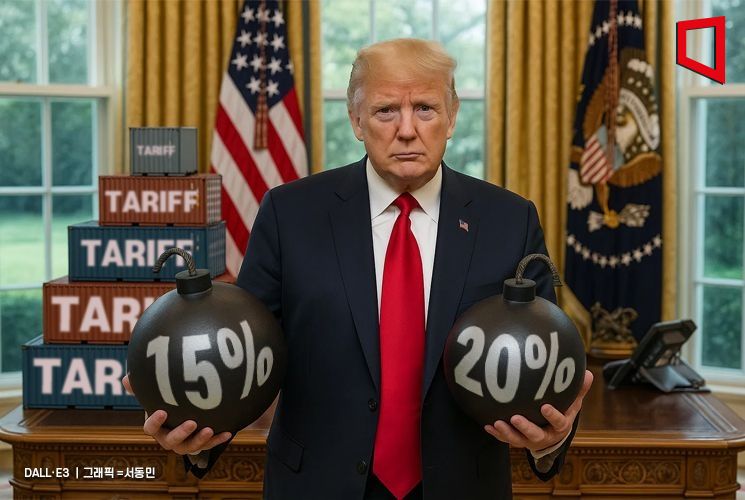
The government has proposed the MASGA project, which includes plans for local investment to help rebuild the U.S. shipbuilding industry, leveraging the competitiveness of South Korean shipbuilders. Since the revival of the shipbuilding industry, which is directly tied to national defense, is a top priority for U.S. President Donald Trump, it is reported that the MASGA project contains quite detailed proposals. While Secretary Lutnick is said to have responded positively to the MASGA project presented by the South Korean side, it is not yet known how much the two countries have narrowed their differences on the amount of investment in the U.S.
Previously, Minister Kim and Chief Negotiator Yeo met with Secretary Lutnick twice?at the Department of Commerce and at his residence in New York on the 24th and 25th?to continue their efforts to persuade the U.S. Secretary. Secretary Lutnick delivered an ultimatum, stating, "Please put the best and final offer on the table." He also increased the pressure by saying, "You must convince us why a new agreement with South Korea is necessary, given that the U.S. has already signed multiple agreements with major partners such as the EU, Japan, and the UK."
The key issues remaining in the final negotiations are the scale of investment in the U.S. and the extent of opening the agricultural and livestock markets. President Trump, who is seeking re-election, is pressuring all negotiating countries to further open their agricultural and livestock markets, mindful of his political base. The EU, Japan, and the UK, which recently concluded tariff negotiations with the U.S., all offered expanded market access for agricultural and livestock products as a bargaining chip to secure the lowest possible tariff rates. The South Korean government, which had initially set the expansion of beef imports over 30 months of age and rice imports as a red line, has now put further opening of the agricultural and livestock markets back on the negotiation table and is attempting to reach an agreement by repeatedly presenting revised proposals. However, the U.S. side is reportedly demanding broad concessions, including increased purchases of U.S. products, deregulation of U.S. platform companies, improvements to non-tariff barriers, and currency issues.
Although the negotiations are expected to face twists and turns before reaching a consensus on core issues such as shipbuilding cooperation, the scale of investment in the U.S., and further opening of the agricultural and livestock markets, some observers believe that a deal is inevitable given the interests of both sides. The South Korean government aims not only to lower mutual tariff rates to 15% but also to conclude a one-shot deal that includes tariff reductions on items such as automobiles. Both Japan and the EU, which previously faced difficulties in negotiations, reached an agreement on a favorable 15% mutual tariff rate, and the EU succeeded in maintaining the 15% rate for additional items such as semiconductors and pharmaceuticals that may be subject to future tariffs under Section 232 of the Trade Expansion Act.
© The Asia Business Daily(www.asiae.co.kr). All rights reserved.
![Clutching a Stolen Dior Bag, Saying "I Hate Being Poor but Real"... The Grotesque Con of a "Human Knockoff" [Slate]](https://cwcontent.asiae.co.kr/asiaresize/183/2026021902243444107_1771435474.jpg)
















