KDCA Announces Results of Youth Health Panel Survey
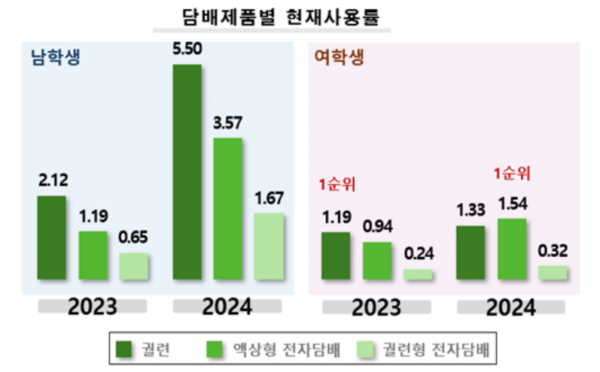
Cigarette Use Among 10th Grade Male Students: 2.12% → 5.50% in 11th Grade
Liquid-Type E-Cigarette Use Among Female Students: 0.94% → 1.54%
60.8% of 11th Grade Students Have Tried Alcohol
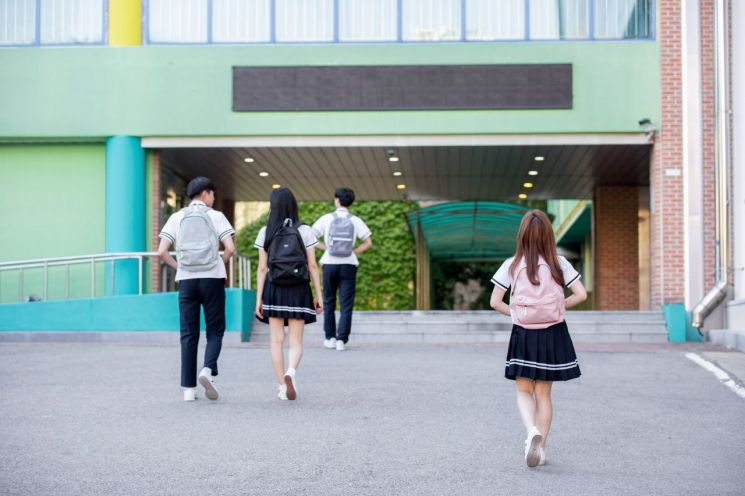 As adolescents advance to higher grades, their rates of smoking and drinking continue to increase. Photo by Getty Images
On July 29, the Korea Disease Control and Prevention Agency (KDCA) released the statistics from the 1st to 6th rounds (from 6th grade in elementary school to the second year of high school) of the "Youth Health Panel Survey," conducted from 2019 to last year. The Youth Health Panel Survey was established in 2019 with a panel of 5,051 sixth-grade elementary school students nationwide and has been tracking them for 10 years until 2028 to monitor changes in health behaviors such as smoking, drinking, physical activity, and dietary habits. This survey was conducted on 3,864 participants who took part in all six rounds.
According to the results, in 2023, the smoking rate among first-year high school students was as follows: for traditional cigarettes, 2.12% for male students and 1.19% for female students; for liquid-type electronic cigarettes, 1.19% and 0.94%; and for heated tobacco products, 0.65% and 0.24%, respectively. After these students advanced to the second year of high school, the usage rates for traditional cigarettes rose to 5.5% for males and 1.33% for females; for liquid-type electronic cigarettes, 3.57% and 1.54%; and for heated tobacco products, 1.67% and 0.32%. This shows an increase in the usage rates of all tobacco products among both male and female students as they progress to higher grades.
In particular, while traditional cigarettes remain the most preferred tobacco product among male students, the preference among female students has shifted from traditional cigarettes to liquid-type electronic cigarettes. This trend is similar to findings in the United States, where high school students' top choice of tobacco shifted from traditional cigarettes to liquid-type electronic cigarettes in 2014. The KDCA expects that the preference for liquid-type electronic cigarettes will also increase rapidly among male students in Korea.
Among current users of liquid-type electronic cigarettes, the proportion who use only liquid-type electronic cigarettes is about 2.9 times higher among female students (51.6%) than male students (17.5%). The proportion of current traditional cigarette smokers who use only traditional cigarettes is similar for both genders, at 34.7% for males and 36.6% for females. Additionally, 77.3% of students started smoking with flavored tobacco products. The proportion of those who started with flavored products is higher for liquid-type electronic cigarettes (86.3%) and heated tobacco products (87.4%) compared to traditional cigarettes (72.6%).
The rate of students who have ever tried smoking even once (lifetime tobacco product use rate) increased over the past five years by 9.23 percentage points: 0.35% in 6th grade, 0.56% in 7th grade, 2.01% in 8th grade, 3.93% in 9th grade, 6.83% in 10th grade, and 9.59% in 11th grade. The current smoking rate among adolescents (current tobacco product use rate) also increased by 4.19 percentage points over the past five years: 0.01% in 6th grade, 0.03% in 7th grade, 0.48% in 8th grade, 1.04% in 9th grade, 1.95% in 10th grade, and 4.20% in 11th grade.
Im Seungkwan, Commissioner of the KDCA, stated, "The results of this survey show not only an increase in tobacco product use among adolescents, but also a clear trend among female students preferring liquid-type electronic cigarettes over traditional cigarettes. It is an urgent time to strengthen regulations and policy responses by product type to prevent youth smoking."
The experience of alcohol consumption among adolescents also consistently increased as grade level rose. The proportion of students who had ever taken even a sip of alcohol increased from 36.4% in sixth grade to 60.8% in the second year of high school, while the proportion who had ever drunk at least a whole glass increased from 7.5% to 33.7% over the same period. The current drinking rate (current drinking rate) increased by 7.6 percentage points over the past five years: 0.7% in sixth grade, 1.0% in seventh grade, 2.1% in eighth grade, 3.6% in ninth grade, 5.3% in tenth grade, and 8.3% in eleventh grade. The largest increase by grade was observed when students advanced to the second year of high school, with a 2.9 percentage point rise.
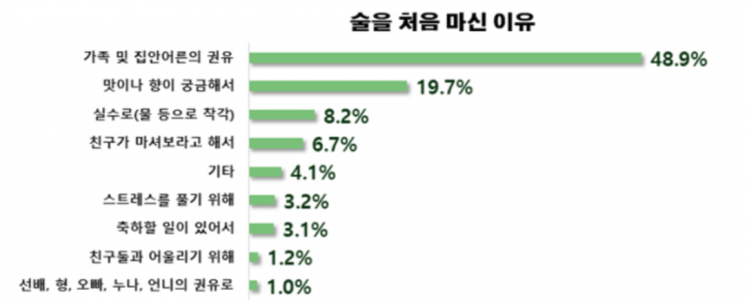
The main reasons for first trying alcohol were as follows: "family or adult encouragement, such as after ceremonial ancestral rites" (48.9%), "curiosity about the taste or aroma" (19.7%), "by accident" (8.2%), and "because a friend suggested it" (6.7%). This indicates that the initiation of alcohol use among adolescents is influenced more by encouragement from family and adults around them than by individual curiosity.
Dietary habits continued to worsen as students advanced to higher grades. The rate of skipping breakfast five or more days a week increased from 17.9% in sixth grade to 33.0% in the second year of high school. The rate of consuming fast food three or more times a week rose from 20.9% to 32.1%, and the rate of drinking sweet beverages three or more times a week increased from 50.9% to 66.6%. In contrast, the rate of eating fruit at least once a day dropped from 35.4% to 15.5%, the rate of eating vegetables three or more times a day fell from 18.0% to 6.8%, and the rate of consuming milk or dairy products at least once a day decreased from 45.7% to 18.4% over the same period.
The rate of engaging in major physical activities fluctuated at points when students transitioned to a new school level. The rate of participating in at least 60 minutes of physical activity five or more days a week steadily decreased from 29.8% in sixth grade to 18.2% in eighth grade, slightly increased to 21.9% in ninth grade, but then dropped again after entering high school, reaching only 13.5% in the second year of high school. The rate of engaging in vigorous physical activity three or more days a week changed as follows: 56.4% in sixth grade, 39.1% in eighth grade, 45.0% in ninth grade, and 33.0% in the second year of high school.
Additionally, the frequency of adolescents eating with their parents every day decreased from 66.3% in sixth grade to 22.2% in the second year of high school, and the proportion who "frequently have conversations about healthy habits" also declined from 58.4% to 37.7%.
© The Asia Business Daily(www.asiae.co.kr). All rights reserved.
![Clutching a Stolen Dior Bag, Saying "I Hate Being Poor but Real"... The Grotesque Con of a "Human Knockoff" [Slate]](https://cwcontent.asiae.co.kr/asiaresize/183/2026021902243444107_1771435474.jpg)

















