Professor Lee Seunghoon's Team Develops Machine Learning Technology
for Rapid and Accurate Superconductor Analysis
Proposes a Physics-Based Strategy to Maximize Learning Efficiency
The research team led by Professor Lee Seunghoon from the Department of Physics at Pukyong National University (President Bae Sanghoon) has developed a machine learning-based technology that can rapidly and accurately analyze the properties of superconductors within several tens of milliseconds (ms).
Professor Lee Seunghoon, together with master's student Lee Dongik as the first author, published the paper "Rapid analysis of point-contact Andreev reflection spectra via machine learning with physics-guided data augmentation" in a world-renowned journal in the field of applied physics (IF: 9.7).
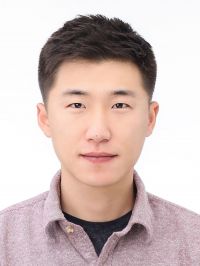 Professor Seunghoon Lee, Pukyong National University. Provided by Pukyong National University
This research has also received high academic recognition for proposing a strategy that maximizes the learning efficiency of the model based on physical understanding.
Superconductors are materials with zero electrical resistance, and they are used in a variety of fields such as power transmission without energy loss, high magnetic field medical equipment (MRI), and as core materials for quantum computers.
Recently, with the attention on high-temperature superconductors following the LK-99 controversy and the active research on next-generation quantum computers based on topological superconductors, the importance of technologies that can rapidly and accurately distinguish various types of superconductors has greatly increased.
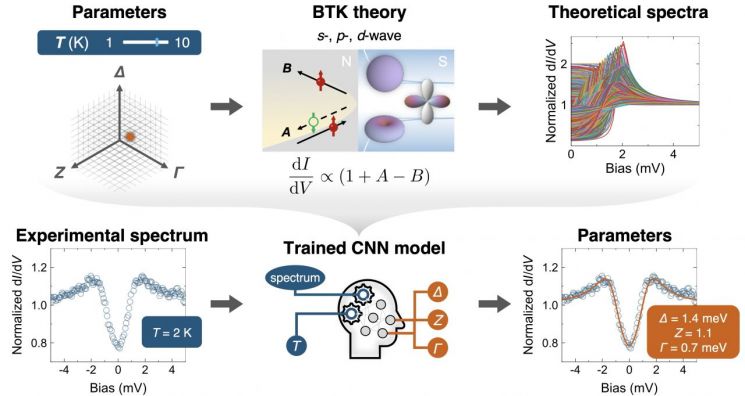
Professor Lee Seunghoon's team introduced machine learning technology to increase the accuracy of point-contact spectroscopy, which is used for superconductor analysis, and to dramatically reduce the analysis time. While conventional spectrum analysis has taken from several hours to several days, the newly developed model can provide highly accurate analysis in less than 0.1 seconds.
Professor Lee Seunghoon explained, "The process of training an AI model is similar to teaching a baby what a pig is. By repeatedly showing images that emphasize key features like a pig's snout and saying, 'This is a pig,' the baby naturally recognizes that this feature is an important clue for identifying a pig."

The research team led by Professor Lee Seunghoon generated a large number of theoretical spectra for training and designed a model to learn from them. By artificially distorting the data to emphasize the core features of the spectrum based on physical knowledge, they maximized the model's learning effect and dramatically improved its real-world performance, including analytical accuracy.
Professor Lee Seunghoon stated, "This research is significant not only because it reduces analysis time, but also because it presents a physics-based strategy that maximizes machine learning efficiency. This technology is expected to accelerate new superconductor research and be widely applied to data analysis in various fields such as materials science, biomedical engineering, and sensors."
© The Asia Business Daily(www.asiae.co.kr). All rights reserved.
![Clutching a Stolen Dior Bag, Saying "I Hate Being Poor but Real"... The Grotesque Con of a "Human Knockoff" [Slate]](https://cwcontent.asiae.co.kr/asiaresize/183/2026021902243444107_1771435474.jpg)
















