Publication of "Letters from the Ancients" by Noh Youngbeom, Oriental Medicine Doctor
Tracing Root Causes with 1-2 Hour Consultations for First-Time Patients
Restoring Lost Bodily Balance with Herbal Medicine
Training Healthy Habits to Prevent Relapse
"The causes of mental illness are not simply due to an imbalance of neurotransmitters in the brain. Complex factors in a patient's life and environment?such as stress from work, financial difficulties, social isolation, and childhood trauma?all play a role. True treatment becomes possible only when we address these underlying causes."
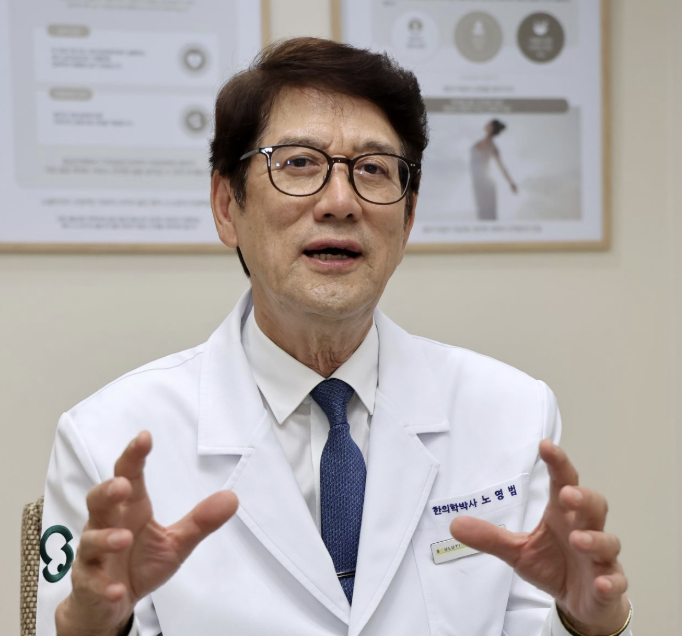 Doctor Youngbeom Noh, director of October 10 Korean Medicine Clinic, is being interviewed by Asia Economy. Photo by Dongjoo Yoon
Noh Youngbeom, an oriental medicine doctor who has focused on treating mental illnesses for 40 years and currently serves as the director of October 10th Oriental Medicine Clinic in Bucheon, Gyeonggi Province, has published a book titled "Letters from the Ancients," which recounts patient cases and treatment experiences from a traditional medicine perspective. In an interview with Asia Economy on July 29, Dr. Noh stated, "Today, many people suffer from depression, anxiety, insomnia, panic, anger, and distractibility, and rely on various medications to treat these symptoms." He argued, "It is necessary to pursue treatments that trace and address the fundamental causes of illness, not just the symptoms that are visible on the surface."
In 2015, Dr. Noh, together with Kim Kyungil, a professor in the Department of Chinese Language and Literature at Sangmyung University, reinterpreted the "Shanghanlun," a medical text written around 200 AD in the late Han Dynasty of China, and published a book applying its principles to the treatment of mental illness, drawing attention from the field of oriental medicine. The Shanghanlun, one of the main subjects in colleges of oriental medicine, is an ancient record of observations and treatments describing how the human body responds to illness. Dr. Noh went beyond previous Korean translations of the Shanghanlun, studying each ancient character in depth, and revealed that it contains symptoms and treatment methods similar to those of modern mental illnesses.
Dr. Noh explained, "For example, while the term 'panic disorder' as diagnosed in today's psychiatry does not appear in the Shanghanlun, its representative symptom, shortness of breath, is described as 'qi shangchong' (qi rising upward)." He added, "When I prescribed the herbal medicines used by the ancients for this symptom to patients with panic disorder, I observed improvement in their symptoms."
He considers the most important aspect of treating mental illness to be the process of tracing back to discover what caused the illness in the patient's life and how and when it first manifested. This is why he spends an average of 30 minutes per patient, and 1 to 2 hours for first-time patients, focusing on and investigating the causes as described by the patient. Dr. Noh believes that when patients understand the roots of their own mental difficulties, they gain the strength to address those causes themselves. He said, "I diagnose the causes of a patient's illness within the flow of their life, restore the body's lost balance with herbal medicine, and train patients in healthy life habits so that the illness does not return, teaching them how to live their daily lives normally again."
The book introduces cases of patients who struggled to stop psychiatric medications after long-term dependence but gradually recovered through treatment. It also describes in detail the process of contextualizing each patient's life?such as childhood memories, family relationships, and emotional patterns?to trace the narrative of the illness and seek solutions.
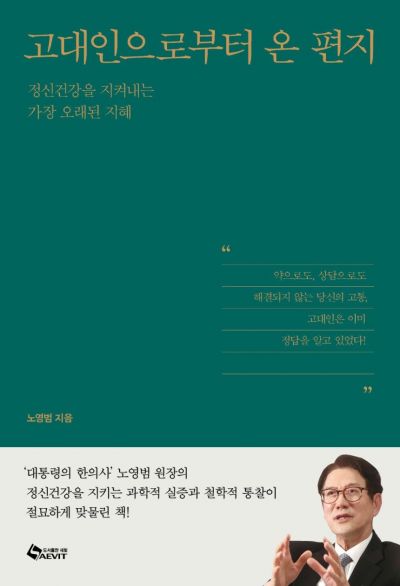
While Dr. Noh treats patients as an oriental medicine doctor, he also acknowledges the effectiveness of medication in Western medicine. He stated, "For acute mental illnesses where early intervention is crucial, or for patients suffering from severe schizophrenia, symptom relief through Western medications should take priority." However, he added, "For patients who have not seen significant improvement after long-term psychiatric treatment, or who feel burdened by psychiatric drugs, herbal medicine can be an alternative." Since the effects of oriental medicine treatments do not appear in the short term, he gradually reduces medication, or, when necessary, prescribes psychiatric medication and herbal medicine together. Even after patients completely stop medication, he continues to monitor their progress for several months to ensure there are no issues before declaring them fully recovered.
Dr. Noh emphasized, "The essence of my treatment is not simply alleviating the symptoms of mental illness, but restoring the body and mind of patients in abnormal states to normal, allowing them to enjoy a complete life without relapse, and returning them to the life they had before the onset of illness."
© The Asia Business Daily(www.asiae.co.kr). All rights reserved.













