EU Agrees to $2 Trillion Energy Purchase and Investment, Accepts 15% Tariff
Trump: "Nothing Below 15%" as 15% Becomes New Benchmark
South Korea Faces Urgency as Final Koo Yooncheol-Scott Besant Talks Set for July 31
The United States has decided to impose a 15% tariff on most imports from the European Union (EU), including automobiles. In return, the EU has pledged to purchase a total of $1.35 trillion (approximately 1,870 trillion won) worth of American energy and make new investments in the United States. With only five days left before the expiration of the mutual tariff suspension on August 1, the EU has reached a sudden trade agreement with the US following Japan. As a result, South Korea, which is still in negotiations, is facing growing concerns about potential trade disadvantages with the US and increasing pressure to conclude negotiations quickly.
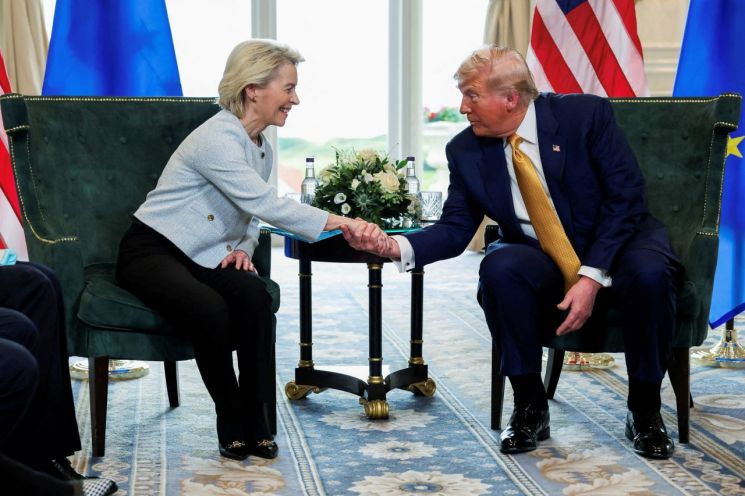
EU Gives $2 Trillion Gift to US, Accepts 15% Tariff
On July 27 (local time), US President Donald Trump and European Commission President Ursula von der Leyen held their final tariff negotiations in Turnberry, Scotland, and reached this agreement.
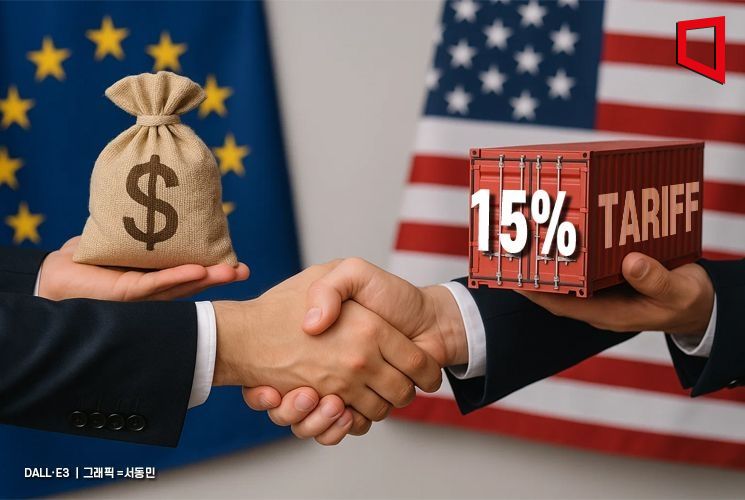
President Trump, who has prioritized reducing the trade deficit, initially threatened to impose a 30% reciprocal tariff on the EU. However, during this meeting, he decided to lower it to 15%. The EU is currently subject to a total tariff of 15%, which includes the existing average tariff of 4.8% plus the 10% base tariff imposed by the US on the world since April. This means the tariff level remains essentially unchanged. President Trump emphasized, "This agreement is basically finalized," and described it as "the largest deal ever made."
President von der Leyen also explained, "This trade agreement will bring stability and predictability," and added, "We should not underestimate the tariff rate, but this was the best we could achieve."
In exchange for accepting the 15% tariff, the EU offered a "gift package" worth nearly 2,000 trillion won. Under the agreement, the EU will purchase $750 billion worth of American energy and invest an additional $600 billion in the US. The parties also agreed on large-scale purchases of military equipment.
However, there are some disagreements on the details. President Trump stated that items such as pharmaceuticals and steel·aluminum would be excluded from the 15% tariff, but President von der Leyen insisted that the 15% tariff applies to all items. The US is currently imposing a 50% item-specific tariff on steel·aluminum imports, separate from the reciprocal tariffs. President von der Leyen explained that a quota system would apply, reducing the tariff from 50% to 15% for a certain export volume. She also stated that even if the US imposes tariffs on pharmaceuticals in the future, the EU's rate would be capped at 15%.
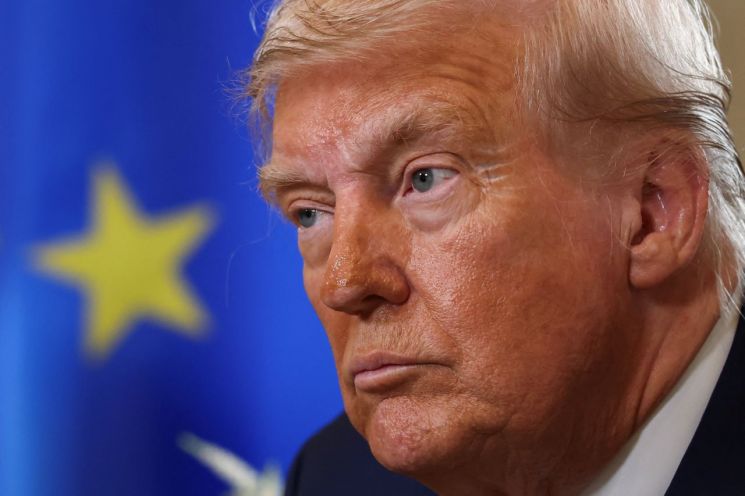
Japan and EU Both Accept '15% Tariff'... Trump: "Nothing Below 15%"
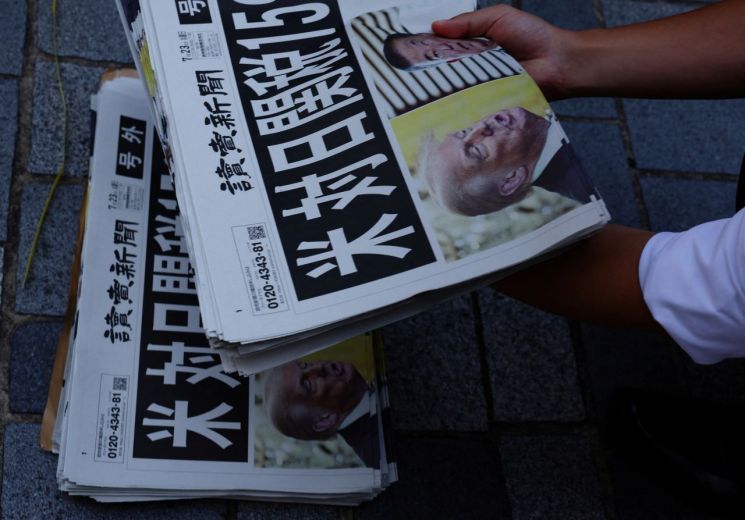
The 15% tariff rate applied by the US to the EU is the same as the level previously agreed upon with Japan. Japan agreed to lower the reciprocal tariff set by the US from 25% to 15%, in exchange for $550 billion in investments in the US and partial opening of its rice and automobile markets. The separate 25% tariff previously imposed on automobiles was also successfully reduced to 15%. Referring to Japan's case, the EU shifted its position to accept the 15% tariff after the US-Japan trade agreement on July 22, which accelerated subsequent negotiations.
As a result, 15% is now effectively the lowest tariff rate the US has applied to countries with which it has a trade deficit. This is why the 15% tariff is expected to become the benchmark for future negotiations with other trading partners. When asked by reporters whether the EU could secure better terms than 15% before the meeting, President Trump dismissed the idea, saying, "If that means a lower tariff, that's not going to happen."
Currently, the only country to which the US applies only the 10% base tariff is the United Kingdom, which has a trade surplus with the US.
South Korea Faces Emergency as Tariff Talks Remain Unresolved... Semiconductor Tariffs Loom Even After Hurdle
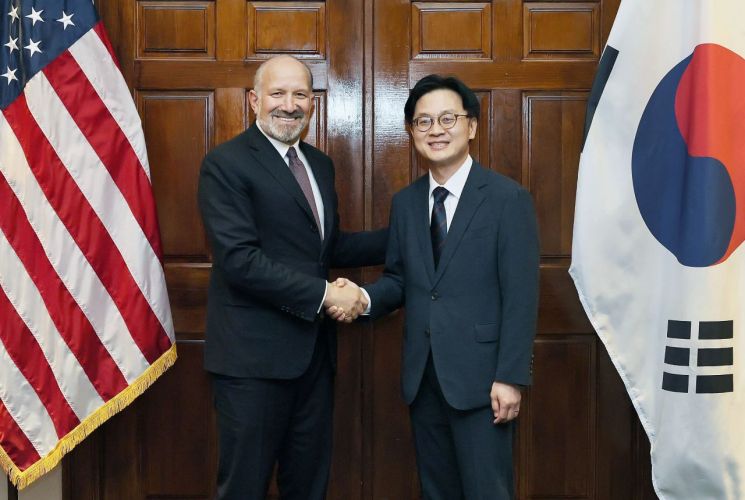
With the US concluding trade agreements one after another with Japan and the EU, South Korea, which is still in negotiations, is now in a state of emergency. Currently, South Korea faces a 25% reciprocal tariff, and to maintain price competitiveness in the US market, it is essential to reduce this to the 15% level agreed with Japan and the EU. In particular, lowering the tariff on automobiles?the top export item to the US?from the current 25% to 15% has become the most urgent task. For the government, maintaining the 15% tariff is an absolute red line.
However, since the US is scheduled to negotiate with China on July 28-29 after Japan and the EU, South Korea is considered to have been pushed down the priority list in US negotiations. Previously, the 'Korea-US 2+2 Trade Consultation' was canceled just two days before the meeting due to a unilateral notice from the US side. As a result, Deputy Prime Minister and Minister of Economy and Finance Koo Yooncheol will meet US Treasury Secretary Scott Besant for the first time in Washington, D.C. on July 31, just one day before the US tariff deadline of August 1, to hold final negotiations. Since US Secretary of Commerce Howard Lutnick stated in a media interview that there will be no extension of the tariff suspension, only five days remain before tariffs are imposed. Currently, Minister of Trade, Industry and Energy Kim Jungkwan is conducting preliminary negotiations in the US, and for a trade agreement to be reached, Deputy Prime Minister Koo and Secretary Besant must finalize the deal in one day on July 31. President Trump also mentioned, "We are reviewing deals with three or four other countries," indicating that negotiations are ongoing with major trading partners such as South Korea.
To conclude the negotiations, the government is now actively considering additional opening of the agricultural market and expanding investments in the US, which had previously been set as 'red lines.' It is also known that the South Korean side has proposed specific plans related to Korea-US cooperation in the shipbuilding industry.
Meanwhile, Secretary Lutnick announced that tariffs on semiconductors under Section 232 of the Trade Expansion Act will be announced within the next two weeks. As a result, even if South Korea completes trade negotiations with the US, it will face the double burden of additional tariff pressure on semiconductors, its main export item to the US.
© The Asia Business Daily(www.asiae.co.kr). All rights reserved.
![Clutching a Stolen Dior Bag, Saying "I Hate Being Poor but Real"... The Grotesque Con of a "Human Knockoff" [Slate]](https://cwcontent.asiae.co.kr/asiaresize/183/2026021902243444107_1771435474.jpg)

















