The Disney+ Series "Pine: Country Folks" Is Based on a True Story
Looting Carried Out Even in Broad Daylight... Some Pieces Sold for Up to 3 Million Won Each
Official Excavations Included Participation by Former Looting Divers
The Disney+ series "Pine: Country Folks," which has been available since the 16th, is based on the webtoon "Pine (Barin·Chonsaram)" by author Yoon Taeho. The story unfolds when a treasure ship filled with antiques is discovered off the coast of Sinan County, South Jeolla Province in the 1970s, drawing swindlers, gangsters, and con artists from across the country.
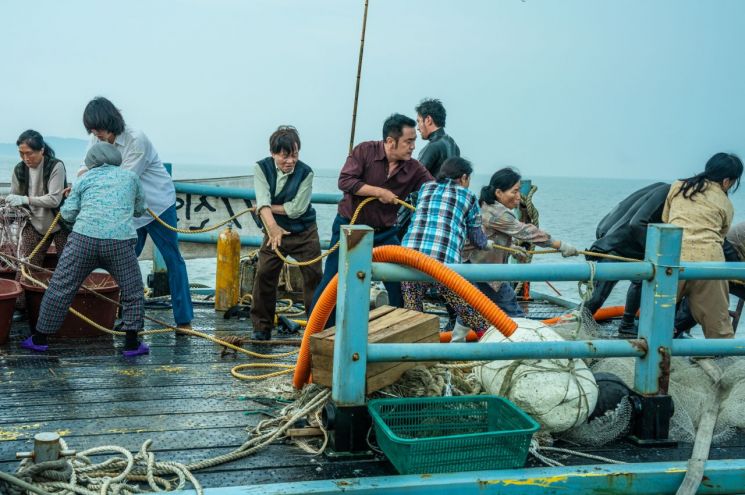
The foundation of the story is based on real events. In May 1975, a fisherman named Choi from Bangchuk-ri, Jeungdo-myeon, found several jars tangled in his net. These included multiple pieces of celadon and white porcelain. Sensing that the items were unusual, Choi's younger brother went to the Sinan County Office. Upon appraisal, one of the jars was identified as a large celadon vase.
Even before this, fishermen would occasionally find ceramics in their nets off the coast of Dodeokdo. Believing them to be bad omens, they would often throw them back into the sea. This was due to a rumor that these vessels were used in the past for human burial at sea during Goryeo funerals.
The Choi brothers received 1 million won for reporting the ceramics. As this news spread throughout the village, looting began. A group of eleven people, including a man named Cho who lived in the same village, rented a 3-ton boat called "Jungwooho" for 120,000 won and headed to the waters off Dodeokdo.
Because the Cultural Heritage Administration was not paying much attention, these individuals carried out looting even in broad daylight. From September 1, 1976, over three days, they recovered seven white bowls, three blue bowls, twelve plates, and more. Through four subsequent operations, they retrieved 117 relics, including vases and incense plates. These items were sold in Mokpo and Jeonju for 2 million to 3 million won each.
In October of that year, Cho's group was apprehended by the police. Ironically, this news served as the starting signal for more widespread looting. As the incident was reported, underwater relics began to attract public attention. The Cultural Heritage Administration, aiming to prevent further incidents, designated a roughly 2-kilometer radius around the area as a cultural property protection zone and began an official investigation.
The looting organizations also acted quickly. They bribed officials in charge of surveillance and hired local residents as divers. The most famous case involved the head of the industrial department at the Sinan County Office. By recruiting UDT-trained divers from Yeosu and Busan, they managed to loot more than 200 relics over two separate occasions. In July 1978, they were tracked down by the Special Investigation Unit of the National Police Agency.
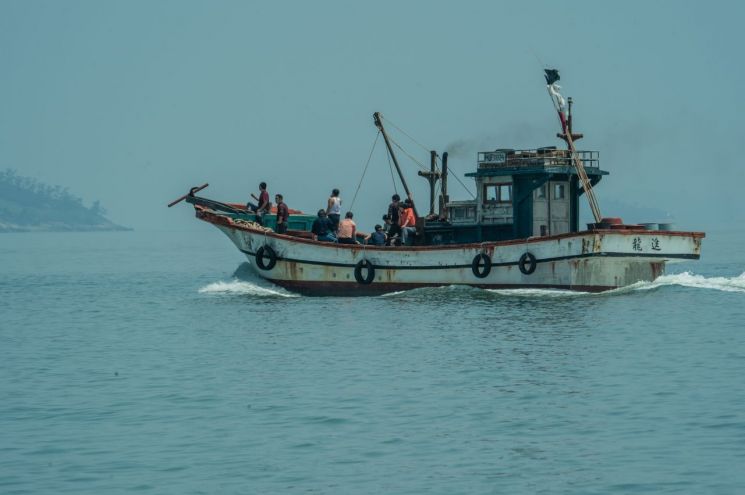
Looting continued covertly into the 1980s until February 1987, when the Seoul District Prosecutors' Office arrested seventeen people, including a Japanese national who attempted to smuggle about 1,000 relics overseas. However, even into the mid-1990s, relics labeled "Sinan Underwater Relics" were openly traded at antique shops in major Japanese cities such as Tokyo. For this reason, some argue that the number of looted relics may rival the number officially excavated.
From the initial looting incident, about 300 looters and smugglers were caught over the course of ten years. Smugglers continued to be apprehended as recently as 2019. For example, an individual referred to as Mr. A, who had been keeping black-glazed cups since 1983, attempted to smuggle and sell them in Japan twice in 2018 but failed.
Official excavations were conducted eleven times from 1976 to 1984. In the first investigation in 1976, led by Professor Cho Myungki of Seoul National University, 1,800 pieces of pottery and 6,000 coins were discovered. Not only Navy divers from the 51st Squadron participated, but also Cho and diver Jung, who had previously been arrested for looting. Lee Hogwan, former director of the Jeonju Museum who participated in the investigation, recalled, "Navy divers struggled to locate the relics, so after much deliberation, they brought in divers with looting experience to pinpoint the exact locations."
Subsequent investigations recovered national treasure-grade Goryeo celadon, as well as Song and Yuan dynasty celadon and white porcelain, black-glazed cups, bronze candlesticks, incense burners, mirrors, inkstones, and millstones. A wooden tag inscribed with "Jichisamnyeon (the third year of Zhizhi)" and a cargo tag engraved with "Gyeongwon-ro (currently Ningbo, China)" were also found, confirming that the sunken ship had departed from Ningbo Port around 1323 and was headed for Hakata and Kyoto in Japan when it was wrecked. A total of 22,007 relics were excavated over eleven investigations, of which 20,661 were ceramics.
© The Asia Business Daily(www.asiae.co.kr). All rights reserved.
![Clutching a Stolen Dior Bag, Saying "I Hate Being Poor but Real"... The Grotesque Con of a "Human Knockoff" [Slate]](https://cwcontent.asiae.co.kr/asiaresize/183/2026021902243444107_1771435474.jpg)
















