Residents Killed in Bear Attacks in Iwate and Hokkaido
First Introduction of "Bear Insurance" for Local Governments
There have been recent reports in Japan of bears appearing in villages and causing human casualties.
On July 27, the Yomiuri Shimbun reported that one resident each was killed in separate bear attacks in Kitakami City, Iwate Prefecture in northeastern Honshu, and in Fukushima Town in southern Hokkaido. The victim in Fukushima Town on July 12 was a 52-year-old male newspaper delivery worker. An eyewitness stated, "When I opened the front door, I saw a bear attacking a person right in front of me."
Citing environmental data, the outlet reported that this was the first fatality from a bear attack in an urban area of Hokkaido since 2006. The bear in Fukushima Town was killed on July 18. This bear was a male, estimated to be 8 to 9 years old, measuring 208 cm in length and weighing 218 kg. DNA analysis revealed that this bear had also attacked and killed a woman in her 70s in a nearby field four years ago.
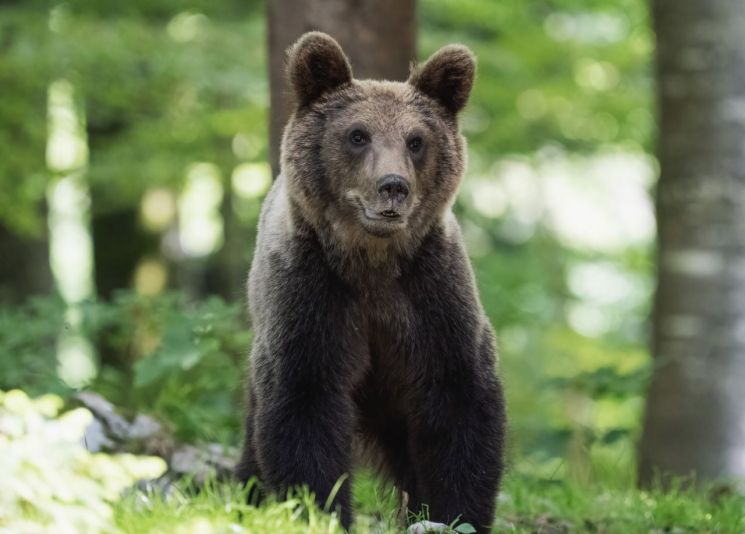
The victim in Kitakami City was a woman in her 80s who was attacked by a bear at her home on July 4. According to the newspaper, such cases have been extremely rare in the past 20 years. Before the fatal incident, the area had already experienced multiple bear intrusions and damage, including bears entering homes, warehouses, outdoor storage areas, and damaging rice sacks.
Yomiuri explained that, looking at the locations of bear attacks resulting in human casualties, forests accounted for 59% and urban areas for 13% in fiscal year 2016 (April 2016 to March 2017). However, by 2023, the proportion of urban areas had increased to 38%, while forests had decreased to 32%. The newspaper attributed this to a decrease in population density in some regions and an increase in abandoned orchards and farmland, which has led to more bears appearing in villages. Additionally, a poor acorn crop, which is a food source for bears, in northeastern Honshu since autumn 2023 may also have contributed to the increase.
Yamazaki Koji, a professor at Tokyo University of Agriculture, told Yomiuri, "The places where bears can comfortably live are changing," and emphasized, "It is urgent to investigate the causes and develop countermeasures to reduce human casualties."
As bear attacks continue to cause human casualties across Japan, insurance products targeting local governments for bear-related incidents have even been introduced.
Tokio Marine & Nichido Fire Insurance announced that it is offering a product that compensates up to 30 million yen (about 280 million won) for property damage caused during the process of shooting bears or wild boars with hunting rifles in villages. However, this product does not cover human casualties. Yomiuri noted that this is the first time such a product has been launched in Japan.
Meanwhile, from April 2023 to March 2024, there were 219 bear-related human casualty incidents in Japan, marking the highest annual number of such accidents ever recorded. Among these, six resulted in fatalities.
© The Asia Business Daily(www.asiae.co.kr). All rights reserved.
![Clutching a Stolen Dior Bag, Saying "I Hate Being Poor but Real"... The Grotesque Con of a "Human Knockoff" [Slate]](https://cwcontent.asiae.co.kr/asiaresize/183/2026021902243444107_1771435474.jpg)















