Interest in Disease Management and Response Guidelines
Six out of ten people in South Korea are changing their daily habits to respond to climate change, according to a recent survey.
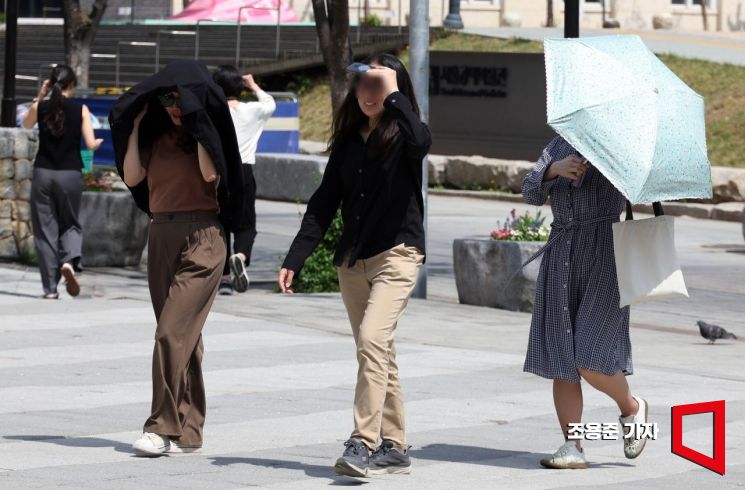 The content is not directly related. Photo shows a street scene in Anguk-dong, Seoul. Photo by Jo Yongjun
The Korea Institute for Health and Social Affairs released the results of its survey on "National Communication Strategies for the Climate Crisis and Health" in the July issue of its monthly journal, Health and Welfare Forum.
The survey was conducted in September of last year, targeting 2,000 adults nationwide between the ages of 19 and 64. The results were previously included in the report "Communication Strategies for Climate Crisis Health Adaptation."
Among respondents, 91.3% said they actively seek out information on climate change and health issues. The most common frequency for information searches was "occasionally" at 41.3%. The main sources of information cited were reputable media such as newspapers and news programs (94.0%) and current affairs or educational broadcasts (92.0%). A considerable number of respondents also reported using general books (70.8%) and professional materials such as academic papers (67.2%).
As many as 66.1% said they have changed their lifestyle habits to protect the climate, and 54.9% said they consider climate change when voting, which is more than half. In addition, 52.7% of respondents said they talk about climate change with family, friends, or colleagues, and 56.5% said they make efforts to encourage behavioral changes among those around them.
On the other hand, only 36.1% had participated in activities or donations related to climate or environmental organizations, and just 26.0% had attended related lectures or seminars, indicating that direct participation remains relatively low.
Interest in the impact of climate change on health was also high. A total of 87.4% of respondents said they wanted to know more about related information. The topics of greatest interest were disease management related to climate (64.7%), personal behavioral guidelines and response methods (59.2%), domestic climate and health policies (40.7%), and health damage statistics (34.5%), in that order.
The research team pointed out that existing information is largely limited to specific diseases and emphasized the need to comprehensively address the various health issues that climate change may cause. They also suggested that messages highlighting the health and economic benefits of responding to the climate crisis, rather than focusing solely on its negative aspects, would be more effective. Additionally, they recommended that the media actively introduce examples of environmentally friendly practices.
© The Asia Business Daily(www.asiae.co.kr). All rights reserved.
![Clutching a Stolen Dior Bag, Saying "I Hate Being Poor but Real"... The Grotesque Con of a "Human Knockoff" [Slate]](https://cwcontent.asiae.co.kr/asiaresize/183/2026021902243444107_1771435474.jpg)















