"Korea Has a Highly Skilled Workforce Beneficial to the United States"
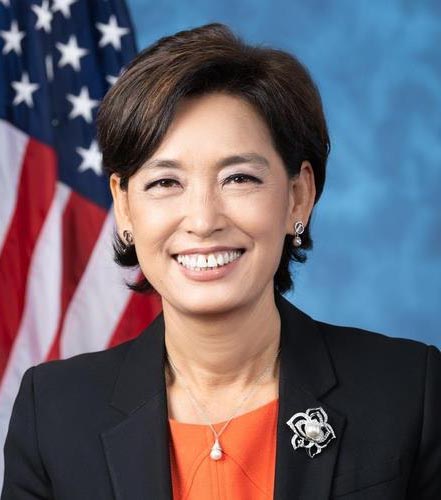
Representative Young Kim, a Republican of Korean descent, announced on the 24th (local time) that she, along with Democratic Representative Sydney Kamlager-Dove, has introduced the "Partner with Korea Act."
The core of this bill is to authorize the US government to issue up to 15,000 professional employment visas (E-4) annually to Korean nationals with specialized education and skills. However, employers must guarantee that no American workers are available for the positions intended for Korean professionals.
Currently, the United States issues professional employment visas to applicants worldwide through the H1B visa program, but the annual cap is limited to 85,000 (including 20,000 for holders of US master's or doctoral degrees), making competition intense. Separately, the US provides annual country-specific quotas for five countries with which it has signed Free Trade Agreements (FTAs): Canada (unlimited), Mexico (unlimited), Singapore (5,400), Chile (1,400), and Australia (10,500). However, South Korea, despite being an FTA partner, does not have such a quota.
This bill has been introduced in every session of the US Congress since 2013 but has not passed. Representative Kim's office stated that she has continued her efforts to pass the bill since becoming a member of Congress.
Regarding her reason for introducing the bill this time, Representative Kim stated, "As the Chinese Communist Party and North Korea become more aggressive and attempt to reshape the international order based on global norms, our partnership with Korea is more important than ever." She added, "Korea's highly skilled workforce can help support our economic and national security in the face of growing threats in the Indo-Pacific region."
Representative Kamlager-Dove also commented, "Immigrants are the driving force of our economy not only in Los Angeles but across the United States. Korean immigrants are essential members of American society and make significant contributions in a wide range of industries, from technology to healthcare and beyond. If we fail to attract immigrant talent, American businesses and the economy will suffer."
© The Asia Business Daily(www.asiae.co.kr). All rights reserved.
![Clutching a Stolen Dior Bag, Saying "I Hate Being Poor but Real"... The Grotesque Con of a "Human Knockoff" [Slate]](https://cwcontent.asiae.co.kr/asiaresize/183/2026021902243444107_1771435474.jpg)















