Despite Record-High Q2 Sales, Operating Profit Drops 15.8%
"Developing Price Scenarios for Each Situation"
Cost Reduction Through Production Efficiency and Parts Diversification
Hyundai Motor Company suffered losses exceeding 820 billion KRW due to the imposition of tariffs on imported cars in the United States. As a result, its operating profit in the second quarter dropped by more than 10% compared to the previous year.
However, Hyundai announced that it will adopt a "fast follower" strategy in the US market, responding flexibly to market conditions rather than taking the lead in raising prices. The company also plans to pursue cost reductions through production efficiency improvements and local sourcing of parts. This is interpreted as Hyundai's intention to absorb the losses internally for the time being.

During its Q2 earnings announcement on the 24th, Hyundai stated, "The amount impacted by tariffs in the second quarter was approximately 828.2 billion KRW," and added, "We expect to be more heavily affected in the third quarter, when the full impact of tariffs will be felt."
The company further explained, "Our pricing policy in the US market follows the 'fast follower' strategy," and added, "Rather than leading price adjustments, we will monitor market conditions and respond flexibly to align with customer value."
Additionally, Hyundai clarified, "Because we are following a fast follower strategy, we will not specify whether or when we will raise prices in the second half of the year," and elaborated, "We are preparing various price scenarios according to different situations."
Regarding the tariffs on auto parts, Hyundai said, "The US government has announced a system that grants credits to finished vehicle manufacturers," and added, "Taking this into account, we expect the impact of tariffs to be around 20% of the total."
Despite achieving record-high sales revenue in the second quarter, Hyundai's operating profit declined significantly. Second quarter sales reached 48.2867 trillion KRW, a 7.3% increase from the same period last year, but operating profit fell by 15.8% to 3.6016 trillion KRW from 4.2791 trillion KRW a year earlier. Net profit was calculated at 3.2503 trillion KRW, a 22.1% decrease from a year ago.
Hyundai explained, "We achieved external growth due to increased sales volume in key markets such as Korea, the US, and Europe," but added, "Profitability declined due to the full impact of US tariffs, increased global incentives, and higher selling expenses resulting from intensified competition."
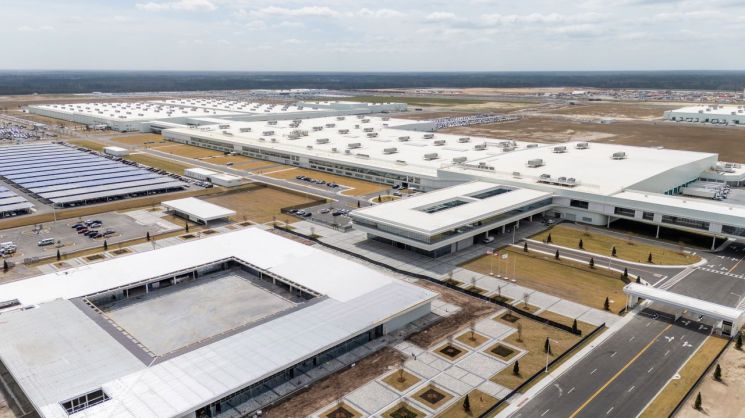
Hyundai stated that in the third quarter, it expects to see cost reduction effects from improved production efficiency. The company said, "We plan to horizontally deploy production efficiency methodologies from our Alabama plant (HMMA), which has been operating for 20 years, to Meta Plant America (HMGMA)," and projected, "These effects are expected to materialize starting in the third quarter of this year."
The company also mentioned cost reduction plans through diversification of auto parts. Hyundai said, "We have activated a task force (TF) for parts diversification and have received quotes for over 200 parts," adding, "We are reviewing whether it is better to export from Korea, source locally in the US, or determine the optimal sourcing method."
However, Hyundai noted, "When changing suppliers, it is necessary to thoroughly examine whether the parts meet Hyundai's top priorities of 'quality' and 'customer safety,' so this process will take some time," and added, "The impact of changes in parts sourcing will not be realized in the short term."
Meanwhile, Hyundai sold 1,065,836 units in the global market in the second quarter, an increase of 0.8% compared to the same period last year. In Korea, the new model effect of the Palisade and Ioniq 9 boosted SUV sales, resulting in a 1.5% year-on-year increase to 188,540 units.
Overseas, sales in the US rose by 3.3% year-on-year to 262,305 units, but sales in emerging markets declined. Nevertheless, total overseas sales increased by 0.7% year-on-year to 877,296 units.
Global sales of eco-friendly vehicles (including commercial vehicles) reached 262,126 units, a 36.4% increase from the same period last year, driven by expanded EV sales in Europe and a strengthened hybrid lineup. Of these, EVs accounted for 78,802 units and hybrids for 168,703 units.
© The Asia Business Daily(www.asiae.co.kr). All rights reserved.
![Clutching a Stolen Dior Bag, Saying "I Hate Being Poor but Real"... The Grotesque Con of a "Human Knockoff" [Slate]](https://cwcontent.asiae.co.kr/asiaresize/183/2026021902243444107_1771435474.jpg)












