Ban on Men's Short Swim Trunks at Chetaibi Beach in Algeria Sparks Controversy
Mayor Cites "Violation of Moral Values"... Order Withdrawn After Backlash
A tourist city in Algeria, located on the Mediterranean coast, sparked controversy after banning men from wearing short swim trunks, only to rescind the ban shortly afterward. According to the Seoul Shinmun on the 23rd (local time), citing the Associated Press, "In the small tourist city of Chetaibi, with a population of 8,000, Mayor Layachi Allaoua issued an order earlier this month prohibiting men from wearing 'short swim trunks,' but withdrew the order after just two days."
 This is a reference photo to help understand the article and is unrelated to the article content. Pixabay
According to reports, Chetaibi is famous for its emerald sea, rocky coastline, and dense forests, attracting numerous tourists every summer. Tourism is known to be the key industry for the local economy. A resident of Chetaibi told the media, "The atmosphere is warm, welcoming, and lively," adding, "There is absolutely no hostility toward beachgoers, whether in words or looks. The people here have a tradition of hospitality toward guests."
However, earlier this month, Mayor Allaoua caused controversy by claiming that men's short swim trunks were "indecent." He stated on social media that "such summer attire makes residents uncomfortable and goes against the moral values and etiquette of our society," and pointed out, "Residents can no longer tolerate seeing outsiders walking around the streets in inappropriate clothing."
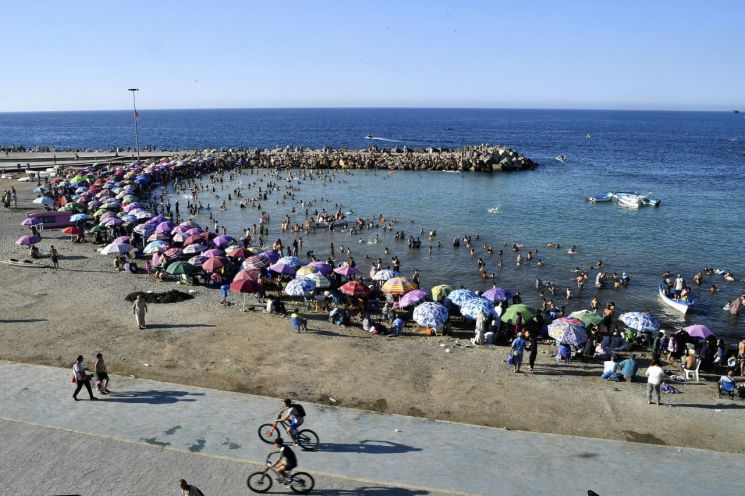 On the 18th (local time), tourists gathered at a beach in Algiers, the capital of Algeria. Photo by AP
The "outsiders" he referred to are visitors from other regions of Algeria and foreigners. He meant that men should wear the long, loose swim trunks preferred by conservative Muslim male beachgoers. However, officials from Annaba, the regional capital, opposed the ban out of concern that it would negatively impact tourism, urging the mayor to rescind the order.
Some residents also questioned whether the authorities had "succumbed to conservatives," and due to the ongoing controversy, the ban on short swim trunks was lifted after just two days. Mayor Allaoua explained on social media that it was "not a concession to pressure from Islamists, but an unavoidable measure for the 'peace and stability' of both local residents and tourists."
However, some have noted that this incident revived dark memories among locals of times when local governments dominated by Islamic extremists sought to reshape public life according to religious doctrine. Algeria, located in North Africa, is an Islamic country where 95% of the population is Muslim. The country has traditionally suppressed Christianity and defines blasphemy as a crime in its penal code. Algerian Christians can face up to five years in prison for sharing their faith with others. The small number of Christian believers is known to be mostly foreigners.
Meanwhile, Muslim women wear burkinis at the beach. The burkini is a portmanteau of "burka," a traditional women's garment that covers the entire body including the face, and "bikini." It is a type of swimwear designed to allow women to observe the Islamic tradition of covering the body.
© The Asia Business Daily(www.asiae.co.kr). All rights reserved.