U.S. Sets 15% Tariff Rate on Japan
Slightly Lower Than ASEAN Levels
Separate Commitments Include $550 Billion Investment
"U.S. Exceptionalism Expected to Persist for a Considerable Period"
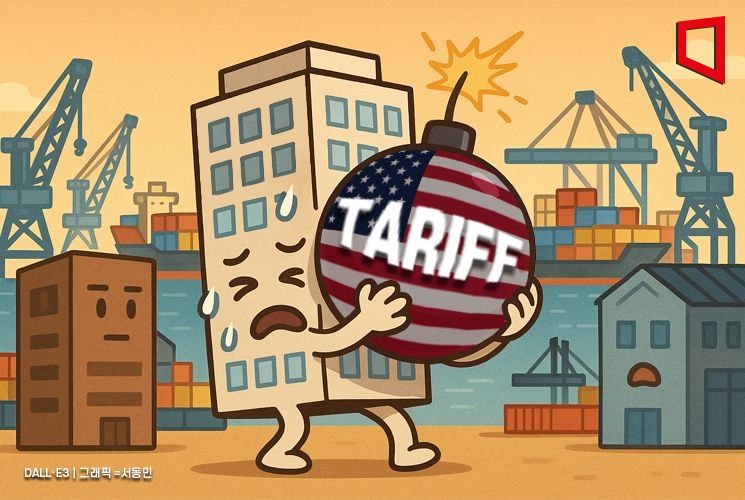
The United States and Japan have reached a dramatic agreement on tariff negotiations. This marks the first such deal among the United States' major trading partners. Although the 15% tariff rate may appear low, it is not a particularly low level compared to countries that have previously reached agreements. The deal also includes provisions to accelerate U.S. reshoring, which refers to bringing back companies that had moved overseas. On July 24, iM Securities released a report titled "The Butterfly Effect of the U.S.-Japan Tariff Agreement," interpreting the outcome as being overwhelmingly favorable to the United States.
Japanese Tariffs to Serve as a Benchmark for Korea, the EU, and Canada
Excluding Vietnam, the U.S.-Japan tariff agreement is effectively the first among the United States' major trading partners. Expectations are rising that other key countries, such as Korea, the EU, Canada, and Mexico, will also reach agreements by the negotiation deadline set for August 1. The Japanese tariff rate (15%) is lower than those previously agreed upon with Vietnam (20%), Indonesia (19%), and the Philippines (19%). Previously, only the United Kingdom, a core U.S. ally with a modest trade surplus in goods, had a 10% tariff set. As a result, countries that export mid- to low-priced products to the United States or serve as alternative export bases for Chinese goods are facing tariffs of 19-20%, while so-called advanced and allied countries are seeing tariffs set at around 15%.
The tariff rates resulting from the U.S.-Japan negotiations are higher than previously expected. Although it has been reported that the auto tariff, which Korea has been closely monitoring, was agreed at 12.5% between the United States and Japan, it is understood that this 12.5% is being added to the existing 2.5% tariff, bringing the final auto tariff rate to about 15%. Park Sanghyun, an analyst at iM Securities, stated, "The decision to set tariffs at around 20% for ASEAN countries such as Vietnam, and 15% for Japan, is higher than anticipated," adding, "While the agreement itself may provide short-term relief, it could become a considerable burden in the medium to long term."
Only the United States Stands to Benefit Unilaterally
In the long run, the Trump administration's tariff negotiations appear to have produced results that are unilaterally advantageous to the United States. First, the global supply chain is expected to shift. ASEAN countries, which had served as the next mid- to low-cost manufacturing base after China and as alternative export hubs for Chinese goods, will now face a high 20% tariff, and transshipped goods will be subject to a 40% tariff. While this puts pressure on the manufacturing growth of these countries, it also increases the likelihood of reinforcing the reshoring trend of U.S. companies, a point emphasized by President Trump.
Additionally, it is important to note that Japan has pledged $550 billion in investments in the United States. These funds, provided through contributions, loans, and guarantees from the Japanese government and financial institutions, will be used for projects such as the Alaska LNG project and investments in the U.S. semiconductor, automotive, aerospace, and biotech industries. Japan has also presented separate incentives to the United States, such as eliminating tariffs on U.S. products, removing non-tariff barriers in its domestic market, and making large-scale purchases of U.S. aircraft, rather than retaliating against the high U.S. tariffs. Analyst Park Sanghyun commented, "President Trump has achieved significant results in tariff negotiations, which could have a positive impact on the U.S. economy and businesses," adding, "This is seen as laying the foundation for the so-called 'U.S. exceptionalism phenomenon' to persist for a considerable period."
© The Asia Business Daily(www.asiae.co.kr). All rights reserved.

















