FT Reports:
Deal Expected at the Level of the US-Japan Trade Agreement
The United States and the European Union (EU) are reportedly close to reaching a trade agreement that would impose a 15% reciprocal tariff on EU-made products.
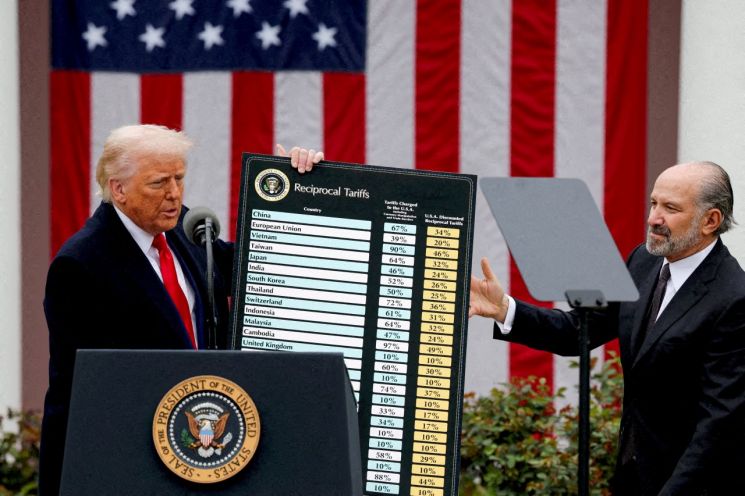
On July 23 (local time), the Financial Times (FT), citing multiple sources, reported that the EU is likely to agree to a 15% tariff in order to avoid the 30% tariff that U.S. President Donald Trump has announced will take effect on August 1. This would maintain the current level, which combines the existing average U.S. tariff on EU goods of 4.8% with the 10% basic tariff imposed worldwide since April.
For automobiles, a plan is being discussed to lower the current tariff from 27.5% to 15%. Some items, such as aircraft, distilled spirits, and medical devices, are expected to be exempt from tariffs.
If both sides reach an agreement on these terms, the deal would be similar in scope to the trade agreement signed between the United States and Japan the previous day.
Japan lowered the reciprocal tariff rate set by the United States from the previous 25% to 15%, in exchange for launching a $550 billion investment program in the U.S. and partially opening its rice and automobile markets. The tariff on automobiles, Japan's top export to the U.S., was reduced from 25% to 12.5%, and then adjusted to 15% by adding the existing 2.5% tariff.
Following the U.S.-Japan trade agreement, major countries such as the EU and South Korea are feeling increased pressure to hasten their own negotiations with the United States. In particular, as the EU appears to be leaning toward accepting the 15% tariff rate that Japan agreed to in the U.S.-Japan deal, some analysts suggest that a "15% tariff" could become the benchmark for negotiations between the U.S. and its major trading partners.
Reuters reported that while the United States may make concessions on tariffs for certain items such as aircraft, it is highly likely to maintain the 50% item-specific tariff currently applied to steel products.
The EU is preparing to impose a 30% retaliatory tariff on $93 billion worth of U.S. products, including aircraft, automobiles, and whiskey, if an agreement is not reached by August 1 and the reciprocal tariffs announced by the U.S. go into effect as planned.
Although the atmosphere surrounding the negotiations is positive, foreign media noted that uncertainty remains, as the final decision rests with President Trump.
© The Asia Business Daily(www.asiae.co.kr). All rights reserved.
![Clutching a Stolen Dior Bag, Saying "I Hate Being Poor but Real"... The Grotesque Con of a "Human Knockoff" [Slate]](https://cwcontent.asiae.co.kr/asiaresize/183/2026021902243444107_1771435474.jpg)















