Canada, Indonesia, and Vietnam Face Tariff Pressure Over Digital Tax
"Taxes and Regulations Seen as Taking Profits from U.S. Companies"
The Wall Street Journal (WSJ) reported on the 22nd (local time) that the Donald Trump administration is using the tariff war to benefit its own big tech (large information technology companies).
Sources familiar with the related negotiations stated that measures targeting major U.S. internet companies remain a sticking point in talks with South Korea, Brazil, and the European Union (EU).
On the 25th, U.S. Treasury Secretary Scott Besant and U.S. Trade Representative (USTR) Jamison Greer are scheduled to meet in Washington with South Korea's Deputy Prime Minister and Minister of Economy and Finance Koo Yooncheol, as well as Yeo Hankoo, head of trade negotiations at the Ministry of Trade, Industry and Energy. Related discussions are also expected to take place at this meeting.
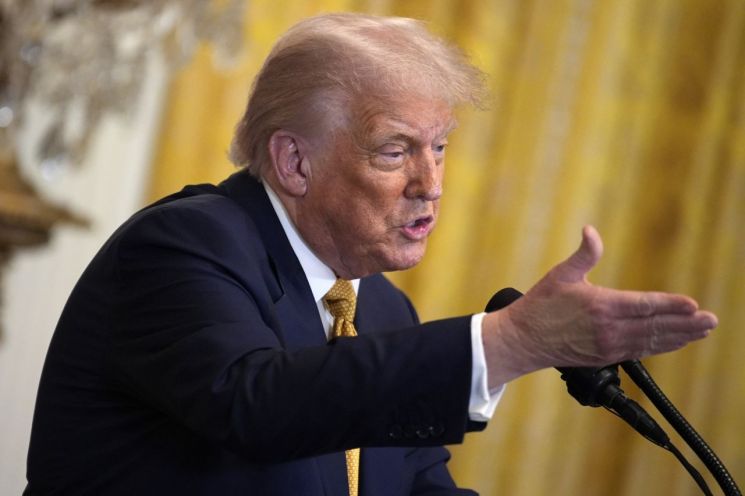
Last month, President Trump pressured Canada by raising issues over its digital tax and threatened to suspend tariff negotiations. Ultimately, Canada abolished the digital tax. WSJ explained that this is an example showing the Trump administration's focus on maintaining U.S. dominance in the technology sector.
In negotiations with Indonesia, the U.S. negotiating team secured a promise from the Indonesian government to withdraw plans to impose tariffs on digital goods such as movies or software downloads. According to those familiar with the matter, a similar promise was obtained from Vietnam, although the relevant negotiation documents have not yet been disclosed.
This is the result of years of lobbying efforts by big tech companies. These companies have long argued that unfair foreign taxes and regulations limit their profits, which in turn could reduce their ability to invest within the United States.
Nue Wexler, a public policy consultant who previously worked at Meta and Google, said, "Tech companies have been extremely skillful in equating the 'big tech agenda' with 'America First.'"
In fact, major big tech executives donated millions of dollars to President Trump's inauguration. After Trump's election, IT industry leaders such as Mark Zuckerberg, CEO of Meta, and Sundar Pichai, CEO of Google, visited President Trump's residence at Mar-a-Lago. According to sources, foreign regulatory issues were discussed at that time.
Officials from the first Trump administration stated that, although President Trump sometimes clashed with tech companies domestically, he has long opposed other countries' attempts to tax and regulate U.S. tech firms. Everett Eissenstat, former Deputy Director of the White House National Economic Council and a close aide to President Trump, said, "President Trump sees this (taxes and regulations) as a way for other countries to unfairly take profits from American companies."
Kush Desai, White House spokesperson, said that the Trump administration is committed to fulfilling President Trump's pledge to protect innovative American companies from unfair foreign practices.
© The Asia Business Daily(www.asiae.co.kr). All rights reserved.
![Clutching a Stolen Dior Bag, Saying "I Hate Being Poor but Real"... The Grotesque Con of a "Human Knockoff" [Slate]](https://cwcontent.asiae.co.kr/asiaresize/183/2026021902243444107_1771435474.jpg)















