Significant 10 Percentage Point Reduction in Reciprocal Tariffs
Steel and Aluminum Tariffs Maintained at 50%
Japan to Jointly Invest in LNG Projects in Alaska
The Donald Trump administration has agreed to lower reciprocal tariffs and automobile tariffs on Japan to 15% each. In return, Japan will open its automobile and agricultural markets and invest $550 billion (approximately 759 trillion won) in the United States. The conclusion of negotiations between the United States and Japan is expected to have an impact on South Korea, which is also in negotiations with the United States.
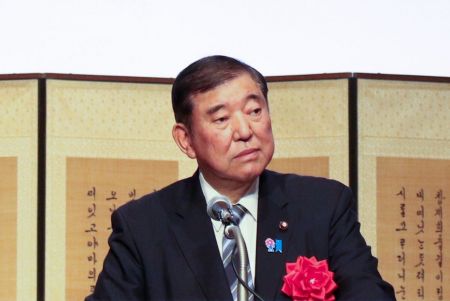
According to NHK and other sources on the 23rd, Prime Minister Ishiba met with reporters at the Prime Minister's Office in the morning and announced that the U.S.-Japan trade negotiations had been concluded, stating that the United States had agreed to lower both reciprocal tariffs and automobile tariffs on Japan to 15%.
Previously, on the 22nd (local time), President Trump announced on his own social networking service, Truth Social, that he had concluded tariff negotiations with Japan and would apply a 15% reciprocal tariff to Japan. President Trump had previously indicated on the 7th that he would raise the reciprocal tariff on Japan by 1 percentage point to 25%, but has now lowered it by 10 percentage points.
In exchange for lowering reciprocal tariffs, Japan agreed to open its markets for automobiles, trucks, rice, and certain agricultural products, and to promise $550 billion in investment in the United States.
The tariff rate on automobiles, which accounts for 80% of Japan's trade surplus with the United States, was set at 15%. The 25% automobile tariff, which has been applied since April, will be reduced to 12.5%, and then the existing 2.5% tariff will be added, resulting in a final tariff rate of 15%.
However, tariffs on steel and aluminum will remain at the existing 50%. The Japanese government has repeatedly requested exemptions from tariffs on steel and aluminum from the United States, but was unable to achieve this in the current negotiations.
Regarding rice, which was a key issue in the tariff negotiations, the Japanese government decided not to lower tariffs on U.S. rice, unlike other Southeast Asian countries such as Vietnam, Indonesia, and the Philippines, which had previously concluded negotiations, but instead to increase the import volume of U.S. rice. Prime Minister Ishiba emphasized, "This agreement does not involve sacrificing agriculture in any way."
Regarding imports of U.S. rice, Prime Minister Ishiba stated that the Japanese government would secure the necessary rice within the framework of the Minimum Market Access (MMA) system, which mandates a certain amount of imports, and said, "We will increase the proportion of U.S. rice procurement within the framework."
Japan imports about 770,000 tons of rice annually without tariffs. Of this, the amount for staple food use is limited to about 100,000 tons. To import rice beyond this amount, a tariff of 341 yen (about 3,200 won) per kilogram must be paid. Kyodo News reported, "The import of neutral varieties of rice for staple food use will be increased."
The Japanese government also promised joint ventures with the United States for liquefied natural gas (LNG) development in Alaska. However, regarding President Trump's statement that "Japan will invest $550 billion in the United States," no specific details have been disclosed. Prime Minister Ishiba also did not provide specifics on this matter.
Prime Minister Ishiba emphasized that this trade agreement is in line with the national interest. He stated, "We have pursued an agreement that protects what needs to be protected and serves the national interests of both Japan and the United States," adding, "Such an agreement was achieved with President Trump."
Regarding his position following the defeat in the House of Councillors (upper house) election on the 20th, he said, "I cannot comment without closely examining the details of the agreement," and refrained from further comment. In this regard, the Mainichi Shimbun reported that Prime Minister Ishiba has decided to announce his resignation by late August.
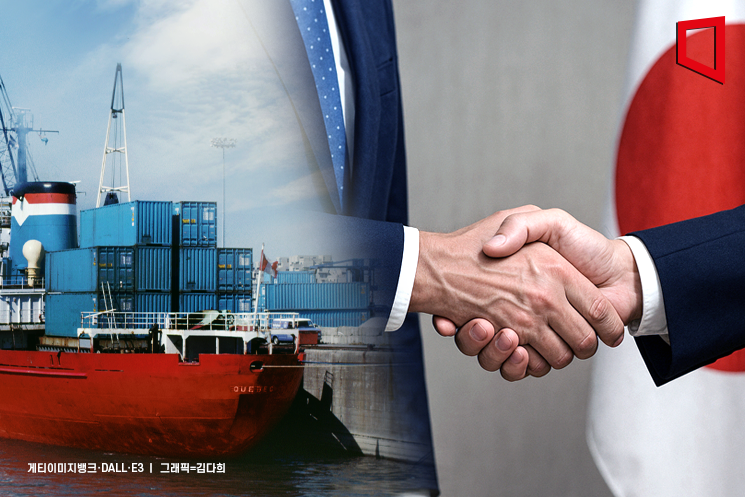
Meanwhile, with only nine days remaining before the reciprocal tariff deadline, Yeo Han-koo, head of trade negotiations at the Ministry of Trade, Industry and Energy, arrived in Washington, D.C. on the 22nd. Minister of Trade, Industry and Energy Kim Jung-kwan and Deputy Prime Minister and Minister of Economy and Finance Koo Yoon-cheol will also visit the United States this week. The Trump administration previously notified South Korea of a 24% reciprocal tariff rate. Currently, among Asian countries, Japan, Indonesia, Vietnam, and the Philippines have concluded trade negotiations with the United States.
The U.S.-Japan trade agreement is expected to have a significant impact on South Korea as well. Reuters reported, "The agreement will put pressure on South Korea, as it now faces the burden of reaching a tariff agreement at a level similar to or better than Japan's 15% by August 1 in order to avoid the 25% reciprocal tariff imposed by the United States."
© The Asia Business Daily(www.asiae.co.kr). All rights reserved.
![Clutching a Stolen Dior Bag, Saying "I Hate Being Poor but Real"... The Grotesque Con of a "Human Knockoff" [Slate]](https://cwcontent.asiae.co.kr/asiaresize/183/2026021902243444107_1771435474.jpg)
















