Recognition of U.S. Automotive Safety Standards and Abandonment of Data Company Taxation
U.S. May Also Demand Removal of Non-Tariff Barriers from Korea
Indonesia has agreed to exempt automobiles, agricultural products, and pharmaceuticals from various regulations in exchange for lowering the reciprocal tariff rate imposed by the United States from 32% to 19%. Since these are the same items for which the United States has claimed the existence of non-tariff barriers and demanded regulatory removal from Korea, there is speculation that the U.S. may make similar demands of Korea.
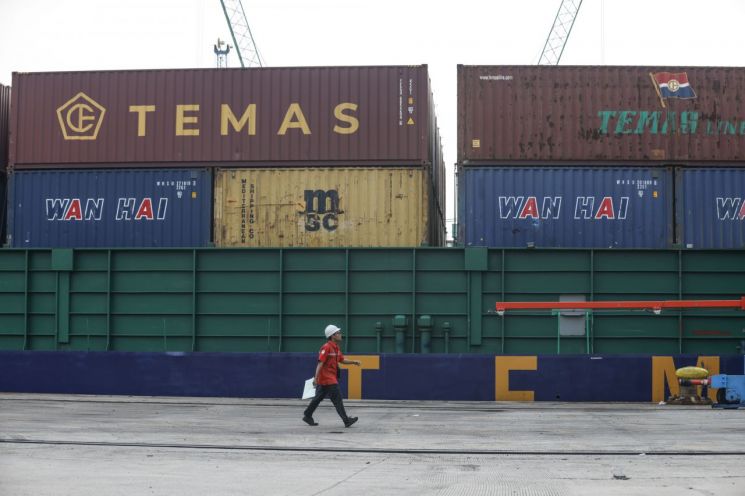
On July 22 (local time), a senior official from the Trump administration stated during a press briefing on the details of the trade agreement with Indonesia, "Indonesia will reduce tariffs to zero on more than 99% of products traded with the United States and will eliminate all non-tariff barriers against the United States."
Regarding non-tariff barriers, the senior official said, "Indonesia will stop efforts to tax the flow of data and will immediately and unconditionally support the World Trade Organization (WTO) moratorium on e-commerce tariffs." He added, "Indonesia was one of several countries that wanted to impose internet taxes to effectively take away sales from U.S. companies. This agreement provides the clarity needed for U.S. exporters and achieves a historic accomplishment by sending a signal to other countries that a tariff-free internet is important."
The United States has been highly sensitive to moves by other countries to regulate American digital companies, strongly objecting to initiatives such as the enactment of platform laws in negotiations with Korea. It appears that the U.S. has also succeeded in securing these demands in its negotiations with Indonesia.
The senior official also stated that Indonesia has agreed to eliminate pre-shipment inspections and certification requirements for U.S. products such as agricultural goods. Additionally, Indonesia will accept U.S. federal automotive safety standards for automobiles imported from the United States. He explained, "This is something the United States has sought to secure in global markets for decades." The U.S. has long argued that it is a trade barrier when other countries apply their own safety standards, different from U.S. standards, to imported American vehicles, and has pressured Korea to recognize U.S. automotive safety and environmental standards to reduce the certification burden on American companies.
The senior official stated that Indonesia will not impose restrictions on the export of critical minerals to the United States.
Indonesia will also exempt U.S. companies from local content requirements. The senior official explained, "Previously, U.S. companies wishing to sell products in the Indonesian market had to build facilities there or meet certain local content thresholds, but now Indonesia will not impose such requirements on U.S. exporters."
Indonesia has agreed to recognize U.S. Food and Drug Administration (FDA) certification and pre-market approval for medical devices and pharmaceuticals. The senior official noted that it can take several years for U.S. companies to obtain such certification and approval in any country, stating, "But now Indonesia has agreed not to require this kind of duplicative procedure for medical devices and pharmaceuticals." U.S. pharmaceutical companies have previously expressed dissatisfaction with the lengthy and complex drug approval process by Korean health authorities, and the U.S. government has also demanded improvements from the Korean government.
The United States will impose a 40% tariff, instead of 19%, on products transshipped through Indonesia from countries such as China in order to avoid tariffs.
The senior official estimated that the agreement will give the United States access to new markets and that Indonesia's purchases of U.S. products such as liquefied natural gas (LNG) will result in at least $50 billion in benefits for the United States. Last year, the U.S. recorded an $18 billion trade deficit with Indonesia.
The conclusion of the trade negotiations with Indonesia was first announced by President Trump on July 15. However, at that time, President Trump only revealed general details such as the reciprocal tariff reduction (32% to 19%), and the specifics of the agreement were disclosed for the first time on this day. In a post on the social networking service Truth Social, President Trump stated, "Indonesia will supply valuable critical minerals to the United States and will enter into massive deals worth tens of billions of dollars to purchase Boeing aircraft, U.S. agricultural products, and energy." He added, "Indonesia has agreed to eliminate 99% of tariff barriers, becoming an open market for U.S. industrial and technological products and agricultural goods. This deal is a tremendous victory for our automakers, technology companies, workers, farmers, livestock industry, and manufacturers."
© The Asia Business Daily(www.asiae.co.kr). All rights reserved.
![Clutching a Stolen Dior Bag, Saying "I Hate Being Poor but Real"... The Grotesque Con of a "Human Knockoff" [Slate]](https://cwcontent.asiae.co.kr/asiaresize/183/2026021902243444107_1771435474.jpg)















