Extreme Weather Events Increasing Worldwide
Last Year: Korean Napa Cabbage Up 70%, Japanese Rice Up 48%
Cocoa Prices Triple, Chocolate Prices Soar in the United Kingdom
Extreme weather events caused by climate change are becoming more frequent around the world, leading to cases of rapid and significant increases in food prices over short periods of time.
On the 21st (local time), the Financial Times (FT) in the United Kingdom reported, citing research from the Barcelona Supercomputing Center, that "food supply systems are becoming increasingly vulnerable to climate shocks." While previous studies have shown that prolonged high temperatures can cause overall food price inflation in the long term, this new research emphasizes that certain items are experiencing much sharper and more sudden price spikes.
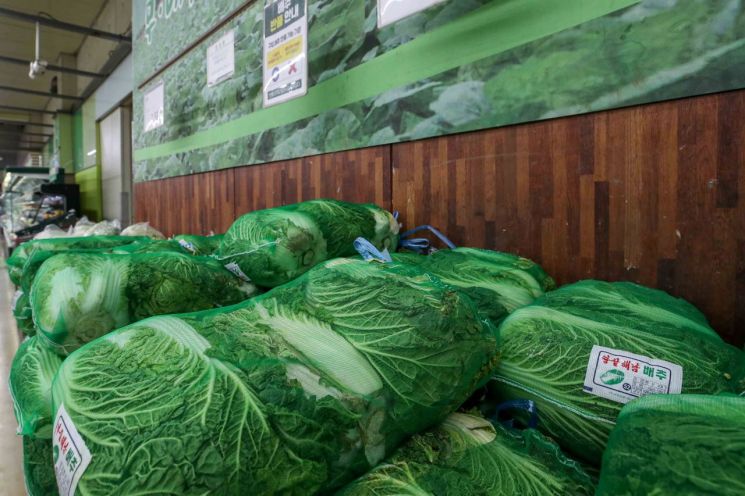
For example, after experiencing the worst heatwave on record last year, the price of napa cabbage in South Korea surged by 70%. In India, onion prices jumped by 89% immediately following a heatwave in May of the same year. In Japan, rice prices soared by 48% within a month after an August heatwave last year. In California, United States, the price of Arizona-grown vegetables rose by 80% after a drought in November 2022. In Europe, the price of olive oil increased by 50% as a result of prolonged drought.
Maximilian Koets, the lead author of the study, warned, "If food supply chains continue to respond as sensitively to climate change as they do now, we will see more frequent and even larger, less predictable surges in food prices in the future." He also pointed out that most of the weather events that triggered these price spikes were unprecedented and far beyond what could have been imagined under previously stable climate conditions.
The study noted that sharp increases in food prices are not confined to specific regions but spread worldwide through global trade networks. In fact, when drought and heatwaves in Ghana and C?te d'Ivoire?the world's largest cocoa producers?caused cocoa prices to triple, chocolate prices in the United Kingdom rose significantly as well.
Rising food prices have also been found to impact the lives of low-income households. The researchers noted in the paper that when food prices rise, poor families are less likely to consume nutritious foods. Anna Taylor, co-author of the study and executive director of the Food Foundation in the United Kingdom, stated, "When food prices go up, consumption of fruits and vegetables becomes especially vulnerable."
© The Asia Business Daily(www.asiae.co.kr). All rights reserved.
![Clutching a Stolen Dior Bag, Saying "I Hate Being Poor but Real"... The Grotesque Con of a "Human Knockoff" [Slate]](https://cwcontent.asiae.co.kr/asiaresize/183/2026021902243444107_1771435474.jpg)















