KERI Report Analyzes Impact on Auto and Battery Industries
U.S. Electric Vehicle Sales Could Drop by Up to 37%
Financial Support Needed, Including Policy Funds and Tax Benefits
An analysis has found that the large-scale U.S. tax cut law (OBBBA), which took effect on July 4, is expected to reduce the sales of Korean electric vehicles in the United States by $1.9 billion (approximately 2.7 trillion won).
The Korea Economic Research Institute (KERI) announced this in a report released on July 21, which examined the impact and implications of the U.S. Trump administration's large-scale tax cut law on the automobile and battery industries. KERI analyzed the effects of the tax cut law on Korea's electric vehicle and battery industries and proposed policy tasks to help domestic companies maintain their global competitiveness.
The OBBBA includes provisions to abolish many clean energy support policies that had been implemented under the Biden administration's Inflation Reduction Act (IRA). In particular, the electric vehicle purchase tax credit, which had encouraged Korean automobile and battery companies to expand their investments in the United States, is now scheduled to end early at the end of September this year. In addition, new supply chain requirements have been added to the battery production tax credit, which previously only specified production within the United States.
According to the U.S. think tank National Bureau of Economic Research (NBER), if the electric vehicle tax credit is completely eliminated in the United States, the sales volume of domestic electric vehicle manufacturers (including Hyundai Motor Company) could decrease by up to 37%. Based on this, KERI estimated that, if the electric vehicle tax credit ends due to the implementation of OBBBA, Korean companies could see their annual electric vehicle sales in the U.S. market decrease by up to 45,000 units (with sales dropping by $1,955,080,000).
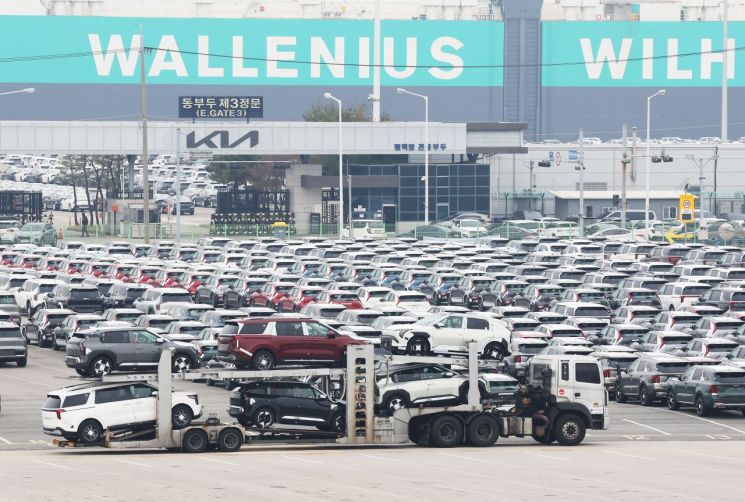
Hyundai Motor Group has invested about $8 billion to build a dedicated electric vehicle plant (HMGMA) in Georgia, United States, aiming to expand its presence in the North American electric vehicle market. Starting in January 2025, five electric vehicle models from Hyundai Motor Group were expected to qualify for the tax credit, raising expectations for investment support. However, KERI expressed concern that the risk of investment recovery is increasing due to the implementation of OBBBA.
Furthermore, the U.S. electric vehicle tax credit has not simply served as an incentive to boost electric vehicle purchases; it has also been used as a strategic tool to restructure supply chains by imposing requirements on the origin of critical minerals, battery component composition ratios, and supply chain standards. The three major Korean battery companies have pursued over 72% of their U.S. production bases through joint ventures with automakers. However, KERI analyzed that if the electric vehicle purchase tax credit ends and demand shrinks, there is a risk of lower operating rates and deteriorating profitability.
KERI argued that, in order to mitigate the impact on the electric vehicle and battery industries from the implementation of OBBBA and to maintain global competitiveness, financial support such as policy funds and tax benefits is necessary. First, KERI called for the National Assembly to promptly process the amendment to the Korea Development Bank Act to establish a 50 trillion won "Advanced Strategic Industry Fund" within the bank, as well as the approval for national guarantees of fund bonds. KERI also stated that a dedicated department should be established within the Korea Development Bank to reduce the time lag in fund execution.
Additionally, KERI urged that, to help Korean companies respond to global supply chain crises, the operation period of the supply chain stabilization fund (currently set to end in 2029) should be extended, and that flexible support measures should be secured by using contributions from the Export-Import Bank of Korea as a financial resource, in order to respond to mid- and long-term risks. KERI also emphasized that, to strengthen the competitiveness of the battery industry, which focuses on research and development (R&D) investment domestically, measures to liquidate tax credits?such as temporary direct refunds for research and personnel development expenses or allowing the transfer of refund claims to third parties?should be applied to increase the effectiveness of tax benefits.
Lee Sangho, head of the Economic and Industrial Division at KERI, stated, "In an uncertain global policy environment, proactive financial support and institutional improvements from the government are needed to ensure the stable production base and international competitiveness of our companies." He also emphasized, "In order for the electric vehicle and battery industries to become future growth engines, it is urgent to provide comprehensive support that combines funds and tax benefits."
© The Asia Business Daily(www.asiae.co.kr). All rights reserved.
![Clutching a Stolen Dior Bag, Saying "I Hate Being Poor but Real"... The Grotesque Con of a "Human Knockoff" [Slate]](https://cwcontent.asiae.co.kr/asiaresize/183/2026021902243444107_1771435474.jpg)















