Namyangju Mayor Joo Gwangdeok Orders Comprehensive Drainage Overhaul
"Temporary maintenance cannot prevent recurring damage"
Emphasizes on-site inspections and real-time response system
On July 19, Namyangju Mayor Joo Gwangdeok personally visited disaster-prone areas in the city that had suffered flooding due to heavy rainfall, inspecting the sites and stating, "Temporary maintenance cannot prevent recurring damage." He ordered a comprehensive overhaul of the drainage system.
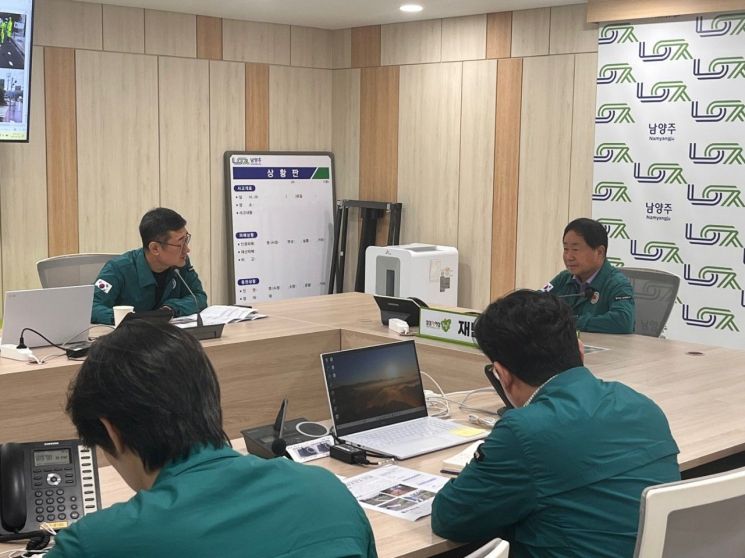 Joo Gwangdeok, mayor of Namyangju City, is holding an emergency inspection meeting on the 19th to prepare for heavy rain damage. Photo by Namyangju City
The heavy rain advisory, which had been in effect since 12:20 a.m. that day, was lifted at 7:30 a.m. The city held an emergency inspection meeting to review the status of flood damage and emergency restoration efforts.
The meeting was attended by Mayor Joo Gwangdeok, the Director of Citizen Safety, and key team leaders. They focused on discussing the current status of flood damage, the progress of emergency restoration, and management plans for remaining risk factors.
According to the Korea Meteorological Administration, the average rainfall that day was 29.1 mm, with a maximum of 47 mm in Byeollae-myeon and a minimum of 13 mm in Yangjeong-dong.
At 12:20 a.m. that day, Namyangju City declared Emergency Response Level 1 and urgently deployed a total of 197 personnel, including the situation room, various departments, and reserve teams from towns and neighborhoods.
Immediately after the emergency meeting, Mayor Joo visited the Pyeongnae-dong Gungjip Hwangto Barefoot Walking section to inspect the site in person.
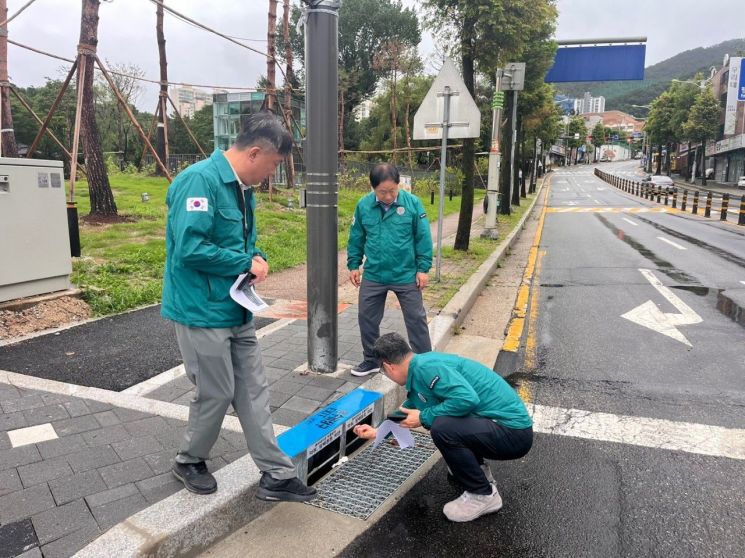 Namyangju Mayor Joo Gwangdeok is visiting the Pyeongnae-dong Gungjip Hwangto Barefoot Walking section in person after holding an emergency inspection meeting on the 19th to check the site. Provided by Namyangju City
This section has frequently experienced drainage blockages due to repeated loss of hwangto soil. After inspecting the site, Mayor Joo instructed, "Stop patchwork maintenance and develop structural improvement measures."
Additionally, Mayor Joo emphasized, "For areas with a history of frequent flooding, such as Jungchon Underpass, thorough advance monitoring and a response system that allows for immediate control must be established." He also urged, "Risk factors such as construction sites, slopes, and retaining walls, where the ground may have been weakened, should be checked and addressed directly on site."
As up to 65 mm of additional rainfall is forecast by the morning of July 20, Namyangju City plans to maintain certain emergency response measures, conduct re-inspections of high-risk areas, continue emergency restoration, provide real-time information to citizens, and focus on post-disaster management and prevention activities.
© The Asia Business Daily(www.asiae.co.kr). All rights reserved.
![Clutching a Stolen Dior Bag, Saying "I Hate Being Poor but Real"... The Grotesque Con of a "Human Knockoff" [Slate]](https://cwcontent.asiae.co.kr/asiaresize/183/2026021902243444107_1771435474.jpg)
















