Scored 97.7 Points in Health Insurance Review and Assessment Service Evaluation
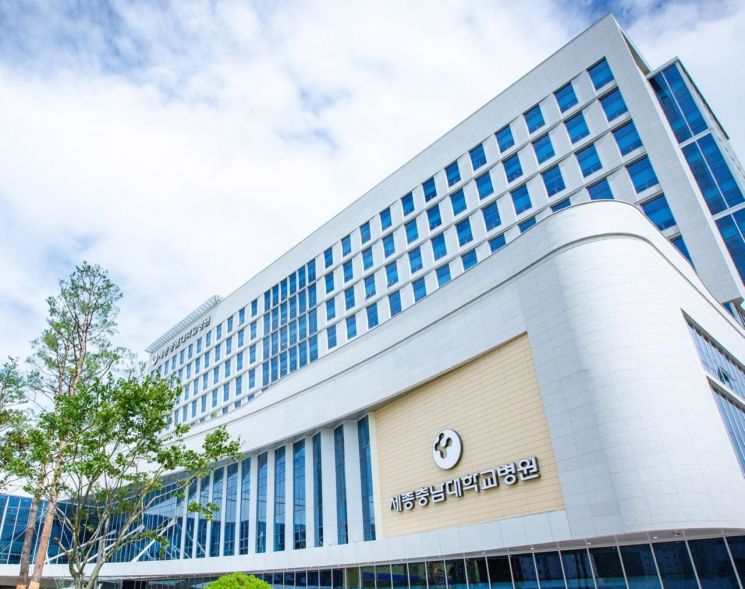 Sejong Chungnam National University Hospital exterior.
 Photo by External Cooperation Public Relations Team
Sejong Chungnam National University Hospital announced on the 18th that it received a score of 97.7 in the 2023 (6th) pneumonia adequacy assessment conducted by the Health Insurance Review and Assessment Service, earning the highest Grade 1 rating for the second consecutive time following the 2021 (5th) assessment, in which it scored 96.9.
According to the hospital, the 6th adequacy assessment was conducted over six months from October 2023 to March 2024. It targeted 45,509 cases at 599 medical institutions of hospital level or higher, including 46 tertiary general hospitals, 304 general hospitals, and 248 hospitals, where adult patients aged 18 or older who were hospitalized with community-acquired pneumonia received antibiotic treatment for three days or more.
The assessment was based on five evaluation indicators: oxygen saturation test implementation rate, severity assessment tool usage rate, sputum culture test prescription rate, blood culture test implementation rate before first antibiotic administration, and antibiotic administration rate within eight hours of hospital arrival. In addition, four monitoring indicators were used: average length of stay per case, high cost per case, readmission rate, and mortality rate.
Pneumonia is the most common infectious disease worldwide, with higher prevalence and mortality rates among the elderly population. In particular, pneumonia ranks as the third leading cause of death in Korea, with a pneumonia mortality rate of 57.5 per 100,000 people in 2023. The mortality rate increases with age, recorded at 1.6 per 100,000 for people in their 40s, 23.9 for those in their 60s, and 130.7 for those in their 70s.
Pneumonia is an infectious disease that causes inflammation in lung tissue due to bacteria, viruses, fungi, or other pathogens. It can cause symptoms such as sputum, cough, shortness of breath, fever, and chills. In severe cases, it may lead to sepsis or shock, and sometimes nonspecific symptoms such as fatigue, headache, or diarrhea can also occur. Streptococcus pneumoniae, known as a causative agent of pneumonia, is transmitted through the respiratory tract. However, there are more than 90 known pathogens that can cause pneumonia. Therefore, it is important to identify the causative pathogen and administer appropriate antibiotic treatment for effective management of pneumonia.
Hospital Director Kwon Gyecheol stated, "We are doing our utmost to provide high-quality medical services and take responsibility for the health of local residents through accurate diagnosis and treatment of pneumonia."
© The Asia Business Daily(www.asiae.co.kr). All rights reserved.
![Clutching a Stolen Dior Bag, Saying "I Hate Being Poor but Real"... The Grotesque Con of a "Human Knockoff" [Slate]](https://cwcontent.asiae.co.kr/asiaresize/183/2026021902243444107_1771435474.jpg)















