As tariff negotiations between South Korea and the United States enter their final phase ahead of the August 1 deadline for the suspension of reciprocal tariffs by the U.S., the talks are facing mounting difficulties due to a complex mix of internal government disagreements over agricultural market liberalization and additional variables from the National Assembly. While the U.S. is demanding comprehensive liberalization of the agricultural sector, the South Korean government maintains that it will defend sensitive items as much as possible while strategically responding to some products. However, conflicts between government ministries over this approach are cited as a major obstacle to progress in the negotiations.
On July 18, an official from the Ministry of Trade, Industry and Energy stated, "As the U.S. has expanded its demands beyond steel and automobiles to include agriculture and digital sectors, the complexity of the negotiations has increased," adding, "There is room for liberalization regarding some items, but considering the political and social costs, a cautious approach is necessary."
The main agricultural items currently being demanded by the U.S. reportedly include: ▲ allowing the import of beef from cattle over 30 months old; ▲ expanding the tariff rate quota (TRQ) for rice; ▲ simplifying quarantine procedures for fruits such as apples, blueberries, and cherries; and ▲ permitting the import of genetically modified (LMO) potatoes. In particular, rice, beef, and apples are defined as 'red lines' by the domestic agricultural sector, making large-scale backlash inevitable depending on the outcome of market liberalization for these products.
The problem is that disagreements between ministries over these sensitive issues are surfacing openly. The Ministry of Trade, Industry and Energy, which is leading the working-level negotiations, argues that "some items can be strategically considered" in response to the urgent diplomatic and trade situation posed by the tariff suspension. Yeo Han-koo, head of trade negotiations at the ministry, recently stated, "A flexible attitude is also necessary to reach an agreement."
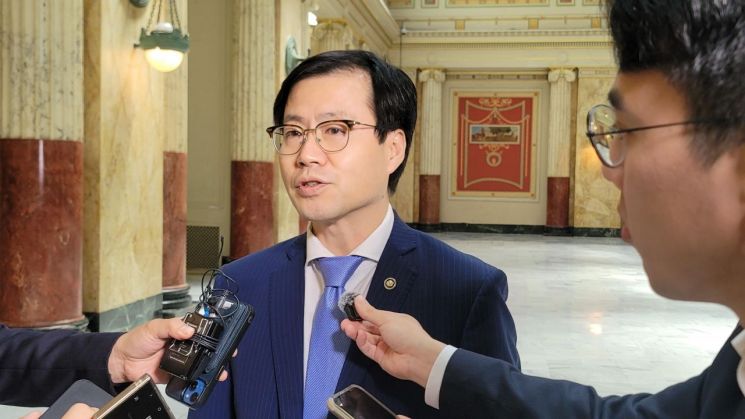
In contrast, the Ministry of Agriculture, Food and Rural Affairs is strongly objecting, even raising the so-called 'passing' issue, claiming the agricultural sector is being sidelined in the negotiations. An official from the ministry emphasized, "Core items such as rice and beef can never be brought to the negotiating table," and warned, "An approach that does not consider the damage to the agricultural sector will, in the long term, place a greater burden on the entire Korean economy."
These differences are spreading beyond working-level discussions and becoming a political controversy. Major agricultural organizations, including the National Hanwoo Association and the Korean Peasants League, have voiced strong opposition to the government's negotiation direction, stating that "agriculture is once again being made a scapegoat." They have announced plans to hold relay press conferences and large-scale rallies in Seoul and other regions by the end of this month, and are showing signs of forming alliances with the National Assembly.
In the political sphere, there are growing calls that if agricultural market liberalization is included in the negotiation results, parliamentary ratification will be required. According to Article 60 of the Constitution and the Trade Procedure Act, any treaty or economic agreement between countries that has a significant impact on citizens' rights must be approved by the National Assembly. While simple tariff adjustments or administrative measures at the presidential decree level can be implemented without ratification, there is an interpretation that structural liberalization of the agricultural sector, if formalized in writing, would clearly require parliamentary approval.
When the Korea-U.S. Free Trade Agreement (FTA) was concluded in 2011, provisions for the phased liberalization of beef, rice, and fruit were included, and the agreement was ratified by the National Assembly. Similarly, if the U.S. specifies agricultural items as a condition for 'mutual tariff exemption' and organizes this in the form of an agreement, review and consent by the National Assembly would be unavoidable.
As a result, standing committees in the National Assembly are continuing to demand public hearings and government reports. Lawmakers from both the ruling and opposition parties argue that the impact of these negotiations on domestic industries and people's livelihoods must be thoroughly examined.
Some suggest that trade authorities may seek to conclude the talks at the level of a 'principled agreement' to facilitate smooth negotiations, leaving detailed sensitive items to be addressed in subsequent working-level talks. In other words, by reaching only a general agreement without specifying particular items or figures, the government could temporarily avoid triggering the requirement for parliamentary ratification.
However, this 'ratification avoidance strategy' could actually fuel greater political controversy in the future. A political source noted, "If the content of the agreement effectively presupposes agricultural market liberalization, then the formal logic of avoiding ratification will lose credibility with both the National Assembly and the public," adding, "It is desirable to provide clear explanations and follow legitimate procedures."
© The Asia Business Daily(www.asiae.co.kr). All rights reserved.
![Clutching a Stolen Dior Bag, Saying "I Hate Being Poor but Real"... The Grotesque Con of a "Human Knockoff" [Slate]](https://cwcontent.asiae.co.kr/asiaresize/183/2026021902243444107_1771435474.jpg)















