Genius Act, Regulatory Framework Bill, and CBDC Ban Passed in Succession
Active Lobbying by U.S. Virtual Asset Industry Pays Off
Ripple Hits All-Time High on Hopes for Market Institutionalization
On the 17th (local time), the U.S. House of Representatives passed three bills related to virtual assets, officially launching the institutionalization of virtual assets in the United States. With the first-ever federal law on virtual assets in the U.S. nearing enactment, market expectations are rising even higher.
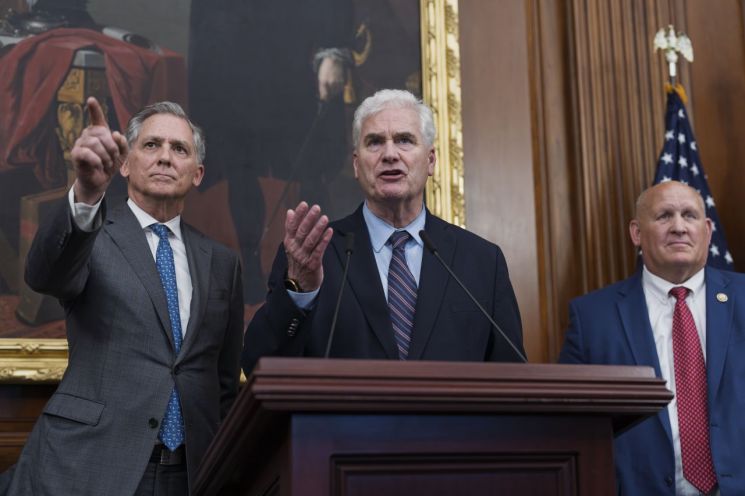
On this day, the House held a plenary session and passed the key virtual asset bill, the "Genius Act," with 308 votes in favor and 122 against. The purpose of this bill is to establish a basic regulatory framework to bring stablecoin use into the institutional system by defining the legal status of stablecoins, setting issuance procedures, and establishing disclosure obligations.
The Genius Act already passed the Senate in June and now only awaits President Donald Trump's signature. If President Trump signs the bill on the 18th, it will become the first federal law on virtual assets in U.S. history.
The House also passed a comprehensive bill establishing a regulatory system for virtual asset exchanges, brokers, and issuers. This bill determines which agency will supervise the digital asset market, and further deliberation is scheduled in the Senate. In addition, lawmakers passed a bill prohibiting the Federal Reserve (Fed) from issuing a central bank digital currency (CBDC).

Previously, House leadership named this week "Crypto Week" and announced plans to focus on processing virtual asset-related bills. However, during a procedural vote held on the 15th, the bills failed to move forward as not only Democrats but also some Republican lawmakers voted against them, preventing the start of full-scale discussions.
In particular, some Republican lawmakers have raised concerns that a central bank CBDC could be misused for government surveillance. In response, President Trump directly engaged with conservative Republican lawmakers to secure support for the bill by including a provision prohibiting CBDC issuance. Some Democratic lawmakers pointed out the potential conflict of interest, claiming that President Trump's family is involved in businesses related to the virtual asset industry. Nevertheless, the majority of lawmakers supported the passage of the bill, stating that "establishing a clear regulatory framework is the way to ensure fairness."
There is an assessment that the virtual asset industry, having responded to regulatory risks during the Joe Biden administration by ramping up lobbying efforts in the political sphere, has succeeded in securing legislative support from the Trump administration and the Republican Party. Major virtual asset companies such as Coinbase and Circle have demanded clear legal standards after conflicts with regulatory authorities under the Biden administration.
The Wall Street Journal (WSJ) reported, "They invested significant funds in last year's election, joined hands with President Trump and many Republican lawmakers, and received support in this legislative process as well."
The UK’s Financial Times (FT) also interpreted, "This legislation is seen as the result of the virtual asset industry, which faced regulatory risks under the Biden administration, securing support by pouring massive funds into the 2024 election."
However, since the Senate is preparing a separate virtual asset regulatory bill, there is a high possibility that the content will differ from the bill passed by the House. Therefore, conflicts between the two sides during the coordination process are inevitable until the final bill is confirmed.
Major U.S. banks have also expressed expectations for entering the digital asset market. Jamie Dimon, CEO of JPMorgan, stated this week, "We plan to participate in both JPMorgan's deposit coin and stablecoin," expressing strong intent.
Jane Fraser, CEO of Citigroup, also commented, "I view the Genius Act very positively," and pointed out, "It has not been easy to participate in the digital asset market on an equal competitive footing until now."
With the passage of the three virtual asset bills in the House on this day, altcoins are experiencing a sharp rise, with XRP (Ripple), the third-largest virtual asset by market capitalization, reaching an all-time high. According to Coinbase, as of 5:20 p.m. Eastern Time, the price of one Bitcoin was $120,634, up slightly (0.03%) from 24 hours earlier.
© The Asia Business Daily(www.asiae.co.kr). All rights reserved.
![Clutching a Stolen Dior Bag, Saying "I Hate Being Poor but Real"... The Grotesque Con of a "Human Knockoff" [Slate]](https://cwcontent.asiae.co.kr/asiaresize/183/2026021902243444107_1771435474.jpg)

















