Cost Reduction and Management Efficiency Expected
Hanil Cement and Hanil Hyundai Cement will merge to form a new entity under the name "Hanil Cement." This strategy aims to enhance management efficiency amid the ongoing downturn in the domestic construction market.
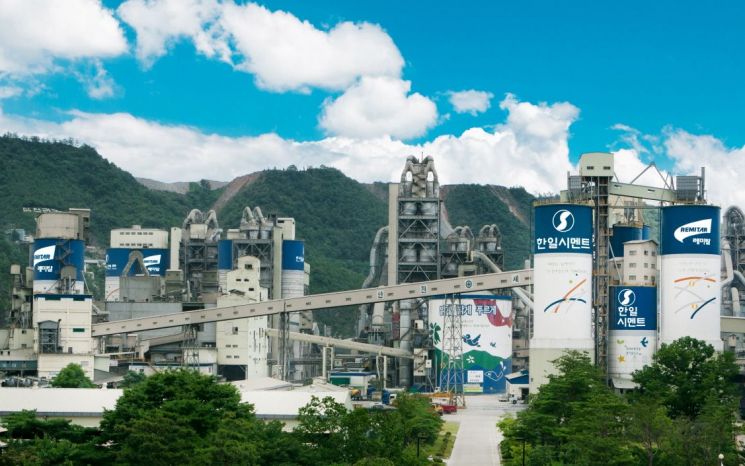
On July 17, Hanil Cement and Hanil Hyundai Cement each held board meetings and announced that they had approved the merger between the two companies.
This merger decision was made in response to the continued uncertainty in the domestic construction market and intensifying industry competition. The company aims to achieve management efficiency by reducing overlapping investments and costs, realize economies of scale by combining assets and infrastructure and increasing market share, and enhance both shareholder value and corporate value by resolving the dual-listing structure and unifying investments.
Following the merger, Hanil Cement's annual sales are expected to approach approximately KRW 1.7 trillion based on last year's figures. In addition, the company's share of the domestic Portland cement market will exceed 20%, further solidifying its position as the industry leader.
The merger will be carried out by issuing new shares of Hanil Cement, the surviving company, to shareholders of Hanil Hyundai Cement. According to the agreed merger ratio, each common share of Hanil Hyundai Cement will be exchanged for 1.0028211 common shares of Hanil Cement. The merger date is set for November 1.
Meanwhile, in 2017, Hanil Cement, together with LK Investment Partners, established HLK Holdings as a special purpose company to acquire Hyundai Cement. After acquiring LK Investment Partners' stake in HLK Holdings through a call option in 2019, Hanil Cement absorbed HLK Holdings in 2020, making Hyundai Cement a subsidiary of Hanil Cement and completing a vertically integrated structure. Since 2021, through on-market purchases and equity conversions, Hanil Cement's stake in Hyundai Cement has reached 77.78%. Since then, the company has focused on creating synergy through integration processes such as personnel exchanges, sharing infrastructure and production know-how, and improving organizational culture.
Jeon Geunsik, CEO of Hanil Cement, stated, "Through this merger, we expect to maximize management efficiency by reducing overlapping investments and external costs related to cement production. We will continue to strive for sustainable growth through management efficiency."
© The Asia Business Daily(www.asiae.co.kr). All rights reserved.
![Clutching a Stolen Dior Bag, Saying "I Hate Being Poor but Real"... The Grotesque Con of a "Human Knockoff" [Slate]](https://cwcontent.asiae.co.kr/asiaresize/183/2026021902243444107_1771435474.jpg)















