Large Sums Flow into Ultra-Short-Term Bond Products Like RP and Money Market ETFs
Sideline Funds Gauge Whether the Rally Will Continue or a Short-Term Correction Is Ahead
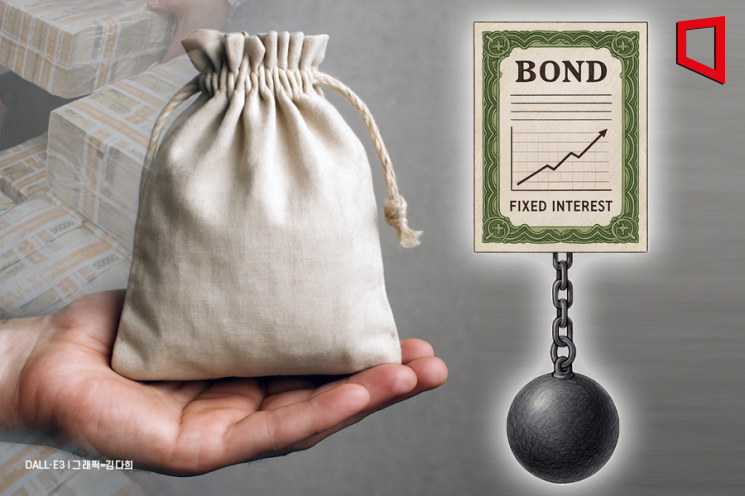
Large sums of money are flowing into 'parking-type' products that invest in ultra-short-term bonds. With the KOSPI approaching its all-time high and now pausing for breath, it appears that more and more funds are waiting on the sidelines, trying to gauge the direction of the stock market.
According to Koscom on July 18, approximately 786.8 billion won flowed into the 'TIGER Money Market Active' ETF over the past month as of July 16. This is the highest among all exchange-traded funds (ETFs). In the same period, 'KODEX 200' and 'KODEX Leverage', which bet on the rise of the KOSPI, saw net outflows of 372 billion won and 354.7 billion won, respectively. Since the beginning of this year, investors have poured a total of 4.2379 trillion won into 'TIGER Money Market Active' and 'KODEX Money Market Active'.

Money Market Active ETFs invest in ultra-short-term bonds with maturities of less than three months, commercial paper (CP), and certificates of deposit (CD), aiming to provide stable returns. Compared to money market funds (MMFs), which have similar underlying assets, these ETFs offer higher liquidity and profitability, making them increasingly popular among investors seeking parking-type products. Currently, the assets under management (AUM) of 'KODEX Money Market Active' stand at 6.4876 trillion won, making it the fourth largest ETF by size.
There is also strong interest in repurchase agreements (RPs). According to the Korea Financial Investment Association, as of July 11, the outstanding balance of customer-facing RP sales reached a record high of 97.8845 trillion won. At the end of last year, the outstanding balance was around 83 trillion won, but it surpassed the 90 trillion won mark early this year and, for the first time last month, exceeded 97 trillion won. Customer-facing RPs are bonds sold by securities firms with the condition that they repurchase them after a certain period with predetermined interest. By using government bonds and similar instruments as collateral, RPs offer higher yields than bank deposits, making them attractive as short-term investment vehicles that combine profitability and stability.
Industry experts point to concerns over the KOSPI's short-term overheating as the background for this surge in sideline funds. As the KOSPI surpassed 3,200 for the first time in about four years and now stands on the verge of its all-time high of 3,305.21, more investors are weighing whether the rally will continue or if a short-term correction is imminent. The fact that leading KOSPI stocks and policy beneficiaries have recently received a series of negative assessments from global investment banks (IBs) is also seen as a burden for further bullish bets.
For example, Goldman Sachs stated the previous day that "while the long-term growth prospects of the high-bandwidth memory (HBM) market are positive, from 2026 onward, oversupply and intensifying competition will exert downward pressure on prices," and downgraded its investment rating on SK hynix from 'Buy' to 'Neutral.' With customers gaining greater bargaining power over HBM prices, SK hynix, which has a high proportion of HBM for graphics processing units (GPUs), is seen as vulnerable to price declines. Previously, JP Morgan downgraded its investment rating on Kakao Pay from 'Neutral' to 'Sell,' citing that its stock price was overvalued relative to its operating margin.
An official from the financial investment industry commented, "Given how rapidly the KOSPI has risen, a short-term correction is a fully plausible scenario, which is why demand for parking-type products has spread." The official added, "However, since policy-driven momentum, including further amendments to the Commercial Act, still remains, and there are no clear signals that the current upward trend is about to reverse, there is no need for investors to exit the market."
© The Asia Business Daily(www.asiae.co.kr). All rights reserved.
![Clutching a Stolen Dior Bag, Saying "I Hate Being Poor but Real"... The Grotesque Con of a "Human Knockoff" [Slate]](https://cwcontent.asiae.co.kr/asiaresize/183/2026021902243444107_1771435474.jpg)
















