Korea Post announced on July 17 that it will issue commemorative stamps featuring "Gungjungchae-hwa," the royal court vegetable paintings used in court events and banquets during the Joseon Dynasty.
The commemorative stamps will be released in two types: "Sunjo Gichukjinchan Jidangpan" and "Gojong Jeonghaejinchan Jidangpan," with a total of 592,000 sheets issued in limited quantities.
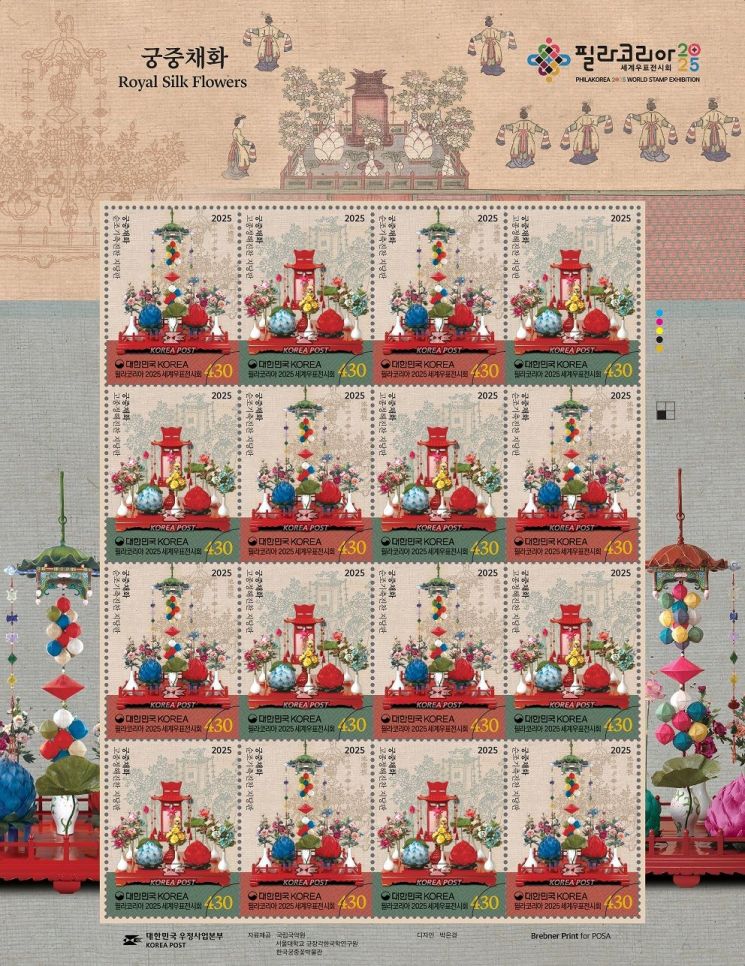
The "Jidangpan" refers to the central structure of a stage installed for court performances (Jeongjae: music and dance performed at royal banquets) during the Joseon Dynasty.
The production process of Gungjungchae-hwa is extremely intricate and delicate. Silk or ramie is dyed with natural pigments, cut into petal shapes, ironed, and then each stamen and petal is coated with pine pollen and beeswax before being shaped by hand.
The completed chae-hwa was used to lavishly decorate the entire performance space, enhancing the dignity of royal court ceremonies.
Gungjungchae-hwa, which are artificial flowers created to decorate court performances and rituals with splendor, disappeared during the Japanese colonial period. However, Hwang Suro, a master of Gungjungchae-hwa designated as National Intangible Cultural Heritage No. 124, successfully restored the craft based on ancient documents, making it possible to experience it again today.
The significance of Gungjungchae-hwa is profound, as it is not merely a decorative item but an artistic work embodying the philosophy and aesthetic sense of the Joseon royal family, and a precious cultural heritage where history and tradition are alive.
Korea Post explained that continued interest and effort are needed to preserve Gungjungchae-hwa, which sings of eternal beauty that never fades.
The commemorative stamps can be purchased at nearby main post offices or through the online post office.
© The Asia Business Daily(www.asiae.co.kr). All rights reserved.
![Clutching a Stolen Dior Bag, Saying "I Hate Being Poor but Real"... The Grotesque Con of a "Human Knockoff" [Slate]](https://cwcontent.asiae.co.kr/asiaresize/183/2026021902243444107_1771435474.jpg)















