Topology Opens a New World of 'Topological Materials'
Topological Insulators Reveal a New Path for Electricity
A Stable 'Highway for Electrons' Even Under External Shocks
Topology and TDA: Creating 'Smarter AI'
"Even If Difficult, We Must Persistently Try to Apply the Topological Perspective"
The smartphone you check frequently and even the cup of coffee you had this morning both contain hidden "mathematical structures" that you may not be aware of. In particular, the principle of "topology," which states that the essential properties of an object remain unchanged even if its shape is altered, has recently emerged as a key driving force behind innovations in advanced materials and biotechnology.
How could this complex field, which explores invisible connectivity, become the "hidden architect" responsible for the creation of dream materials and the transformation of disease diagnosis and treatment paradigms?
 From a topological perspective, just as a cup (with a hole in its handle) and a donut share the same number of holes, which is one, objects with different shapes but the same fundamental properties are grouped in the same topology. Pixabay.
Topology Opens a New World of 'Topological Materials'
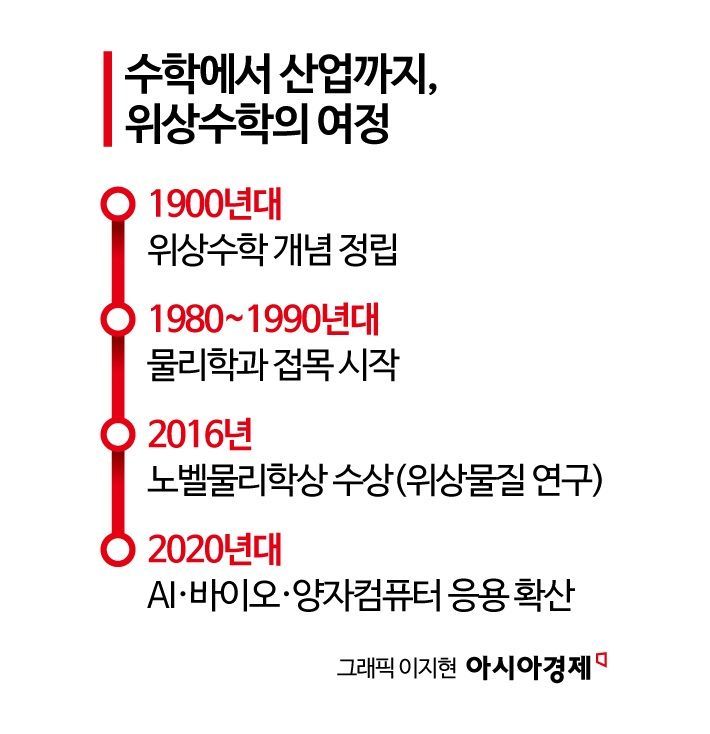
Topology is the study of "topological invariants," numbers that remain unchanged no matter how much a shape is deformed. From a topological perspective, just as a cup (with a hole in its handle) and a donut share the same number of holes, which is one, objects with different shapes but the same fundamental properties are grouped in the same topology. When scientists applied this topological perspective to solid crystals, they made a remarkable discovery.
They found materials in which "pathways for electron movement" with the same topology are preserved even if the lattice is slightly distorted. These materials robustly maintain unique electronic states at their boundaries. Such substances are called "topological materials." In 2016, the Nobel Prize in Physics was awarded to researchers in this field, signaling to the world that a new frontier in physics had opened.
A representative example of a topological material is the "topological insulator." While its interior is a perfect insulator that does not conduct electricity, its edges or surfaces allow current to flow with almost no resistance. Thanks to this stable boundary current, which remains unaffected by changes in the external environment or impurities, topological insulators are attracting attention as candidates for next-generation low-power and high-resilience devices.
Topological Insulators Reveal a New Path for Electricity
Topological insulators are special materials with different properties inside and out. It is as if the inside of a building is completely blocked by walls, making entry impossible, but just inside the outer wall, there is a continuous corridor (the surface or edge). Electrons in a topological insulator move along this corridor, and their flow is rarely interrupted even in the presence of internal defects or external shocks.
In this special pathway, electrons move while retaining a unique property called "spin." Topological insulators exhibit a phenomenon called "spin-momentum locking," where the direction of an electron's spin is automatically fixed according to its direction of movement.
Much like a dedicated highway lane, electrons with a particular spin direction flow in an orderly fashion without scattering backward or becoming entangled. Because the spin is fixed and electrons rarely bounce back, the current is extremely stable and there is minimal energy loss, effectively creating a "highway for electrons."
A Stable 'Highway for Electrons' Even Under External Shocks
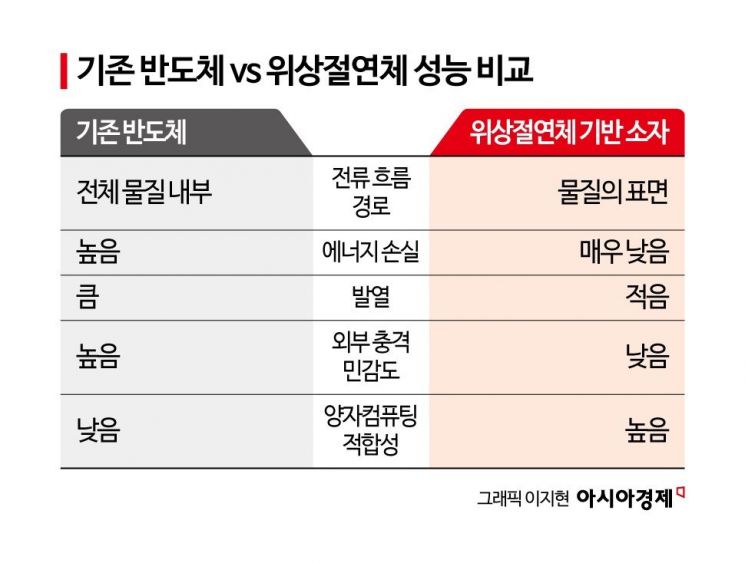
Topological insulators are evolving into low-power, high-efficiency devices. Conventional semiconductor chips generate heat and consume power as electrons carry charges and write or erase data, resulting in collisions and friction.
However, the "highway for electrons" on the surface of a topological insulator allows electrons to transmit signals smoothly with almost no bouncing. This enables more information to be processed with the same amount of power, reduces heat generation, and lessens the burden on cooling systems. This is particularly valuable for devices where battery life and heat management are critical, such as smartphones, as well as for AI accelerators in large data centers.
The era of spintronics has also begun. The spin-momentum locking property of topological insulators is advantageous for efficiently converting charge current into spin current. Spintronics devices can switch information states simply by slightly changing the spin direction without requiring electrons to move significantly.
Because the travel distance is short and less current is required, less heat is generated. Even when the power is turned off, the spin direction remains, enabling the design of next-generation memory (MRAM) and logic that are fast, low-power, and "non-volatile."
Topological insulators also provide a solid foundation for quantum computers. Quantum bits (qubits) are highly susceptible to errors due to external noise. However, the surface of a topological insulator offers a uniquely stable quantum state that is resistant to noise.
When a superconductor is layered on top, pairs of electrons can intertwine to form a special quantum state called a "Majorana Fermion." This state is topologically protected, so its properties remain unchanged even if its shape is slightly distorted. It is actively being studied as a seed for implementing topologically protected, noise-resistant quantum bits.
Topology and TDA: Creating 'Smarter AI'
Topology deals with invisible structures, whether inside materials where electrons flow or in abstract spaces where data moves. Materials change the flow of current through topological properties, and data reveals patterns through topological structures.
The power of topology is not limited to organizing the movement of electrons. The principle that "objects with the same shape have the same properties" becomes a key to uncovering hidden structures even in data filled with numbers. This perspective has been developed into a practical analytical technique known as Topological Data Analysis (TDA).
By connecting scattered data points in a "point cloud" to form shapes and calculating topological features such as holes and loops, TDA extracts essential patterns. In this way, it captures the "overall shape" of data that is not visible at a glance.
Especially in AI training, TDA complements global structures that partial statistics may miss. When a model understands the broader structure of data, the risk of overfitting decreases and predictive accuracy improves even in new situations. For this reason, AI incorporating TDA is expected to emerge rapidly in various fields, including bio, finance, and image processing.
"Even If Difficult, We Must Persistently Try to Apply the Topological Perspective"
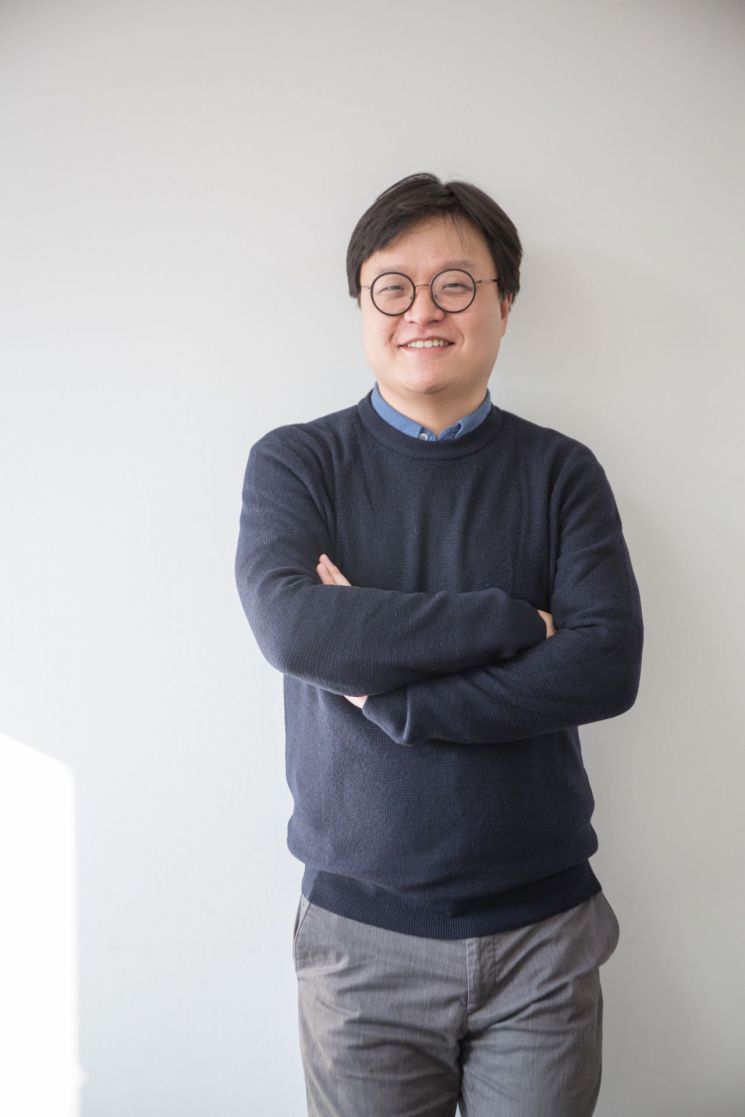
Sooyoung Choi, Professor of Mathematics at Ajou University, emphasizes, "TDA has great potential for data analysis because it can extract new information that is invisible to conventional data processing methods," adding, "If any data is given an appropriate topological structure, data mining performance will unconditionally improve."
The potential of TDA is also immense in the medical field. If the vast amounts of medical data?such as patients' genomic information, medical images, and clinical records?are analyzed using TDA, it could contribute not only to early disease diagnosis and the development of personalized treatments, but also to new drug discovery.
However, despite the innovative potential of topology, there is still a lack of practical collaboration between topologists and industry. Professor Choi stated, "The topological perspective has potential in almost every field that deals with data," but also stressed, "The biggest obstacle to applying topology in the field is a lack of understanding. Even if it is difficult, we must persistently attempt to incorporate the topological perspective."
Thus, topology, once considered "esoteric mathematics," is now emerging as the "hidden architect" that transcends the limits of materials to create dream materials, uncovers hidden insights in data to realize smarter AI, and transforms human life. The future they will unfold will go beyond simple technological advancement and bring about innovations that fundamentally change the paradigms of human life and industry.
© The Asia Business Daily(www.asiae.co.kr). All rights reserved.



















