Gwangju City to Reduce City Bus Routes from 97 to 40 Starting August 1
Public Transit Innovation Begins in Earnest
Expansion of Ttok Bus and Transfer-Oriented System
Gwangju City in Gyeonggi Province announced on July 17 that it will officially implement its "Bus Route System Reorganization Plan" starting August 1.
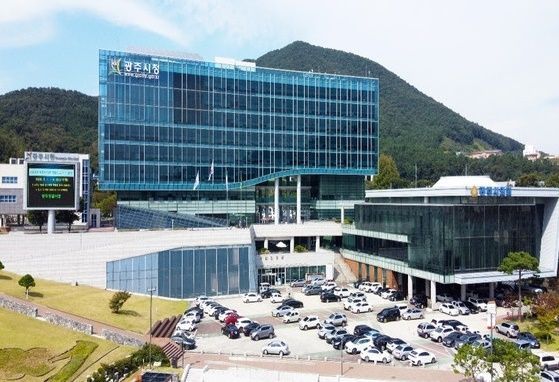
This reorganization aims to alleviate public transportation inconveniences for citizens and to proactively respond to changes in the urban spatial structure. The core focus is on establishing an efficient transfer-oriented transportation network and a customized route system.
Since December 2022, Gwangju City has conducted a related study to prepare the bus route reorganization plan, focusing on the following key areas: establishing a transfer system centered on transit stations, reorganizing the main and branch route systems, expanding demand-responsive buses (Ttok Bus), and improving the student commuting environment.
As a result, since 2023, the city has implemented several measures, including reorganizing routes passing under the Taejeon-dong underpass, adjusting routes in the Toechon area, operating Ttok Bus services for transportation-disadvantaged areas, and introducing student-only commuting circulator buses. These initiatives have received positive feedback from citizens.
With this full-scale reorganization, the number of regular city bus routes will be significantly simplified from 97 to 40. Insufficient sections will be supplemented by village buses and demand-responsive Ttok Buses.
In particular, a total of seven new Ttok Buses will be deployed in the Jangji-Tanbeol and Taejeon-Gosan areas. In addition, route adjustments will be made in connection with the relocation of private bus garages in Chuja-dong, following the urban development of the Songjeong District.
Furthermore, the operation conditions for metropolitan buses will also improve. Route 3201, which frequently experienced boarding failures during rush hours, will increase service by two trips per day, and route G3202 will increase by seven trips per day. This is expected to greatly alleviate commuting inconveniences for residents in the Taejeon-Gosan area.
This achievement is the result of Gwangju City repeatedly submitting proposals and holding working-level discussions with the Metropolitan Transport Commission of the Ministry of Land, Infrastructure and Transport. The commission recognized the need for improvements in the area and accepted the proposals.
Mayor Bang Sehwan stated, "This bus route reorganization is an essential adjustment to accommodate the changing urban structure and transportation demand. We will continue to monitor and supplement the system to minimize inconvenience for citizens. In the future, we will also successfully implement a revision of the bus numbering system and introduce color-coded route maps centered on subway stations, in order to provide a more systematic public transportation service."
© The Asia Business Daily(www.asiae.co.kr). All rights reserved.
![Clutching a Stolen Dior Bag, Saying "I Hate Being Poor but Real"... The Grotesque Con of a "Human Knockoff" [Slate]](https://cwcontent.asiae.co.kr/asiaresize/183/2026021902243444107_1771435474.jpg)















