Perception of the Necessity of Having Children Is Among the Highest
Total Fertility Rate Remains the Lowest at Around 0.7
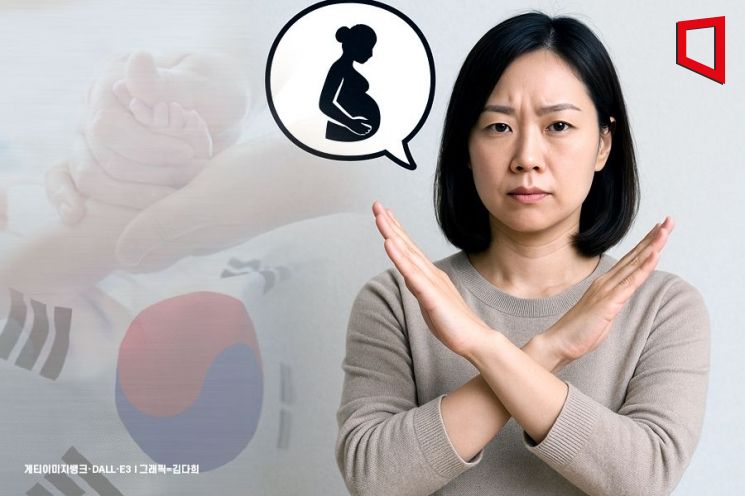
The intention to have children among South Korean women was found to be the lowest compared to major UN member states. At the same time, the gender gap in childbearing intentions was the largest, indicating a clear divergence in perceptions between men and women.
According to the preliminary results of the "Family Panel Survey on Low Birth Rates" released by the Korean Women's Development Institute on July 16, the childbearing intention score among South Korean women was 1.58 out of 5, the lowest among the eight countries surveyed.
 Newborn babies lying in the neonatal room. This photo is for illustrative purposes only and is unrelated to the content.
This survey is the Korean component of the Generations and Gender Survey (GSS), an international panel study conducted under the Generations and Gender Programme (GGP) of the United Nations Economic Commission for Europe (UNECE). The institute selected eight countries for which fertility rate analysis was meaningful from among more than 20 participating countries.
In contrast, the childbearing intention score for South Korean men was 2.09, which is 0.51 points higher than that of women. Compared to the Netherlands (women: 2.07, men: 2.23), Germany (2.17, 2.22), Hong Kong (1.73, 2.06), Denmark (2.17, 2.11), the United Kingdom (2.26, 2.22), Norway (2.16, 2.12), and Austria (2.11, 2.14), South Korea showed the largest gender gap in childbearing intentions.
While the intention to have children among women in South Korea was overwhelmingly lower than in the other countries surveyed, the intention among men was at a similar level. South Korea also demonstrated the highest perception of the necessity of having children, but its total fertility rate was the lowest, at around 0.7.
Regarding the statement, "A woman must have children to live a happy and fulfilling life," the agreement score in South Korea was 2.93 for women and 3.08 for men, higher than Hong Kong (2.45, 2.43), Norway (1.61, 1.74), and the Netherlands (1.35, 1.47). For the statement, "A man must have children to live a happy and fulfilling life," agreement in South Korea was also the highest among the eight countries, at 3.11 for women and 3.20 for men.
In particular, South Korea showed a strong preference for the traditional family structure in which both parents raise their children together. For the statement, "A child is happiest growing up in a family with both a mother and a father," agreement scores in South Korea were 3.74 for women and 3.56 for men, higher than Norway (2.28, 2.79) and the Netherlands (2.67, 3.06).
This preliminary survey is an expanded version of the Women and Family Panel Survey. It aims to analyze changes in family patterns and the life prospects of new generations. The survey was conducted among 2,634 men and women aged 19 to 59 nationwide, with 76.0% of responses collected through face-to-face interviews and 24.0% online.
The institute conducted a preliminary study for the low birth rate and family panel survey over two years and plans to launch the main research and the first round of the main survey starting next year. The results will be presented at the 140th Gender Equality Policy Forum, to be held at the Korean Women's Development Institute on July 17 in the afternoon.
Kim Jongsuk, President of the Korean Women's Development Institute, emphasized, "To effectively respond to low birth rates, a new survey system is needed that comprehensively examines gender, generations, and all aspects of family formation."
© The Asia Business Daily(www.asiae.co.kr). All rights reserved.


















