Seventeen Years After Implementation, Certification Agencies Still Concentrated in Seoul Metropolitan Area
Frequent Cases of Preliminary Approval but Final Certification Rejection
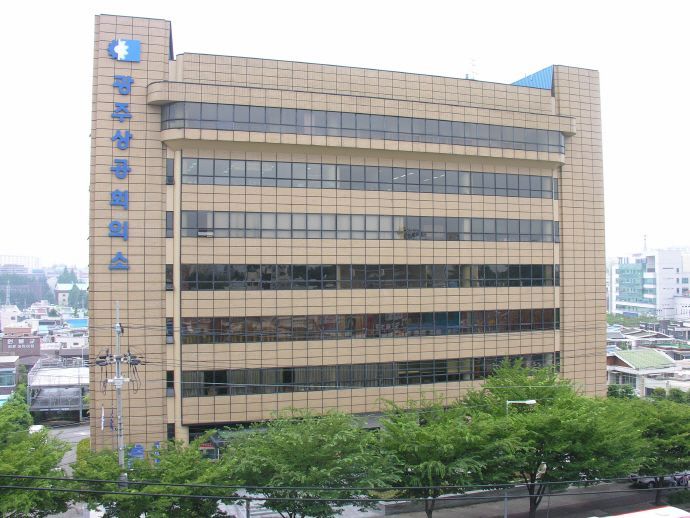
The Gwangju Chamber of Commerce and Industry announced on July 16 that it had submitted proposals for improving the Barrier Free (BF) Certification System to the Office of the President, the National Assembly, the Ministry of Land, Infrastructure and Transport, and the Ministry of Health and Welfare.
The BF Certification System was introduced in 2008 to ensure that not only socially vulnerable groups such as people with disabilities, the elderly, and pregnant women, but all citizens, can use public facilities and living spaces more safely and conveniently. Since 2015, certification has been mandatory for all public facilities commissioned by local governments nationwide.
Through this proposal, the Gwangju Chamber pointed out that, even 17 years after the system was implemented, its effectiveness has been diminished due to several issues: a shortage of certification agencies and their concentration in the Seoul metropolitan area, a lack of consistency between preliminary and final certification reviews, and delays in the review process caused by complicated certification procedures.
In fact, out of the 11 designated BF certification agencies nationwide, 10 are located in the Seoul metropolitan area, which means that on-site inspections and administrative consultations in other regions require a significant amount of time.
The annual demand for certification increased about 14-fold, from 188 cases in 2015 to 2,640 cases in 2024. However, the corresponding expansion of review infrastructure has not been achieved.
In addition to the regional concentration of review agencies, the lack of consistency in review standards has also been repeatedly pointed out. When preliminary and final certifications are conducted by different agencies or reviewers, there are frequent cases where an item is deemed compliant at the preliminary stage but found non-compliant during the final certification.
For example, a kindergarten under the Gyeongnam Provincial Office of Education attempted to install child-sized toilets for people with disabilities. However, during the preliminary certification stage, it was instructed to change to adult-sized toilets because "there is no standard for child-sized toilets." At the final certification stage, however, it was determined that the facility was unsuitable for actual users, so it had to be changed back to child-sized toilets, resulting in design changes and wasted budget.
In addition, in Daedeok-gu, Daejeon, the average period required for BF certification over the past five years was about 330 days, and there have been four cases in which completion was delayed due to this, with similar problems occurring nationwide.
In response, the Chamber insisted that the reliability of the certification system must be improved by expanding certification agencies by region and ensuring balanced distribution, quantifying and standardizing review criteria, introducing a management system to track the history between preliminary and final certifications, and implementing training and evaluation systems to enhance the expertise of reviewers.
A representative from the Gwangju Chamber of Commerce and Industry emphasized, "The BF certification system should not remain a mere formality, but should be operated in a way that enhances convenience from the perspective of actual users," and added, "Government-level improvements to the system are urgently needed to reduce confusion on the ground and prevent wasteful spending."
© The Asia Business Daily(www.asiae.co.kr). All rights reserved.
![Clutching a Stolen Dior Bag, Saying "I Hate Being Poor but Real"... The Grotesque Con of a "Human Knockoff" [Slate]](https://cwcontent.asiae.co.kr/asiaresize/183/2026021902243444107_1771435474.jpg)















