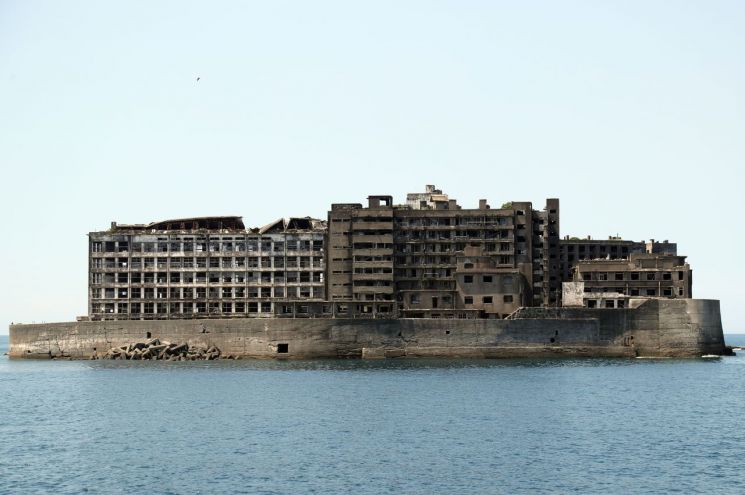
Regarding Japan's failure to properly implement follow-up measures for modern industrial heritage sites such as the Hashima coal mine (commonly known as Gunkanjima), which was the site of forced labor during the Japanese occupation, the government stated that it will continue to pursue bilateral consultations but emphasized that UNESCO should become involved if no progress is made.
Park Sangmi, South Korea's Ambassador to UNESCO, expressed her regret on the 15th (local time) at the World Heritage Committee meeting held in Paris, France, over the fact that inadequate follow-up measures regarding Japan's modern industrial heritage were not discussed.
Previously, on July 7, during a World Heritage Committee meeting, South Korea attempted to have an 'assessment of the implementation of the committee's decision' regarding Meiji industrial heritage adopted as a formal agenda item, but this attempt was blocked after a vote among committee members following Japan's opposition.
Ambassador Park pointed out, "It is noteworthy that the committee has repeatedly, through four decisions, requested the development of interpretive strategies that allow for a comprehensive understanding of the full history of each site within the Meiji Industrial Revolution heritage." She added, "However, it is concerning that even after nearly ten years, implementation remains insufficient."
The Japanese government publicly pledged in 2015, when Gunkanjima and other sites were inscribed as World Cultural Heritage, that it would provide explanations regarding the forced mobilization of Koreans. However, in 2020, it established the Industrial Heritage Information Center not at the heritage site but in Tokyo, and has failed to properly implement its promises, including not addressing the forced labor of Koreans at all.
© The Asia Business Daily(www.asiae.co.kr). All rights reserved.

















